| Allied Command Transformation’s quarterly newsletter aims to inform stakeholders on Command contributions to NATO and the Nations.
2nd edition 2024 | April |
From NATO Allied Command Transformation in Norfolk, USA – NATO’s home in North America
Welcome to this edition of Let’s ACT, a compilation of selected articles from NATO’s Warfare Development Command in Norfolk, USA. We like to hear from you: If you have anything to share with us, please use ‘[email protected]‘ to make your voice heard. Best wishes from across the ocean, Your Team at NATO ACT |

NATO 75th Anniversary VideoAllied Command Transformation has helped forge NATO’s future for the past 20 years – Happy Anniversary, NATO! Watch the video here. |

Building Ukraine’s Future Security with NATO and Allied Command TransformationTwo years after Russia’s invasion, NATO remains committed to standing with Ukraine. Allied Command Transformation empowers its defence, sharing knowledge, training, innovative solutions and improving its interoperability with NATO. This unwavering collaboration strengthens not only Ukraine’s future, but also ours. Read more here. |

Why Cognitive Superiority is an ImperativeComplacency is a lethal error in strategy making and warfare. As Russia has learned in Ukraine, overestimating your own capabilities and underestimating your enemy can lead to failure. NATO cannot take its own continued strategic success for granted. Read more here. |

General Lavigne’s Strategic Blueprint: Transforming NATO’s Military Instrument of PowerDefining what the operating environments of the future will look like is a key outcome of Allied Command Transformation’s Strategic Foresight work; an activity that is accomplished in close collaboration with allies to ensure a fully realized picture is generated. The future operating environment provides the conditions to which NATO needs to adapt the military instrument of power. Read more here. |

The Age of AI: Navigating the Convergence of Emerging TechnologiesDefining what the operating environments of the future will look like is a key outcome of Allied Command Transformation’s Strategic Foresight work; an activity that is accomplished in close collaboration with allies to ensure a fully realized picture is generated. The future operating environment provides the conditions to which NATO needs to adapt the military instrument of power. Read more here. |

NATO’s Military Committee Gains Strategic Insights at Joint Analysis Lessons Learned Centre“Even if NATO is stronger today than it was only a few years ago, we are engaged in a race we cannot afford to lose,” said General Lavigne. ”Furthermore, it’s not a static situation, but one where our opponent is currently building or rebuilding his team faster than we are.” Read more here. |

Engaging Tomorrow’s Leaders: NATO’s Youth Outreach ProgrammesIn today’s dynamic geopolitical environment, fostering understanding and collaboration among future leaders is paramount. NATO Allied Command Transformation offers impactful “Youth Outreach” programmes that not only educate but also inspire high school and university students to engage with the Alliance’s mission and values. These programmes not only benefit the students but are also crucial for NATO as an Alliance, ensuring a future generation of leaders who understand the importance of international cooperation and security. Read more here. |

Upcoming Strategic Engagementsby Strategic Issues & Engagement BranchWith the 75th Anniversary Summit fast approaching, Allied Command Transformation is continuing to engage youth and students across the Alliance to promote NATO’s priorities and warfare development, as well as to gauge student’s views and opinions about future security challenges and opportunities. The Command will support the NATO Youth Summit in Miami on 13 May and will also run a NATO Model Summit Event on 8 July. This will be a unique opportunity for students to offer their perspectives and priorities on key topics to be discussed in Washington. Finally, in May we will also announce the winners of the NATO 75th Anniversary Student Challenge, who will be invited to attend the Summit in Washington in July. At the Summit itself, ACT will host the Public Forum Social in Washington, which will allow ACT to showcase how its work supports NATO’s priorities and how we are driving the necessary transformation of the Alliance to ensure NATO continues to offer credible deterrence and defence. Finally, ACT will organize the Allied Warfighter Talks 25 June. This event brings together NATO and US military leaders to wargame the most demanding security challenges of today. |
| Allied Command Transformation’s quarterly newsletter aims to inform stakeholders on Command contributions to NATO and the Nations.
1st edition 2024 | January |
From NATO Allied Command Transformation in Norfolk, USA – NATO’s home in North America
Welcome to this edition of Let’s ACT, a compilation of selected articles from NATO’s Warfare Development Command in Norfolk, USA. We like to hear from you: If you have anything to share with us, please use ‘[email protected]‘ to make your voice heard. Best wishes from across the ocean, Your Team at NATO ACT |

Anticipation, Capabilities, and Talents– our distinctive trademarks at NATO’s strategic warfare development command NATO – Watch the 2023 wrap-up video here! |
|
General Lavigne’s Strategic Blueprint: Transforming NATO’s Military Instrument of Power The mission of NATO’s Strategic Warfare Command is to enhance interoperability and military effectiveness through strategic transformation and warfare development. During his address to his troops, GEN Lavigne said: “Allied Command Transformation’s work is not just about tomorrow, it fuels the Alliance’s edge, today, tonight, and into the future.” Read more here. |
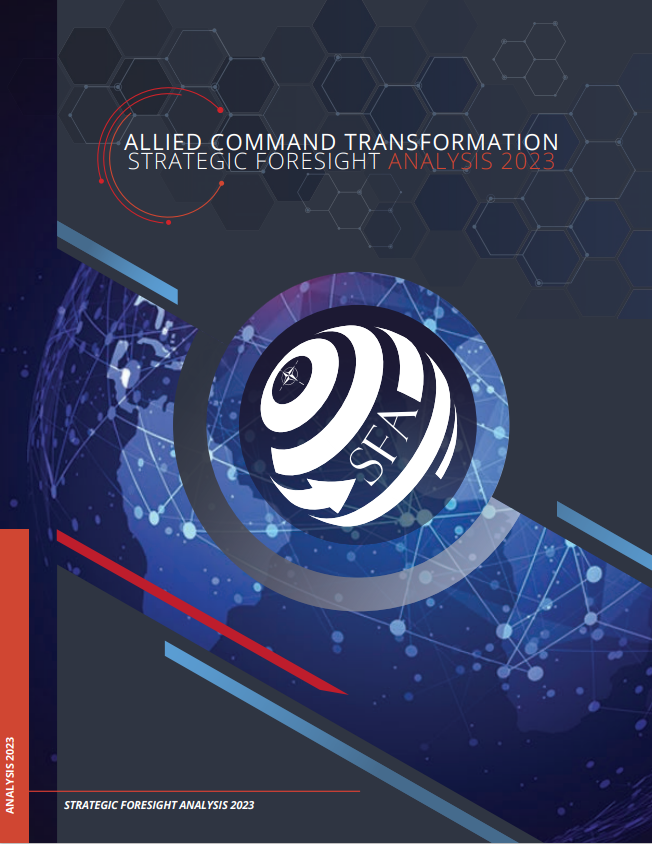
Unveiling the Future: The Release of Allied Command Transformation’s Strategic Foresight Analysis 2023 Strategic shocks in NATO’s security environment have necessitated reinforcing futures thinking at NATO ACT with strategic foresight, a proven practice for understanding the extent and direction of change in the strategic environment. Since its re-establishment, NATO Allied Command Transformation’s strategic foresight function has enabled the Allied future thinking community to chart a wide range of key challenges, and consider their implications. Furthermore, it has provided a platform for the increasing Allied military foresight community to exchange collaborative dialogue and research. Read more here. |

Allied Warfare Development Conference Concludes in NorfolkNATO Allied Command Transformation hosted the 2023 Alliance Warfare Development Conference, an annual meeting of Flag and General Officers, as well as Senior Civilian decision makers from NATO Nations, designed to foster interaction and collaboration with NATO’s Allied Command Transformation and other senior NATO leaders involved with warfare development. Read more here. |

Allied Command Transformation’s 2023 Space Activities: A RecapAllied Command Transformation is enhancing NATO’s understanding of the Space Domain and driving interoperability of NATO and Allied space capabilities through multiple crosscutting efforts. Read more here. |

Innovation Challenge Competition Showcases Ground-Breaking InnovationsThe NATO Innovation Challenge competition emphasized this year’s theme on military mobility. The competitive event is an opportunity for industry and intellectuals from all Allied Nations to pitch their modern initiatives and innovations to effectively contest Alliance-wide challenges. Read more here. |
Upcoming Strategic Engagementsby Strategic Issues & Engagement BranchIn preparation for the 75th Anniversary Summit, ACT is planning various events throughout the USA to emphasize the importance of the transatlantic alliance and its ongoing benefits for Americans. Additionally, we will involve young people from different countries through NATO Model Events held in Italy, France, Germany, and the USA. These efforts align with the NATO 75th Anniversary Student Challenge, which aims to gather insights on how NATO can safeguard their future. ACT has planned two high-level events to delve into important topics at the upcoming Summit. From 11-13 March in Norfolk, Virginia, we will host the 2024 Academic Conference on Alliances and Partnerships in a Complex and Challenging Security Environment. This conference will bring together academic leaders, Think Tank experts, NATO policy makers, and military decision makers to discuss pressing issues. Additionally, from 29-30 April in Toulouse, France, SACT and DGIMS will hold the first-ever NATO Space Symposium with key NATO and national leaders as well as space industry champions. The symposium’s theme is “Deterrence, Defence and Resilience in and through the Space Domain”, focusing on accelerating development and implementation of NATO’s space capabilities. |
| Allied Command Transformation’s quarterly newsletter aims to inform stakeholders on Command contributions to NATO and the Nations.
3rd edition 2023 | October |
From NATO Allied Command Transformation in Norfolk, USA – NATO’s home in North America
Welcome to this edition of Let’s ACT, a compilation of selected articles from NATO’s Warfare Development Command in Norfolk, USA. We like to hear from you: If you have anything to share with us, please use ‘[email protected]‘ to make your voice heard. Best wishes from across the ocean, Your Team at NATO ACT |

NATO Allied Command Transformation’s Role in Shaping the Alliance’s Future: Insights from the PermRep VisitThe visit served as an excellent opportunity to further tie the work of Allied Command Transformation to NATO’s priorities and define how this Strategic Command contributes to effective deterrence and defence today, while preparing the Alliance to meet future challenges. During their time at NATO Allied Command Transformation, a wide range of topics were covered which encompassed Strategic Foresight Analysis and Deterrence, Multi-Domain Operations, Digital Transformation and next generation tools to support Cognitive Superiority and decision making throughout NATO. Read more here. |

Allied Command Transformation Hosts 2023 NATO Communicators’ ConferenceNotable sessions included workshops on using Digital for Deterrence and a panel on Information as a Military Strategic Function, underlining the importance of communications and information-dominance in contested environments. Allied Command Transformation personnel also highlighted several lectures and panel groups, including a discussion on Multi-Domain Communications as an Operational Enabler and Leveraging Artificial Intelligence for Information Environment Assessments. Read more here. |
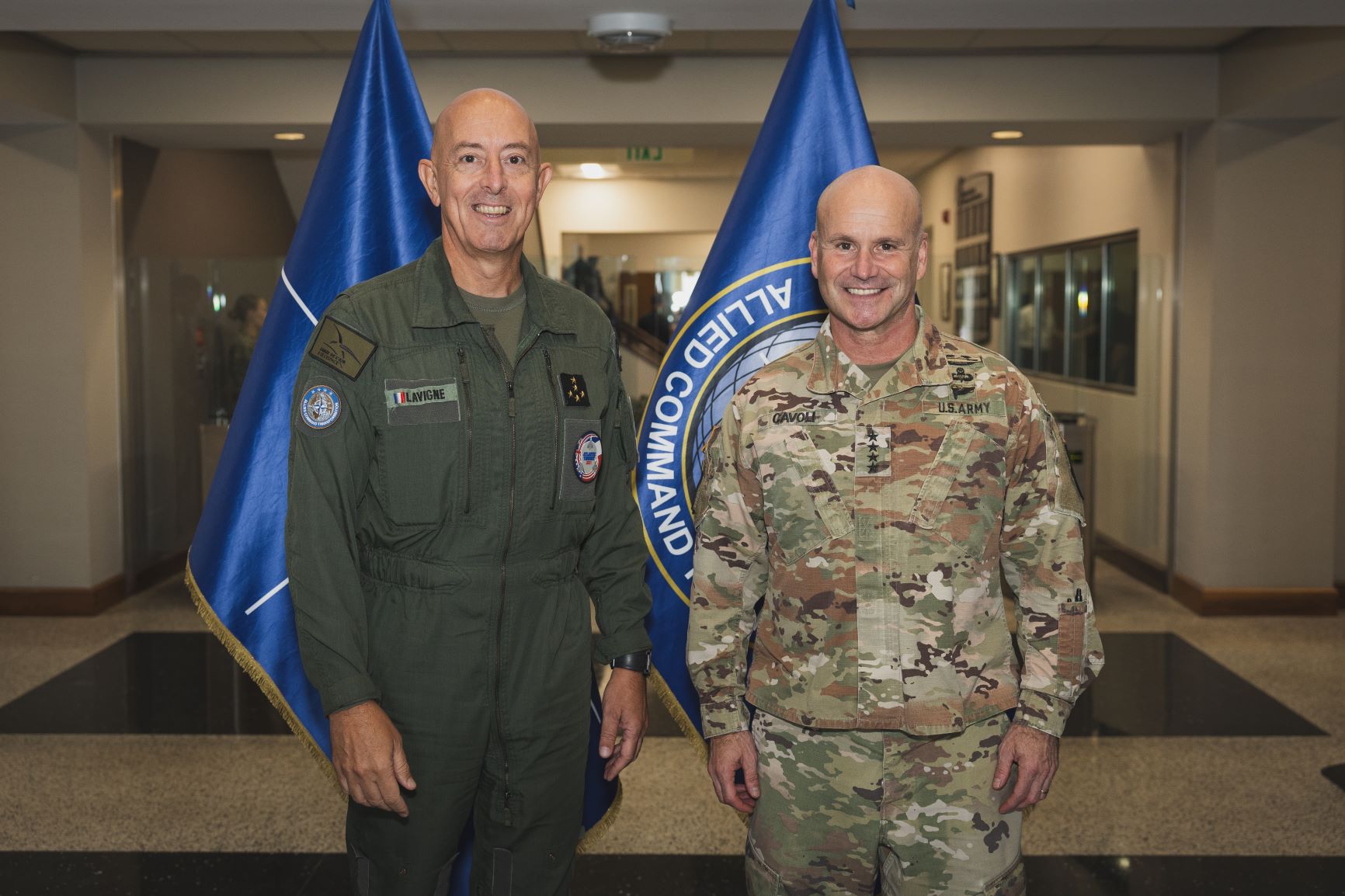
Allied Command Transformation Receives General Christopher Cavoli, Supreme Allied Commander EuropeDuring his visit to Headquarters Supreme Allied Commander Transformation, Gen. Cavoli took part in direct discussions with Gen. Lavigne on high-level Alliance initiatives, including the ongoing development of Multi-Domain Operations and the capacity for interoperability across the Alliance’s ecosystem. Read more here. |

Allied Command Transformation Begins Operational Experimentation at Dynamic Messenger 2023Troia, Portugal – Unmanned vehicles, for operations underwater, above surface and in the air filled the jetty as a distinguished visitors’ day was held to mark the end of the Portuguese-led exercise Robotic Experimentation and Prototyping with Maritime Unmanned Systems (REPMUS) and the transition to NATO’s Dynamic Messenger 2023. Military, industry, and academia gathered to display technologies, share best practices and demonstrate capabilities that will shape the future of NATO operations. Read more here. |
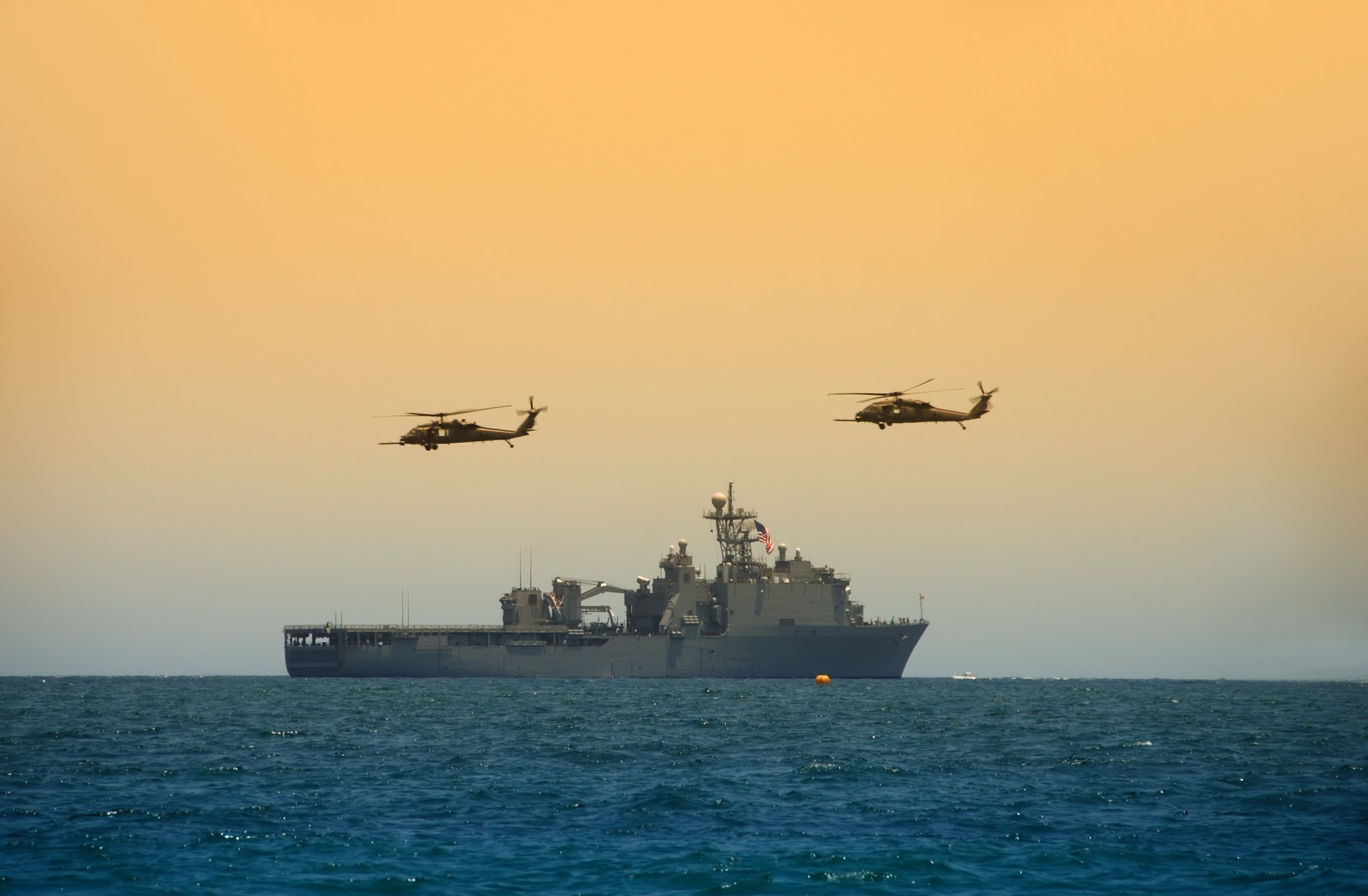
Allied Command Transformation Leads the NATO Multi-Domain Operations ConferenceAhead of the NATO Multi-Domain Operations Conference, held from 09-11 October 2023 in Copenhagen, Denmark, the importance of mastering Multi-Domain Operations has never been more relevant. With emerging threats from space and cyber Domains combining with existing land, sea, and air risk factors, the formation of a collective, multi-layered operational approach is paramount for the Alliance. Read more here. |

Allied Command Transformation Enhances NATO’s Understanding of Climate ChangeThe Strategic Foresight Branch has integrated considerations of climate change across its robust futures research, leveraging insights from its network of planners, futurists, think tanks and industry experts. The Strategic Foresight Analysis Reports are emblematic of this comprehensive approach, identifying the main trends of global change across the themes of politics, human security, technology, economics and resources, and environment. Read more here. |
Upcoming Strategic Engagementsby Strategic Issues & Engagement BranchFollowing the NATO Multi-Domain Operations Conference in Copenhagen, Denmark on 9-11 October, ACT and the Defence Investment Division of the NATO HQ International Staff will deliver the 2023 NATO-Industry Forum (NIF) on 24-25 October in Stockholm, Sweden. Organized on behalf of NATO Secretary General, the NIF is the preeminent strategic engagement between NATO and industry as it offers a platform for senior leadership from NATO, nations and industry to share strategic thoughts and visions on geostrategic developments, challenges and opportunities. The theme for the 2023 edition is ‘Addressing the New Strategic Reality Together’. The Forum will build upon the decisions taken by Heads of State and Government at the NATO Summit in Vilnius on 11 and 12 July 2023, in particular those related to the Defence Production Action Plan. It will also offer an opportunity to explore NATO’s vision for its future defence capabilities and has already attracted over 600 attendees. November will be dedicated to Academic and Partner Outreach. Alongside delivering a number of NATO-Model Events in the US and Europe to help students improve their understanding of how NATO works, the Academic Conference 2023, co-organized with the University of Bologna on 8-10 November, will bring together the Alliance’s top academics and practitioners to dive into the topic of “Space – Exploring NATO’s final frontier.” Eager to diversifying the Academic Conference model, ACT has already initiated planning for next year’s event that will be co-hosted with Old Dominion University, Norfolk on “The Future of Alliances and Partnerships”. This event will undoubtedly be informed by the Partnerships 360 Symposium (P360). The 2023 edition of NATO P360, hosted by the Kingdom of Spain on 14-16 November and co-organized by ACT and the Political Affairs and Security Policy Division of the NATO HQ International Staff, will engage the partnership network and community in a “one NATO” spirit of political-military cooperation. Under the theme of “Understand Better, Adapt Faster, Prevent Together”, it will enhance understanding of the global security environment, inform new concepts, and explore trends and needs most relevant for NATO Partners and their relationship with the Alliance. On 5 to 7 December, we will again welcome national and NATO military leaders to our annual Alliance Warfare Development Conference here at HQ Allied Command Transformation. |
| Allied Command Transformation’s quarterly newsletter aims to inform stakeholders on Command contributions to NATO and the Nations.
2nd edition 2023 | July |
From NATO Allied Command Transformation in Norfolk, USA – NATO’s home in North America
Welcome to this edition of Let’s ACT, a compilation of selected articles from NATO’s Warfare Development Command in Norfolk, USA. We like to hear from you: If you have anything to share with us, please use ‘[email protected]‘ to make your voice heard. Best wishes from across the ocean, Your Team at NATO ACT |

ACT – 20 years as NATO’s Military Leader for Change
|
Allied Command Transformation Conducts Strategic Foresight Symposiumby ACT Strategic Foresight BranchAllied Command Transformation conducted a workshop at George Washington University to discuss the future challenges facing NATO and explore the utility of strategic foresight in support of Allied considerations. Nearly 100 high-level experts from NATO and academia addressed challenges of the next 20 years, sharing the methodologies used by Allied foresight entities to conduct their analysis. Read more here. |
The Coalition Warrior Interoperability Exercise Showcases NATO Interoperability to Allied Decision Makersby ACT Federated Interoperability BranchOn June 20th, 2023, Allied Command Transformation opened the Coalition Warrior Interoperability Exercise to senior military and civilian representatives, demonstrating the value and necessity of improving interoperability and cross-domain information exchange between Allies and Partners. Read more here. |

Allied Command Transformation Enhances NATO’s Deterrence Posture through Four Square Studyby ACT Warfare Development Fusion BranchAllied Command Transformation is enhancing NATO’s understanding of deterrence and escalation dynamics through the Four Square Study, which seeks to transform NATO’s approach to deterrence so that it can better respond to emerging threats. Read more here. |

Cognitive Warfare: Beyond Military Information Support Operationsby ACT Concept Development BranchCognitive Warfare includes activities conducted in synchronization with other Instruments of Power, to affect attitudes and behaviours, by influencing, protecting, or disrupting individual, group, or population level cognition, to gain an advantage over an adversary. Designed to modify perceptions of reality, whole-of-society manipulation has become a new norm, with human cognition shaping to be a critical realm of warfare. Read more here. |

Innovation: Allied Command Transformation Launches New Innovation Challenge on the High Northby ACT Innovation BranchThe 11th edition of the NATO Innovation Challenge aims at collecting new and innovative solutions that will ensure effective operations in the Arctic, from Space to Seabed. Priority focus includes geographical specificities, unique considerations, and the context of a NATO joint operation. Submissions are open until May 14th 2023. The best proposals will be awarded a monetary prize, and could be developed by NATO for further opportunities. Read more here. |
Upcoming Strategic Engagementsby Strategic Issues & Engagement BranchPermanent Representatives visit to HQ SACT on 24-26 September 2023 |
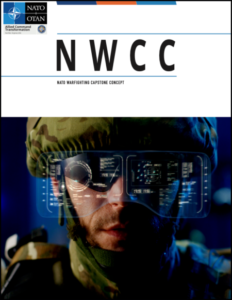
NATO Warfighting Capstone Concept (NWCC)The NATO Warfighting Capstone Concept (NWCC) was approved in 2021. It contributes to the Alliance’s efforts to strengthen its deterrence and defence posture and offers a vision in support of maintaining and further developing NATO’s decisive military advantage, and continuously adapting the military instrument of power through to 2040. Read more here. |

1st edition | March 2023
From NATO Allied Command Transformation in Norfolk, USA – NATO’s home in North America


Welcome to this edition of Let’s ACT, a compilation of selected articles from NATO’s Warfare Development Command in Norfolk, USA.
We like to hear from you: If you have anything to share with us, please use ‘[email protected]’ to make your voice heard.
Best wishes from across the ocean,
Your Team at NATO ACT
Space Symposium
From 17-20 April 2023, NATO will participate in the 38th US Space Symposium.
Leadership and Space SMEs from the various NATO HQs and Agencies (e.g. IS, Bi-Strategic Commands, NATO Space Centre and the NCI Agency) will be participating in this Space event.
LtGen David Julazadeh, DCOS for Capability Development, will be the official NATO representative and key speaker at the International Military Cooperation Panel, moderated by the Deputy Under Secretary of the Air Force for International Affairs, Mrs. Kelli Seybolt.
NATO will have a presence during the entire event at its Exhibit Centre, alongside participating nations, defense, academic and commercial providers as well as other Space agencies and entities.
The event will be conducted within the framework of the NATO Overarching Space Policy, dated 17 January 2022 – https://www.nato.int/cps/en/natohq/official_texts_190862.htm
 NATO Defence Planning Process
by ACT Defence Planning Policy Analysis Branch
In February 2023, NATO Defence Ministers approved the Political Guidance for Defence Planning 2023, perhaps heralding the most significant change in Defence Planning since the end of the Cold War.
The NATO Defence Planning Process is not linear, there is more that ACT will be doing in 2023. Preparations are underway for the targeting process that will commence in 2024 and deliver in 2025 with the objective of providing a consistent and transparent result. In a similar vein, our teams in Mons will support the International Staff in the fall of 2023 as they commence the demanding yet important process of reviewing the results of the last cycle.
Read more here.
 Information Environment Assessment Capability Programme Plan Initiated
by Joint Intel Surveillance & Reconnaissance and Joint Effects Branch
The NATO Secretary General identified the development of the Information Environment Assessment (IEA) capability as a high priority programme at the 2022 Madrid Summit, with ACT driving capability production to meet NATO ambitions deterrence policy must now adapt. With an increasingly interconnected world, where easy access to technology is prevalent, the IEA capability (IEAC) offers the ability to deliver real-time, audience-tailored communication to report, command, inform, persuade, confuse, coerce, distract or deceive. While executing current IEA capability development, there is the need to also look to the next challenge of fusing cross-functional information through the context of Multi-Domain Operations (MDO) and Digital Transformation.
Read more here.
 From SACLANT to SACT – on the way to 20 years of NATO ACT
by ACT Communcations Branch
Creating the Future-Oriented Command: The Founding and Evolution of Allied Command Transformation
Read about the historical evolution and emergence of NATO Allied Command Transformation, from its Cold War roots as Supreme Allied Commander Atlantic to present.
Read more here.
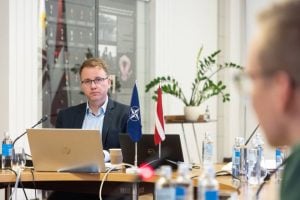 Identifying Non-Military Trends Shaping the Future Military Instrument of Power
by ACT Strategic Foresight Branch
Allied Command Transformation is engaging in comprehensive and robust futures research to advance its Strategic Priority of ‘better understanding’ by examining the future operating environment of NATO’s Military Instrument of Power. These efforts will enable NATO to be more proactive in shaping the strategic environment to the Alliance’s advantage and ensure its Military Instrument of Power remains fit for purpose into the future. In support of these efforts, Allied Command Transformation’s Strategic Foresight Branch is conducting workshops with Allies, Partners, and academics to inform the development of the Strategic Foresight Analysis 2023 Report.
Read more here.
 Workshop – Cognitive Warfare Concept
by Concept Development Branch, Strategic Plans & Policy
HQ SACT conducted a working level Solution Scoping workshop for the Cognitive Warfare Concept in Madrid. The Spanish Joint HQ hosted and supported this event.
This was the third workshop conducted in 2022 as part of the research phase of concept development. Focusing on Problem Definition, Solution Generation, and Solution Development respectively, the three research workshops have seen attendance from 167 people from 20 NATO nations, 10 NATO Centres of Excellence (COEs), Science and Technology Organization (STO), Industry and across the NATO Command Structure.
Read more here.
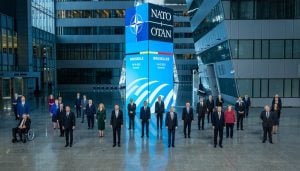 Ongoing Military Transformation, Leading to NATO 2030 – Multi-Domain Operations, Deterrence and Defence, Improved Understanding
by ACT Communications Branch
Multi-Domain Operation Enablement is a key concept for alliance transformation – land, sea, air, space, and cyber, as well as domain interfaces all require diverse inputs. NATO’s Allied Command Transformation will leverage innovation, experimentation, and war-gaming to improve Alliance-wide education, creating both the mind-set and means for military and non-military capabilities to synchronize seamlessly across all domains and environments. Phases of implementation include Training & Exercise, Capability Development, and the NATO Defence Planning Process.
Read more here.
Upcoming Strategic Engagements
by Strategic Issues & Engagement Branch, Strategic Plans & Policy
In the run up to the Summit, ACT’s focus is on resilience and wargaming.
On April 25-27 in Riga, Latvia, ACT and the International Staff Defence Plans and Policy Directorate will co-organise the NATO Resilience Symposium addressing “Resilience in the age of Disruption”. The Symposium will bring together senior national and NATO political and military leaders to unpack the challenges and opportunities to strengthen Alliance resilience, and focus on exploring the critical infrastructure, security of supply, importance of data and societal resilience.
In May and June, a number of events will be held in London, Rome, Lisbon and Virginia Beach on wargaming, experimentation, modelling and simulations. These high level events will gather NATO, national, industry and academic experts to promote and advance the use of wargaming and Modeling and Simulation (M&S) tool within the Alliance. Of particular note is the Wargaming Initiative for NATO 2023 (WIN23) to be held in Rome 26-28 June, as it aims to develop a strategic culture of wargaming, strengthen interoperability through their use, increase understanding of future challenges and help decide faster and better.
Allied Command Transformation’s quarterly newsletter aims to inform stakeholders on Command contributions to NATO and the Nations.
3rd edition | October 2022
Statement by Deputy Supreme Allied Commander Transformation, General Chris Badia
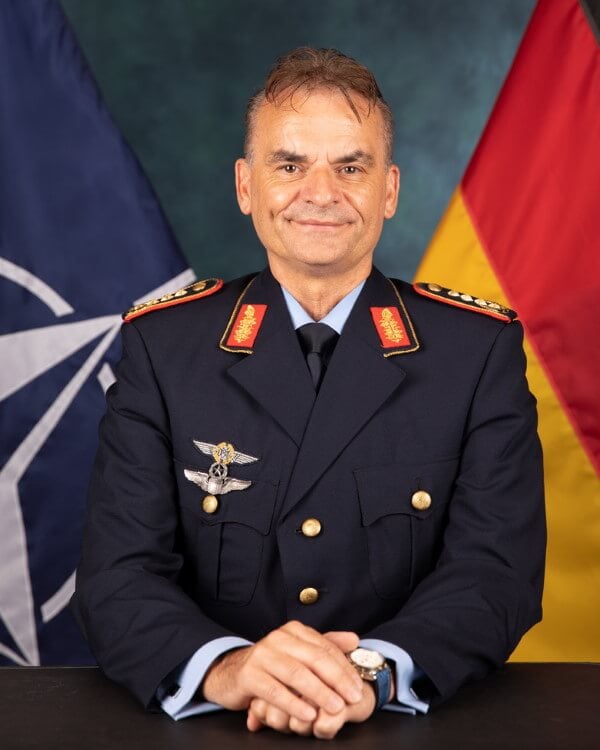
This is the third iteration of our ACT Newsletter, “Let`s ACT”, and I am delighted to have the opportunity as the new DSACT to address you. ACT stands for transforming the Alliance to ensure that NATO remains fit for its purpose in the future. In other words, we ensure that SACEUR will be able to fulfil his job not only today but also in the future. Can we do this on our own? Of course not! We create and foster the environment to look into and analyse today’s needs and bridge it with the future, but nations are to deliver the required capabilities. We, as ACT, add to this value chain the harmonisation of the soon to be 32 nations’ efforts in order to build a synchronised, synergetic, and future oriented comprehensive set of capabilities. We achieve this by utilising the well-established NATO Defence Planning Process.
Currently the starting point for the next cycle, 2022 – 2026, is under development. It is called Political Guidance for Defence Planning (PG) and is expected to be approved by Defence Ministers in March 2023. Following this guidance, we in ACT – together with ACO – derive the Minimum Capability Requirements. In other words, we give the unfettered military advice on what is needed in the future to meet the politically agreed Level of Ambition.
In the next step, these requirements will be apportioned to all Allies in the form of Capability Targets, which set the outline of the national defence planning. By implementing these targets into national plans, Allies provide their individual stake to the overall Military Instrument of the Power of NATO.
Therefore, everything we do in ACT has to fit into this process in order to enable the nations to provide the right capabilities for the future.
That is why we use capabilities as common language to link our innovative and conceptual content to concrete and practical national capability development. Inside this newsletter, you will find a myriad of topics – spanning from Strategic Foresight, Innovation, MDO, Cognitive Warfare, all the way to annual Conferences and Strategic Engagements, which all lead into capabilities.
There is a lot of work going on here in ACT and still a lot of work to be done – but be assured, we will ensure that this work is linked to NATO and national efforts by providing the right capabilities needed to fulfil NATO’s Core Tasks.
I am convinced, that by exchanging our views, expertise and programme of work with you, we are creating a better understanding of what you need us to do and what we need from your side to deliver.
Sincerely,

General Chris Badia Deputy Supreme Allied Commander Transformation
#WeAreNATO
Everything starts with an idea! This is the spirit of TIDE Sprint, led by HQ SACT. From 24-28 October in Virginia Beach, VA, the Fall 2022 ‘Think-Tank for Information Decision and Execution’ Sprint will bring together operators, engineers, scientists, and managers to shape future concepts, requirements and interoperability specifications for Command & Control (C2) capabilities and IT services. As HQ SACT’s largest think-tank event, TIDE Sprint enables NATO’s communities of interest to collaborate, exchange ideas, and accelerate NATO’s Digital Transformation.
Participants will also explore the Alliance’s most timely strategic challenges, such as the implementation of outcomes from the NATO Summit as well as the advancement of the NATO Warfighting Capstone Concept (NWCC) and Warfare Development Imperatives (WDIs), such as Cognitive Superiority, Integrated Multi-Domain Defence, and Layered Resilience.
Learn more here.
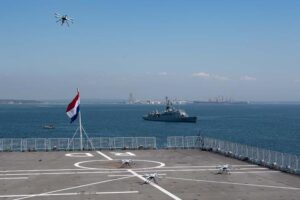
Dynamic Messenger 22: An OPEX Exercise Designed for the Future
 by ACT Communications Branch
TROIA, PORTUGAL
The first edition of NATO’s Dynamic Messenger 2022 drew to a close today after bringing together military, industry and academia to Portugal’s Maritime Operational Experimentation Centre (CEOM) near Troia, Portugal for NATO’s first operational experimentation exercise focused on maritime unmanned systems (MUS). Maritime operational experimentation within NATO is designed to be a forcing function to increase innovation and deliver true capability and interoperability development.
“We recognize that the introduction of maritime uncrewed systems presents challenges and opportunities for the Alliance, in all aspects of maritime warfare.” said Vice Admiral Keith Blount, Commander of Allied Maritime Command. “Dynamic Messenger 22 has significantly increased our capacity to employ current and future technologies. This is an important aspect of our vital work with maritime uncrewed systems to further increase NATO’s technological advantage.”
During the weeklong exercise, drones went underwater, on the surface and in the air. The drones then transmitted data to combat management systems of participating NATO vessels and at the exercise command centre, located at Troia. For the first time, maritime unmanned operating picture was shared with a warship. The observations, analysis and lessons learned from the execution of each scenario feeds into the development of NATO’s tactics, techniques and procedures in the use of unmanned maritime systems. The data also informs nations and the alliance on capability development and digital transformation.
“We have now concluded the first operational experimentation phase of Dynamic Messenger,” said Vice Admiral Guy Robinson, Chief of Staff, Allied Command Transformation. “Now we will bring the data, the insights from commanders and the lessons forward to better define how those emerging disruptive technologies, particularly unmanned maritime systems, can be brought into the operational sphere.”
Portugal’s Maritime Operational Experimentation Centre (CEOM) offered Dynamic Messenger 22 a unique operating area, designated as a free technology space, it allowed for unhindered experimentation with MUS and innovative technologies. The integration of the CEOM into the Defence Innovation Accelerator for the North Atlantic (DIANA), as a NATO test centre, aims to accelerate the development of emerging and disruptive dual use technology solutions.
Contributions to the exercise came from both military and industry, and was co-led by Allied Maritime Command (MARCOM) and Allied Command Transformation (ACT). MARCOM provided the operational planning and execution experience, committing two of NATO’s Standing Naval Groups for the duration of the exercise (SNMG1 and SNMCMG1). MARCOM also worked closely with the Portuguese hosts to ensure that operations were de-conflicted with civilian maritime and air traffic.
ACT tested Minimal Viable Products concentrated on counter mine warfare and an ACT team led the Evaluation, Analysis and Assessment syndicate. ACT also funds NATO’s Centre for Maritime Research Experimentation Contributions (CMRE), which deployed one of its largest contribution of equipment and personnel to a NATO exercise. CMRE conducted missions such as a passive Anti-Submarine Warfare (ASW) serial utilizing a collaborative autonomous network of static and dynamic sensing nodes to detect/track an artificial target. The locations of vehicles and track data was relayed back to the Maritime Operations Centre (MOC) using Collaborative Autonomy Tasking Layer (CATL) and Command, Control, Communication Maritime Robotic Exploitation (C3MRE). This means unmanned systems are showing increasing maturity and readiness as they transition to fully fledged capabilities. CMRE also demonstrated the integration of digital twins for its ASW assets into C3MRE using CATL messages.
Dynamic Messenger 22 has demonstrated the importance of operational experimentation in an exercise context, where the exercise does not validate readiness, rather it offers a venue where collaboration between industry, academia and militaries can be conducted in a real time setting. NATO must test technologies to better understand how digital transformation, and the speed of its introduction, can be operationalized across the alliance to allow seamless command and control, and to address capability development. The goal for NATO is for operational experimentation to be a forcing function to increase innovation and to deliver true capability and interoperability development.
The exercise provides NATO’s digital transformation will scale up the generation, sharing, processing and employment of data to enable multi-domain operations, agile interoperability and enhanced escalation management. To enable continued success, ACT will help build an innovative mind-set change; interoperability requires open architectures, non-priority standards and an agile CAPDEV with a modular incremental approach. In turn that will enable a Multi-Domain Operations Alliance supporting with capability development, defence planning and innovation.
Quantum Computing and Artificial Intelligence Expected to Revolutionize ISR
 by Strategic Alternatives Branch, Strategic Plans & Policy
The Coming Twenty Years Crisis
Consider the following Scenario: Classified intelligence indicates China is on the cusp of fully integrating quantum-enhanced AI into its nuclear command and targeting systems. Following a series of cyberattacks believed to stem from Macau and Vladivostok on U.S. and NATO missile defence systems in South Korea, Alaska and Romania, Washington raises the DEFCON level. As a consequence, the U.S. President calls for an emergency NAC meeting to discuss the rise of a multipolar nuclear deterrence environment and how NATO’s deterrence policy must now adapt.
Traditional perspectives on the implementation of emerging and disruptive technologies (EDTs) into nuclear deterrence are usually considered to be the work of science fiction, ranging from The Terminator to Dr. Strangelove. Reality though is likely to become stranger than fiction. EDTs have already transformed thinking on nuclear deterrence, and future technology developments and applications involving quantum computing and artificial intelligence (AI) are expected to revolutionize aspects of Intelligence, Surveillance and Reconnaissance (ISR) intrinsic to nuclear deterrence. The impacts of quantum and AI empowered ISR on nuclear decision-making are less fully explored and may pose significant risks due to the possibilities of escalation, disinformation and enhancing cognitive biases, which could lead to changes in the way escalation management is considered. In the scenario, it could be envisaged that nuclear decision-making, the rationale underpinning the development of nuclear policy and ‘use once’ nuclear deterrence has failed, which sparks a fundamentally important conversation to address whether existing policy and the cognition of key decision-makers is resilient enough to cope with such circumstances. This is especially true for NATO’s nuclear decision-making, a multistep political process geared towards managing the escalation between NATO and its adversaries through the use of NATO’s nuclear sharing arrangement.
NATO faces a unique challenge from technologies like quantum and AI because of the possibility an entire state’s defence network or critical infrastructure may be attacked, destroyed, or disrupted, including its nuclear arsenal. The challenge, therefore, becomes a race to harness technologies that increases resilience beyond that of your adversaries’ offensive capabilities. Encouragingly, NATO’s technological innovation lies at the forefront of development, giving NATO the opportunity to be the first to militarise these emergent and significant technological advances. The revolutionary impacts of quantum and AI will likely prompt ground breaking reassessments of what NATO could be capable of in the future and fundamentally shape the future operating environment.
Quantum represents the largest leap forward in computing potential and power, and the first actor to successfully develop a general-purpose quantum computer will immediately become incredibly influential. From a generalized perspective, the development of quantum communications will revolutionize the protection of distributed data systems as quantum cryptoanalysis has the potential to preclude transmission interception and data decryption. Effectively, any transmissions that are not protected by post-quantum cryptography run the real risk of having its classified information compromised. This is already forcing a reassessment of how information is protected and highlights the inherent vulnerabilities within growing interconnectedness of critical infrastructure. Likewise, quantum sensing advancements hold the potential to obtain positional data of all aircraft and submarines which would deliver transparent skies and oceans facilitating rapid support to decision-making through the enhanced understanding of the real-time operational environment. While quantum’s maturity remains decades away, if NATO is able to win the race for adoption and military capability integration then NATO will gain an edge in having the wealth of knowledge needed to successfully tackle any emerging crisis while researching new technologies. However, the inverse is also true as potential adversaries could use such technology to find and exploit any vulnerability within the Alliance. Therefore, the race to a general-purpose and integrated quantum capability represents one of the most important milestones for the future.
AI is already being integrated in some civilian and military spaces. Applications of AI have focused on machine learning aspects of the technology, applying these ideas into strategic-level decision making enables rapid modelling of multiple outcomes to determine the best courses of action for decision-makers. Yet, AI has powered deep fake videos as part of disinformation campaigns from adversaries with the hope of manipulating the popular opinion of the Alliance and pressure governments. From an operational perspective, rivals could plant deep faked, bad information in systems while obscuring the true information gathered through sensors, compromising the information required to make decisions. While countermeasures to detect deep fakes and other misinformation exist and are capable, bad information will likely spread faster than the corroborated truth and may not be discovered until too late. AI-combined with quantum computing raises additional considerations, ranging from quantum-empowered AI to make hypersonic missiles harder to eliminate with traditional missile defences to increasing missile defence capabilities through more effective targeting. Thus, the coupling of these two technologies poses the opportunity for major benefits for the Alliance in fulfilling its core tasks, especially when considering the dimensions of nuclear decision-making and deterrence.
The web of impact of both AI and quantum is large and holds the potential to revolutionize NATO’s thinking on its core tasks. In effect, the combination of both these technologies will disrupt the security environment and pose unique challenges that must be understood, especially within nuclear decision-making. If the Alliance successfully harnesses these technologies to facilitate its own goals then quantum and AI will enhance deterrence in the same vein as the Nuclear Sharing Agreement, making the Alliance more secure and capable within a changing security environment.
Interested to see whether EDTs have the potential to be Weapons of Mass Destruction (WMD) and what this means for the NATO Warfighting Capstone Concept (NWCC)? Follow this link: Future of Emerging Disruptive Technologies on Weapons of Mass DestructionStrategic Foresight Regional Perspectives Report on the Indo-Pacific
 by Strategic Foresight Branch, Strategic Plans & Policy
“Indo-Pacific will convert into the most militarized area of the world.”
In line with NATO’s effort to comprehend the future strategic and military environment, the Strategic Foresight Regional Perspectives Report on the Indo-Pacific represents a brilliant resource, together with the on-going series of Regional Perspectives Reports. The initial research on the Indo-Pacific region involved NATO nations, NATO entities, academia, think tanks and a talented group of 15 Subject Matter Experts from around the world who presented their findings to nearly 100 participants.
Key amongst the findings set up within the Indo-Pacific Perspectives Report is that China is not the only challenge facing the region, but it will likely remain the dominant influencer for the foreseeable future. Politically, the Indo-Pacific landscape is likely to convert into a predominant Chinese attempt to federate or potentially constrain split countries through economic, diplomatic, cultural and military levers putting at risk the rule of law, international order, democratic values, maritime freedom, sovereignty and territorial integrity. Vis-à-vis China, the region is likely to become an increasingly competitive space in terms of sovereign territory claims, resource exploitation, infrastructure development and free maritime access. The increasing militarization of the area is obviously the main concern for the Alliance, because it makes direct confrontation with dramatic economic and geopolitical consequences possible. Maritime capabilities are likely to continue to grow, especially for China, putting at risk freedom of navigation. The militarization of disputed islands, nuclear proliferation, a possible invasion of Taiwan, the positioning of an emerging India, the use of Cyber, Space and cognitive warfare will create increased possibilities for tension, escalation, and even direct or indirect conflict. Before that, the increasing number of defense partnerships and the constant rising of defense budget will convert the Indo-Pacific into the most militarized area of the world.
By placing interest on regional trends with security implications relevant to NATO worldwide, notably geopolitical, economic, environmental, human-related and technological, the report underscores the complexity of the region, including China’s rise and its strategic partnership with Russia, and provides perspectives and scenarios on how the future of that region may look like in 2040 and beyond. Nevertheless, the Indo-Pacific is likely to become an increasingly competitive space in terms of sovereign territory claims, resource exploitation, infrastructure development and free access. Consequently, the Alliance needs to improve its understanding of both the entire region as well as China’s strategic and economic influencing therein. Yet the rise of China is a defining global challenge, which has implications for all NATO. The 2022 NATO Strategic Concept identifies the Indo-Pacific as important for the North Atlantic Alliance, given that developments in that region can directly affect Euro Atlantic security, and so the evolution of the international security system will require the Alliance to adopt its global outlook and approach.
More than any other region, the Indo-Pacific Area will be shaped by technological innovations and Emerging and Disruptive Technologies for both civil and military purposes. At the same time, the Indo-Pacific will face environment and resource challenges. On one hand, the growing population, concentrating on urban areas and on the coastline will be increasingly vulnerable to natural or human catastrophes. These will range from tsunamis to industrial accidents, from massive earthquakes to severe droughts and major flooding events. On the other hand, human pollution and global warming will compromise resources, fishing, and crops, at unprecedented stress levels and could create further tensions. In this context, supporting urban resilience in the region will become vital.
To conclude, the release of the Indo-Pacific Report is crucial in the aftermath of the 2022 Madrid Summit and the adoption of a new NATO Strategic Concept. The rise of China and its destabilising effects on the Indo-Pacific region require the Alliance’s collective attention and a comprehensive understanding of the implications of an expanding Chinese influence. The analysis and the strategic scenarios identified in the Report facilitate the understanding of the NATO’s challenging role in the region and its primary goal to ensure and maintaining a stable maritime order in order to mitigate threats to regional stability and global economic supply chains.
The Indo-Pacific Report is available here.
NATO Innovation Challenge
 by Innovation Branch, Capability Development
Innovation Challenge Winners to be announced in Romania by SACT in October
The Innovation Challenge brings together academics, researchers, and start-ups to solve complex challenges that NATO faces today and in the future.
This year’s Challenge, co-organised by Allied Command Transformation and NCIA and hosted by the Romanian Ministry of Defence, focused on resilience and data security in a contested environment. The finale will take place in Romania on October 12th, 2022.
Under the leadership of SACT General Philippe Lavigne, ACT has focused on digital transformation and innovation. Considering the Russian invasion of Ukraine and increased antagonism globally, this fall’s Innovation Challenge was tailored to incorporate elements of resilience and digital security.
“This year’s challenge is all about looking ahead at the next challenge NATO will face,” said SACT. “Resilience and reconstruction are always going to be part of what NATO does and seeing into the future to identify innovative solutions is what we are focused on.”
The NATO Innovation Challenge, initiated in 2017, is a brainstorming process aimed at resolving common Alliance and Partner Nation operational challenges efficiently and cost-effectively. The Challenge gives priority access to non-traditional innovators, such as individual developers, start-ups, and academia. It also expands and deepens Alliance networks and collaboration with industry and academia, especially through the NATO Innovation Network. The NATO Innovation Network strives to develop a shared culture of innovation among NATO Nations and inspire transformation.
This year’s edition will feature ten finalists who have created solutions to the hypothetical scenario laid out in the Challenge. The winners will have an opportunity to further develop their solutions in collaboration with NATO and its partners across the Alliance.
As the global security and technological environment and NATO’s own strategies continue to evolve, NATO’s data management, collection, and security are at the forefront of the Alliance. This edition of the NATO Innovation Challenge, through a fictitious scenario related to current global events, calls for creative tools and strategies for securing and managing data in a contested environment. A contested atmosphere may include one or more antagonistic forces seeking to disrupt Allied data usage and flows. In past reconstruction efforts in the Balkans and Iraq, data management was a relevant concern. Although hypothetical, this scenario is playing out in the real world and is likely to become increasingly relevant to the Alliance.
In light of increasingly antagonistic Alliance adversaries data management and security have continued to be vital pieces of the security puzzle. Military and commercial sectors are highly interconnected for transport, communications, and even basic supplies such as food and water. Establishing, maintaining, and deploying resilient systems is key to both civil preparedness and military capacity. This challenge broadly focused on resilience from a whole-of-society perspective, meaning that it combines civilian, economic, commercial, and military factors. Within the scenario the Challenge outlines, the Alliance’s ability to sustain cyber-attacks, secure data in a contested environment to accomplish the mission were one of the primary objectives. Resources from local or national industry, partner militaries, and civil society could be leveraged. The Challenge also emphasises the importance of planned data collection, secure data sharing, and effective data management during the crisis.
In the new Strategic Concept, NATO Allies have stated their commitment to digital transformation including the management of data in contested environments. As authoritarian powers become more assertive and aim to shift the global balance of power in their favour and undermine our values and interests, the digital apparatus used by Allies is likely to come under growing strain. A test for which NATO and its partners must be ready. The Innovation Challenge supports efforts to meet the call for next-decade Alliance capabilities and will be highlighting its work during the October event.
During the Innovation Challenge Finale on October 12th, HQ SACT will present three levels of monetary awards for the top three winners; the winner will receive $5,000 USD, the second place winner will receive $2,500 USD, and the third place winner will receive $1,000 USD. Winning submissions could support the development of future NATO concepts, doctrine, standards, requirements, capability development, and will get stage-time at NATO-wide events in the future.
In addition to monetary prizes, winners will be awarded registration waivers for admission to the NATO Edge, the flagship event of NATO NCI Agency on October 25-27 at Lotto Mons Expo in Belgium.
Workshop – Cognitive Warfare Concept
 by Concept Development Branch, Strategic Plans & Policy
HQ SACT conducted a working level Solution Scoping workshop for the Cognitive Warfare Concept in Madrid. The Spanish Joint HQ hosted and supported this event.
This was the third workshop conducted in 2022 as part of the research phase of concept development. Focusing on Problem Definition, Solution Generation, and Solution Development respectively, the three research workshops have seen attendance from 167 people from 20 NATO nations, 10 NATO Centres of Excellence (COEs), Science and Technology Organization (STO), Industry and across the NATO Command Structure.
Some of the take-aways from the workshops are:
- NATO needs to seize the initiative in the Cognitive Dimension
- Cognitive Resilience is vital to our societies and forces
- NATO and nations need a capability with distributed sensing (including local cultural, social knowledge) and central sense-making to understand the information environment.
- The Cognitive Dimension poses many challenges similar to Cyberspace.
- Emerging Disruptive Technologies introduce serious challenges and new opportunities.
With this Madrid workshop, the Cognitive Warfare Concept effort have completed the research phase. The initial findings and solutions will be reflected in an exploratory concept in early 2023. Following further refinement, testing and validation, the final Cognitive Warfare Concept should be delivered by summer 2024.
The central idea of the Cognitive Warfare concept is:
The Alliance must seize the initiative in the Cognitive Dimension, recognising the threat of persistent cognitive attacks and the resulting risk to the Military Instrument of Power (MIoP), and take proactive steps to shape the environment and contest the threat of Cognitive Warfare.
The Cognitive Warfare Concept is a Line of Delivery (LoD) and a ‘Jump-Starter’ in SACT’s Warfare Development Agenda (WDA), approved by Nations as the implementation vehicle for the NATO Warfighting Capstone Concept (NWCC).
The Cognitive Warfare Concept is organised under the Warfare Development Imperative (WDI) Cognitive Superiority.
The inclusion of Cognitive Warfare in NATO’s Warfare Development Agenda highlights the importance of military preparedness in a dimension where adversaries persistently attack the Alliance below the threshold of Armed Conflict, with malign intent to undermine cohesion, trust and democratic values.
Joint Analysis and Lessons Learned Centre’s 20th Anniversary
 by Lessons Learned Branch, Joint Force Development
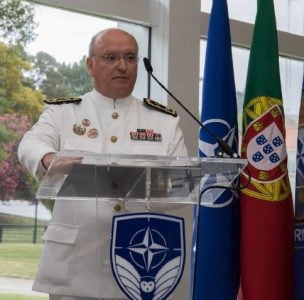
On 20 September 2022, the Joint Analysis and Lessons Learned Centre (JALLC) celebrated its 20th Anniversary.
Established in 2002, the JALLC took over the role of the Permanent Maritime Analysis Team based in Northwood, UK. The JALLC was conceived to primarily analyse exercises, however changes to the NATO environment and growing NATO involvement in operations resulted in the JALLC’s activities shifting to analysis of operations and major NATO Response Force exercises.
Today, the JALLC is NATO’s lead agent for Lessons Learned. Its mission is to support Alliance-wide implementation and sustainment of NATO’s Lessons Learned policy through monitoring and supervising the NATO Lessons Learned process within the NATO Command Structure and other NATO bodies.
The JALLC’s activities include: JALLC Analysis, which includes Joint Analysis, Short Term Analysis and NATO Lessons Learned Portal (NLLP) Content Analysis, management of the NATO Lessons Learned Portal, NATO Lessons Learned Capability Assessment and Training, and Lessons Learned Support to Operations and Exercises. You can read more about JALLC activities here.
In recent months, the JALLC began its work on analysing the initial observations from NATO’s response to the situation in and around Ukraine. The work on this project will continue in 2022 with further analysis, which will be presented in a JALLC report to be produced later this year.
In March 2022, the JALLC published a report on the NATO Standing Naval Forces (SNF). This report was intended to better understand the identified shortfalls in force generation SNF as well as capture insights from the Nations as to what a future SNF should look like.
The Resolute Support Mission (RSM) was launched in 2015 with the intention of reaffirming NATO’s crucial role in training, advising, and assisting the Afghan National Defence and Security Forces (ANDSF). At the request of SHAPE, the JALLC was tasked to produce an evidence-based report identifying the key strategic and operational lessons from NATO’s experience in training, advising, and assisting the Afghan security forces and institutions. The purpose of the report, which was published in March 2022, was to support the NATO strategic and operational level military HQs to learn from NATO’s recent military experience in Afghanistan. The Project Team identified 12 lessons on topics such as Strategic Communications and the effect of the COVID-19 pandemic on RSM efforts and activities. The associated recommendations, together with the lessons identified will go on to support, not only future missions, but NATO’s ongoing transformation.
Over the last 20 years, the JALLC has had a total of nine directors and commanders from five different Nations. The current JALLC Commander, Commodore Fernando Artilheiro (Portuguese Navy), was appointed in June this year. To read more about the Commander, click here.
The JALLC is manned by a peacetime establishment of 50 staff, hailing from 16 different Nations and is made up of both military and civilian staff members ensuring the JALLC’s work represents the different perspectives, experience, and backgrounds in NATO.
Upcoming Strategic Engagements

by Strategic Issues & Engagement Branch, Strategic Plans & Policy
Allied Command Transformation continues a campaign of strategic engagements in support of NATO’s priorities and warfare development. Over the next three months, the focus will be on resilience as we co-organise a Layered Resilience Seminar with the NATO Information and Communication Agency in Romania, and award winners of the resilience related Innovation Challenge – Data Management in the Context of Reconstruction Efforts. The winners will be announced in October at the most significant industry engagement this year – NATO Edge. This event will be the first major touch point of NATO with industry post the Madrid summit, organised by NCIA. It will feature discussions on digital transformation, public-private partnerships enhancing innovation, and bringing agility in defence acquisitions. ACT will use this event to actively showcase how we drive military transformation of the Alliance and further build relationships with relevant industry leaders.
During the fall, we are excited to host visits by Assistant Secretary General for Political Affairs and Security Policy, Ambassador Bettina Cadenbach, and Assistant Secretary General for Public Diplomacy Ambassador Baiba Braže. Moreover, Assistant Secretary General for Defence Plans and Policy, Mr. Angus Lapsley, as well as Assistant Secretary General for Operations, Mr. Thomus Goffus will also visit HQ SACT during the annual Defence Counsellors’ visit to the United States of America. Additionally, Secretary General Special Representative for Women, Peace and Security, Mrs. Irene Fellin will be visiting the Command during the Gender Advisers’ Conference on October 24th.
On 6-8 December, we will again welcome national and NATO military leaders for our annual Alliance Warfare Development Conference. This year’s theme is “Better Today, Stronger Tomorrow”, and we intend to inform warfare development leaders about the global security and strategic trends emerging from the War in Ukraine, explore ongoing work on achieving Cognitive Superiority, and exchange views on persistent interoperability challenges. We also intend to provide an opportunity for a practical and immersive experience fusing ACT’s strategic thinking with emerging technology.


NATO Allied Command Transformation
7857 Blandy Road, Suite 100
Norfolk, VA 23551-2490
Supreme Allied Commander Transformation’s quarterly newsletter aims to inform stakeholders on Command contributions to NATO and the Nations.
June 2022
Statement by
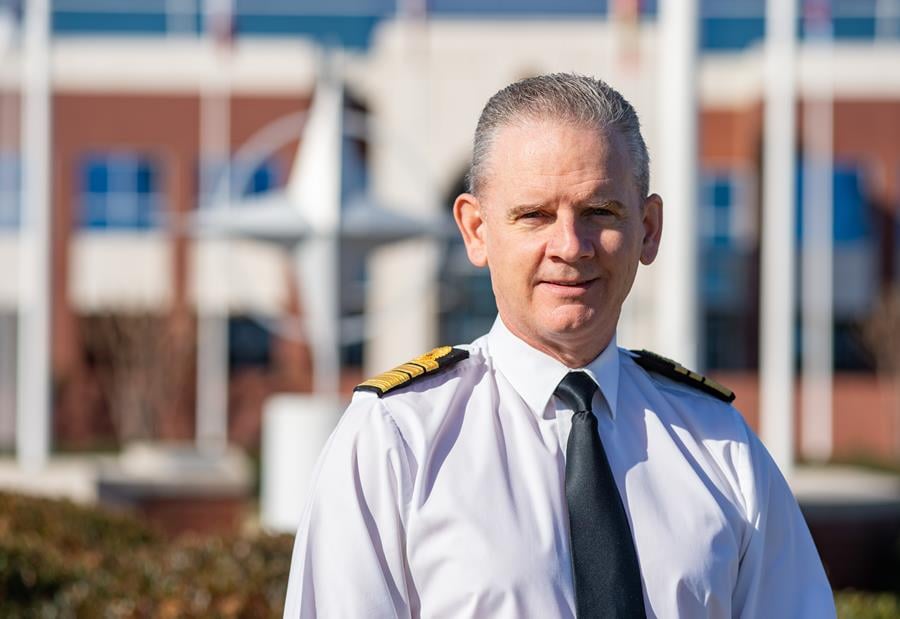
NATO Allied Command Transformation Chief of Staff, Vice Admiral Guy Robinson
Dear Readers,
Our Alliance has had a busy and transformative week. Madrid Summit decisions keep NATO strong, innovative and ready in a more dangerous world. We are equipped with a new Strategic Concept. Militarily, we are adapting warfare development, harmonizing multi-domain operations and shaping the digital transformation of our Alliance. Last, and certainly not least, we welcome the Madrid Summit’s news surrounding the accession of Finland and Sweden. How do our newest Allies contribute to common funded budgets, connect to and operate on NATO systems and position personnel in NATO? ACT, with support from ACO, leads military aspects of the accession and integration of Finland and Sweden into the military realm of the Alliance through advice, education, training support and the practical delivery and fitting of NATO equipment. This means, as an example, that ACT helps furnish the nations with the right equipment and training to be interoperable with NATO systems and to assist the deterrence and defence of the Euro-Atlantic area. In the coming months, a series of meetings, training activities and conferences will take place to ensure the military integration of Finland and Sweden into our Alliance is seamless.
We’ve structured this, our second “Let’s ACT” newsletter, to inform you how our Command is set-up to immediately begin delivering on Summit decisions. In about 5 minutes of reading time you’ll come away with a good understanding of how our Command helps NATO navigate the most serious security situation faced in decades and plan for the future. There are four articles in this Let’s ACT which I’m pleased to bring to your attention and which I think you will find valuable to your understanding of ACT work.
First, ACT and PASP Division will host NATO’s first major conference following the Summit – the Partnerships 360 Symposium on July 11th to 13th. This symposium features in-depth discussions on the implications of the New Strategic Concept on partners, capacity building, innovation, interoperability, resilience, human security and the rules-based international order between NATO and our partner nations from around the world. This builds on the Madrid Summit’s partnership with the European Union and support to Georgia, Asia-Pacific nations and other partners. I expect the symposium to serve as an important milestone as NATO looks to work even more closely with like-minded nations and organisations.
Second, in the context of the new Strategic Concept and how Allies operate together, ACT just completed CWIX 22 that convened more than 1,500 technicians, scientists, operators, and engineers from 35 nations and organizations who performed more than 12,000 interoperability experiments. CWIX is three weeks of focused experimentation and accelerated transformation – with an intent to deliver warfighters the tools they need to do their jobs.
Third, our Command is working on a concept of how we process information and how that shapes our decision-making. In effect, we are looking at how to defend against the cognitive actions of our adversaries. We call this Cognitive Warfare and our Nations have asked that we develop this work through the NATO Warfighting Capstone Concept. I offer an introduction of that concept to you in our third article.
Finally, in September, MARCOM and ACT will lead EXERCISE DYNAMIC MESSENGER. This is a new operational experimentation exercise, designed to allow NATO’s operational community to work together with industry and academia. This will be achieved by exercising military personnel in the tactical use of unmanned systems, their operational interoperability and promote their utility at the strategic level. In line with digital transformation, this is a window into how technologies may be integrated and employed by NATO in future maritime and multi-domain operations.
Thank you for your consideration of this newsletter. Our teams look forward to engaging with you on these topics in-person over the coming weeks. I also encourage you to reach out to me with your questions on ACT’s Warfare Development Agenda.
All the best from NATO’s Home in North America; Norfolk, Virginia.
VAdm Guy Robinson
ACT Chief of Staff
#WeAreNATO

NATO’s family of Centres of Excellence has grown! On June 23rd, the NATO-accredited Maritime Geospatial, Meteorological and Oceanographic Centre of Excellence was formally introduced at a virtual ceremony at HQ SACT. General Lavigne signed a Functional Memorandum of Understanding with Portugal, Romania, Spain and Türkiye to formally introduce the Centre as the 28th NATO Centre of Excellence.
P360 Symposium
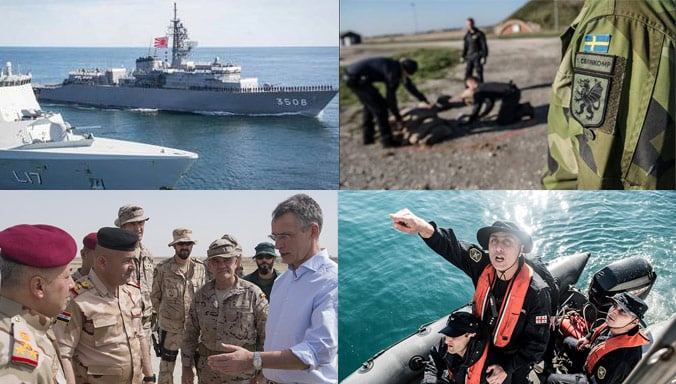
P360 is a collaborative venture bringing together civilian and military representatives from Allies and NATO Partner Nations to build the future evolution of NATO’s military partnerships policy.
The event, co-organized by Allied Command Transformation and the International Staff Political Affairs and Security Policy Division, will engage the partnership network and community in Geneva, Switzerland from 11 to 13 July 2022.
This year’s symposium will feature five in-depth breakout sessions, each addressing a fundamental aspect of NATO’s partnership endeavours: Capacity Building, Innovation, Interoperability, Human Security, and the Rules-Based International Order. It will also addressed issues of the implications of the new Strategic Concept and Resilience and Partnership in a plenary format.
For three decades, NATO has used its Defence Institution and Capacity Building infrastructure to foster peace and security by making partners more capable, more secure and better prepared to respond to crisis at home and abroad. By focusing on defence reform, defence capabilities development, strengthening resilience, and promoting integrity and good governance in the defence and security sector, Defence Institution and Capacity Building has made a concrete contribution to enhancing international and Allied security and to sustain conflict prevention and management.
As global security and technological environment, and NATO’s own strategies, continue to evolve, addressing the role and the future of NATO’s Defence Institution and Capacity Building is a clear necessity. P360 will examine the possible adaptation of Defence Institution and Capacity Building in the context of the transformed strategic environment and address the impact of the NATO Madrid Summit decisions on NATO’s Defence Institution and Capacity Building.
The breakout session on Innovation will inform attendees on NATO’s current innovation activities and explore how NATO will develop them in the coming years. In an environment characterized by complexity, instability and unpredictability, Allied Command Transformation sees innovation as crucial to ensuring that the Alliance adequately adapts its Military Instrument of Power to keep both a competitive advantage and operational relevance. Within Allied Command Transformation, Innovation is the implementation of new and/or different ideas, methods or solutions that achieve value for the Alliance. The Defence Innovation Accelerator for the North Atlantic, in short DIANA, will leverage existing innovation structures, assets and capabilities within NATO and Allies, in order to accelerate interoperable, dual-use emerging and disruptive technological solutions to answer critical Alliance defence and security challenges. The breakout session will also describe how technological start-ups will be fostered by DIANA.
Partners will also address Interoperability in a dedicated breakout session. Interoperability in NATO is described as “the ability to act together coherently, effectively and efficiently to achieve Allied objectives.” It is essential to NATO’s effectiveness in peace, crisis and in conflict. Military cooperation with partners in NATO-led operations benefits both the Alliance in terms of increased military resources, and the partners in terms of enhancing interoperability with NATO. Interoperability among nations enables forces, units and/or systems to operate together, communicate with each other, utilize common procedures, infrastructure and bases, all based on shared common doctrine. Interoperability also reduces duplication of effort, enables pooling of resources and produces synergies among Allies and Partners.
With the end of the missions in Afghanistan, the opportunity for NATO and partner nations to work together at the headquarters level and in the operational theatres has shrunk. In addition, the Russian aggression against Ukraine has fundamentally changed the Euro-Atlantic Security landscape; the Alliance must adapt quickly, and ad hoc interoperability workarounds such as liaison teams or adapted communications systems tend to cost additional money and time, reducing the effectiveness of capabilities. Interoperable capabilities have to sit at the very beginning of the capability development process and capacity building of NATO’s partners.
The Rules-Based International Order breakout session will generate new and concrete ideas – as well as refine some already existing ones – articulating an efficient way forward for NATO and its partners to shield the rules-based international order from conscious efforts to destabilise it. Similarly, the breakout session on the Human Security – Leading by Example will address how NATO and Partners can address policies on Human Security, Women Peace and Security and Climate change maximizing synergies in a mutually beneficial relationship.
The plenary session on Resilience and Partnerships will address how NATO can take forward its ambition for a more strategic, integrated and coordinated approach to strengthening national and collective resilience. It will include how to project forward resilience, the key requirements to have resilient military forces, the impact of climate and energy security on NATO’s resilience, and the role of societies and citizens in building national resilience. Through the Strengthened Resilience Commitment agreed at the 2021 Brussels’ Summit, Allied Heads of State and Government called for more engagement with societies and populations, the private and non-governmental sectors, as well as for closer cooperation with partners and international organisations engaged in resilience and civil preparedness efforts, especially with the European Union.
The ongoing Russian aggression against Ukraine exemplifies the negative impact that the resurgence of geopolitical competition has on the rules-based international order. In the new Strategic Concept, NATO Allies have stated their commitment to uphold and shape this order, including by working closely with other countries and organizations. As authoritarian powers become more assertive and try to shift the global balance of power in their favour and undermine our values and interests, the rules-based international order is only likely to come under growing strain in the coming years. A test for which NATO and its partners must be ready. The plenary session on the new Strategic Concept will provide an in-depth discussion on its implications for NATO’s partnerships.
The current challenge to the rules-based international order has already affected the functioning of key institutions. It has questioned the central principles that regulate the international society, and shocked the fundamental areas of the rules-based international order of great importance to the Alliance and its partners, such as international humanitarian law or the maritime domain. Furthermore, not only are current rules undermined but the risk also extends to the new ones, given systematic attempts to influence the development of new rules and standards inside key international fora. This is particularly clear when it comes to Space and Cyber domains.
CWIX
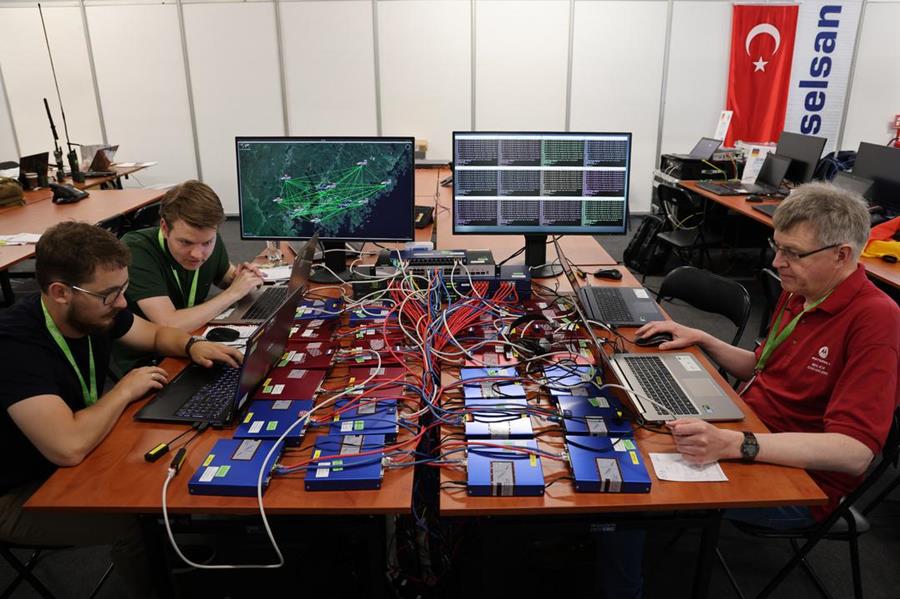
NATO Accelerates its Digital Transformation by Harnessing Data as a Strategic Asset.
The ability to share relevant data reliably and in near real-time amongst Allies and Partners across all five military domains – Air, Land, Maritime, Cyberspace and Space – determines superiority on the battlefield. As such, data generation and data sharing was the focus of the Coalition Warrior Interoperability Exercise (CWIX), NATO’s biggest interoperability event.
The annual event held at the NATO Joint Force Training Centre in Bydgoszcz, Poland, from June 8th until June 22nd, addresses current and future gaps of the most pressing interoperability challenges for Command & Control (C2) capabilities that are critical for tomorrow’s security challenges.
“Interoperabilityensures that NATO’s military power is always greater than the sum of the Allies’ military capabilities,” said General Lavigne, NATO Supreme Allied Commander Transformation in his opening address at the CWIX VIP Day.
Allied Command Transformation Chief of Staff, Vice Admiral Guy Robinson, highlighted the value of CWIX as a key enabler of NATO’s digital transformation. “To stay ahead of our adversaries we must continually adapt,” said Vice Admiral Robinson. “At CWIX, allies and partners break down interoperability barriers to ensure the effective exploitation of increasingly large quantities of data. CWIX enables higher readiness, resilience, and resource efficiency.”
With 18 Focus Areas ranging from Air to Logistics, from Space to Federated Mission Networking, CWIX convened more than 1,500 technicians, scientists, operators, and engineers from 35 allied nations and organizations who performed more than 12,000 interoperability testing events and ultimately resolved critical interoperability challenges.
Three weeks of focused experimentation enabled accelerated transformation, so the Alliance can equip the warfighter with what is needed to succeed.
CWIX has been and always will be about digital transformation. The 340 command and control capabilities and IT services being tested at CWIX touch all five NATO military domains of operation. As the most recently recognized domain, Space played a featured role at CWIX 2022. Data from national and commercial Space assets need to be integrated into all other domains to provide a solid baseline for accurate military decision making. Federated Mission Networking (FMN) is continuously developed to support the data exchange among NATO allies and partners.
CWIX is a forward-looking event that enables the acceleration of innovation and features emerging and disruptive technologies. One among many examples is KRADOS. With the help of the NATO ACT Innovation Hub (IHub) and U.S. Air Force Kessel Run, the “Kessel Run All Domain Operational Suite” has been adapted in record time to work with NATO capabilities. KRADOS is a set of integrated applications for non-real time air battle planning in an Air Operations Centre. These applications work together, share information, and can be developed independently from each other. With its modular microservice architecture, it is agile, flexible and easier to develop. The ACT Innovation Hub adapted KRADOS to work with the NATO standardized format. At CWIX it was proven that the ACT version of KRADOS can send and receive data to current NATO enterprise and national systems. Thus, proving that it can be integrated in the full scope of NATO AIRC2 systems.
With capabilities such as the Extended Reality simulation, CWIX creates added value for operators. This “Military Metaverse” immerses the commander into a virtual battlefield. The capability promises to improve swift and accurate decision making as large data streams can be visualised to bring the complexity of the anticipated operation across to a Commander in a remote location.
Data lakes are being tested that are used to make data discoverable, retrievable, and understandable in a coalition environment. The blockchain technology is tested across services and domains to secure data. In addition, communication via 5G and IP-based technology is tested to enable data-rich military applications due to its bandwidth, latency, and flexibility. Those are just some of many of the highlights at this year’s CWIX.
Through exercises like CWIX, NATO Allied Command Transformation advances digital transformation as the Alliance’s future success relies on the power of data and the interconnectivity of its forces.
COGNITIVE WARFARE

To assure its advantage, enhance freedom of action and actively ensure unfettered decision-making, NATO is progressing its Cognitive Warfare concept.
What do we mean by Cognitive Warfare? Our adversaries have experience in this domain already; they use Cognitive Warfare to affect the behaviours and beliefs of individuals, groups and populations in order to fracture the unity of western societies. Our competitors are using Cognitive Warfare to lead people, knowingly and unknowingly, to exacerbate divisions in our societies. These actions have implications for the Alliance. Exploiting information technology, adversaries seek to create confusion, create false representations, and manifest uncertainty through a deluge of targeted information, misinformation and disinformation activities.
Cognitive Warfare has the potential to destabilize societies, military organizations, and fracture alliances. Sensitivity to cognitive warfare raises many questions and concerns for NATO. We need to be able to guard against such attacks and detect networked automations that distort and manipulate the information sphere.One may argue that manipulation and psychological warfare have existed since the dawn of humanity. However, what has changed is the scale, speed and stealthiness that cognitive technologies now allow.
NATO therefore intends to develop a Cognitive Warfare concept as a holistic approach to counter these attempts by our adversaries who seek to undermine our information space.
But what do we mean by cognitive warfare as a capability? This is the generation of cognitive effects based on actions in the five military domains and the information environment. Cognitive Warfare leverages hyper-connectivity, the pervasiveness of data, psychological warfare and cognitive sciences to affect not only what people think but also how they think and act.
To develop this capability, ACT is developing the Cognitive Warfare Concept. This concept proposes how NATO can effectively increase the cognitive resilience of NATO’s Military Instrument of Power by enhancing and protecting decision-making superiority and ensuring Allied freedom of action. Cognitive warfare directly exploits advances in digital technology, applied both at individual and networked levels, to defend against the manipulation of psychological, social and information environment.
That’s why the conceptualization of Cognitive Warfare is currently being done in Allied Command Transformation. Now more than ever, we need to understand what we are fighting against and how to defend ourselves. We need the contribution of all relevant NATO, national or private entities to help us grasping the outreach of such a complex issue.
ACT’s cognitive warfare efforts enable freedom of action for NATO decision-makers, improves NATO’s ability to deliver military effects for shaping, contesting and fighting in the cognitive dimension, and helps equip nations to safeguard core democratic values. Join us in the discussion by reaching out to our team leads:
CDR Paul Groestad: [email protected]
Ms Clara Peters: [email protected]
EXERCISE DYNAMIC MESSENGER 22
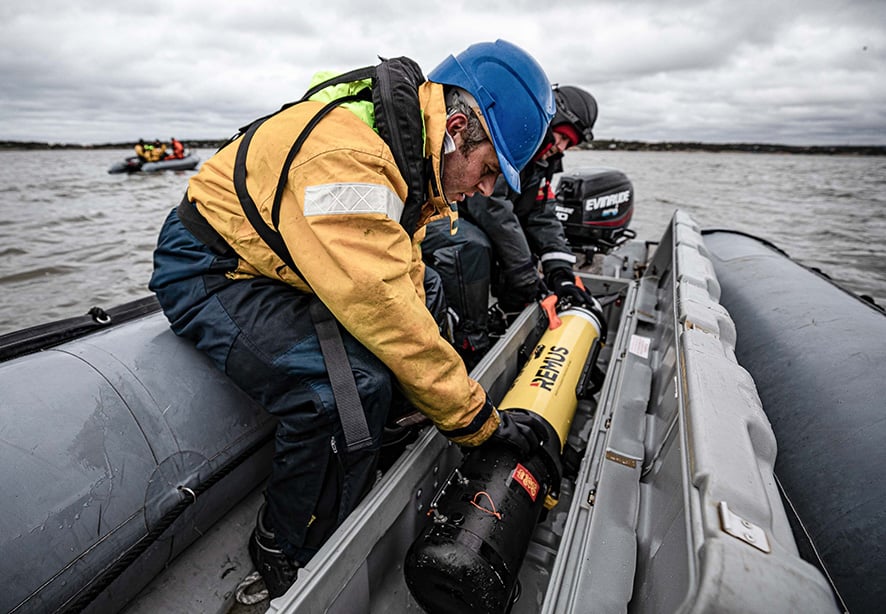
How we integrate technology in the implementation of NATO’s three core tasks is a question for today and the future.
Unmanned vehicles on the water, underwater, or in the air, is reality.
In the waters near Lisbon, Portugal NATO Allies will come together for exercise Dynamic Messenger 2022, the first full NATO exercise specifically focused on integrating unmanned systems into NATO Task Groups at sea. Dynamic Messenger, running from 26 to 30 September, follows directly after the Portuguese led exercise Robotic Experimentation and Prototyping with Maritime Unmanned Systems (REPMUS), which runs from 19 to 23 September. REPMUS will focus on capability development and interoperability, with many assets staying for NATO’s Dynamic Messenger, which has a focus on integrating maritime unmanned systems into multinational operations.
Over the last 18 months staff from various branches across Allied Command Transformation (ACT), in conjunction with Allied Maritime Command (MARCOM) and the Centre of Maritime Research and Experimentation (CMRE), have been working to deliver the first edition of Dynamic Messenger. Approximately twenty nations will contribute to the exercise, which will include over one hundred maritime assets.
Legacy and future unmanned air systems, surface vessels and unmanned underwater vehicles, will support the operational experimentation through various scenarios to test how they might be employed and integrated into a NATO Task Group, such as SNMG1. Scenarios will include such events as mine detection, harbour protection and amphibious landings. All scenarios will take place near the Portuguese Navy experimentation test site and sea ranges at Troia and Sesimbrathe, Portugal.
Both REPMUS and Dynamic Messenger will allow work to be done with both industry and academia. The use of legacy and future unmanned maritime vehicles allows for integration in an operational setting where various national platforms work to seamlessly employ them in a NATO-led environment under real world conditions. Dynamic Messenger is the first exercise of its kind for NATO, and a new form of training in the NATO training calendar.
Space Domain Video
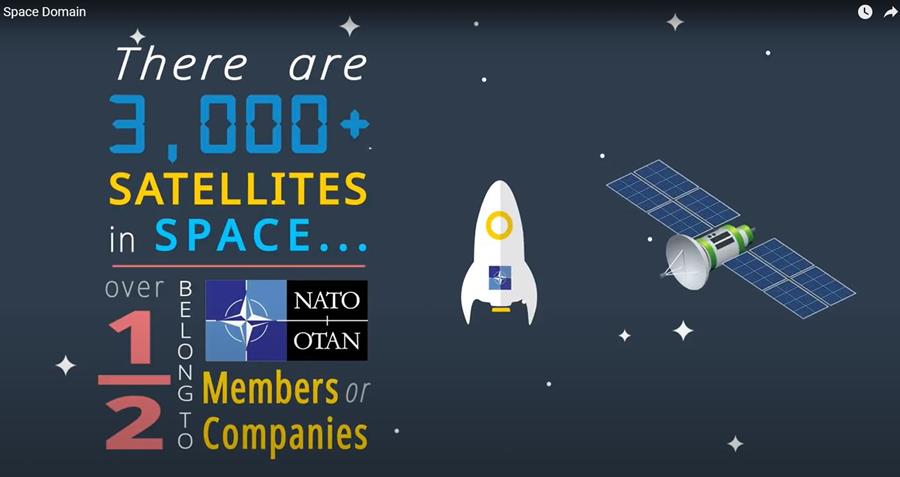
Please visit this link to watch the latest Space Video: https://www.youtube.com/watch?v=_FnRXBYMM4g


April 2022
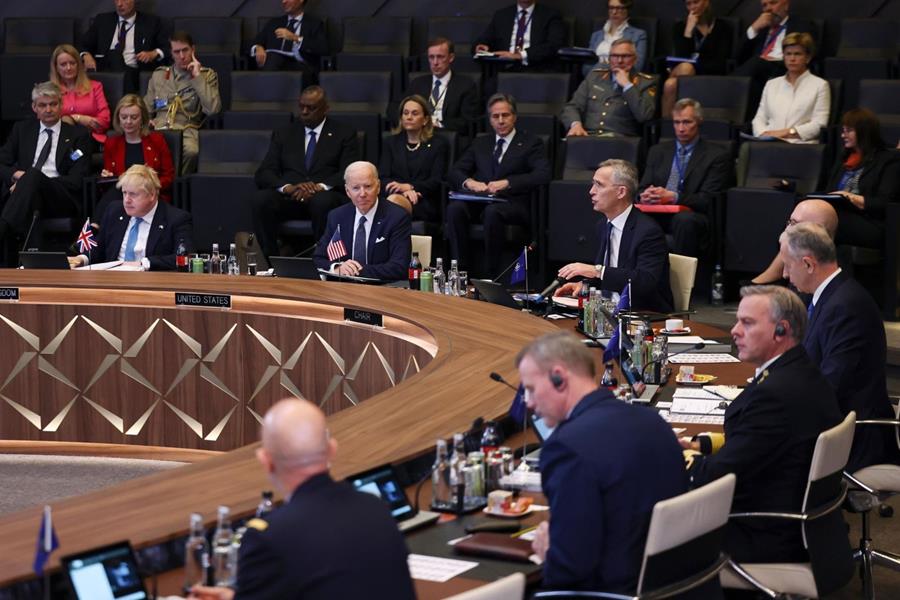
Statement by Supreme
Allied Commander Transformation,
General Philippe Lavigne
Dear Reader,
I’m pleased to connect with you through a new product at Allied Command Transformation – our newsletter “Let’s ACT”. The intent of this quarterly newsletter is to inform our stakeholders of how the Command contributes to NATO and national aspirations. I see a real need to demonstrate the ways in which Allied Command Transformation’s forward thinking has benefitted Allied responses to real-world problems. Let’s ACT for you in order to get the right Military Instrument of Power available at the right time.
Since the beginning of 2022, NATO’s visibility and cohesion have increased tremendously. Last month, our leaders expressed their commitment to accelerate NATO’s transformation to face a more dangerous strategic reality, including through the adoption of the next Strategic Concept in Madrid. In light of the gravest threat to Euro-Atlantic security in decades, we will also significantly strengthen our longer-term deterrence and defence posture and will further develop the full range of forces and capabilities necessary to maintain credible deterrence and defence.
In 2021, the NATO Warfighting Capstone concept (NWCC), a high-level Military concept from Allied Command Transformation, was endorsed at the highest NATO political-level. It sets a Pro-active and ambitious direction to keep the edge and to anticipate future challenges. Alongside Supreme Allied commander Europe’s concept for the Deterrence and Defence of the Euro-Atlantic area, this concept builds on the changing character of warfare to maintain and develop our military advantage now and in the future. Now is the time to implement through the so called “warfare development agenda”. There is an even greater sense of urgency to accelerate our transformation.
Thank you for taking time to add these concise updates to your reading lists. As always, I look forward to your feedback and advancing our political-military dialogue. “Win as a team”.
#WeAreNATO
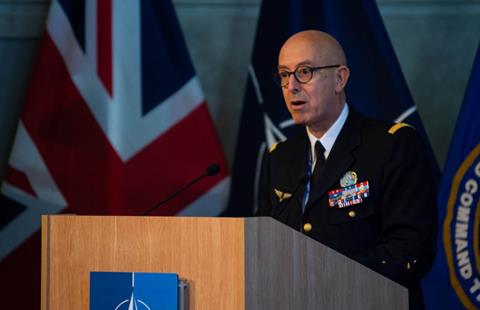
Multi-Domains Operations Conference – What We Are Learning
As part of the development of an Alliance initial concept for Multi-Domains Operations, NATO’s Allied Command Transformation has recently organized two events – the virtual Military Committee visit to the Headquarters on 22 February 2022, and the NATO Multi-Domain Operations Conference on 16-18 March 2022 – to explore thinking and drive the template for the future art of war.
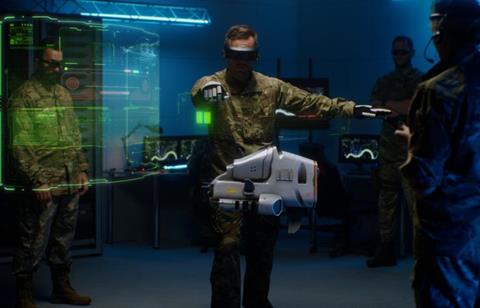
The Alliance’s Warfare Development Agenda: Achieving a 20-year Transformation
NATO faces persistent competition from multiple actors across multiple domains. Russia’s aggression against Ukraine underscores this fact. The Alliance’s Warfare Development Agenda is a planning tool to implement the NATO Warfighting Capstone Concept.

ACT Innovation Hub delivers a New Resilience Data Analytics Tool
Confirming the value of Agile development process to respond to operational pain points, the Allied Command Transformation’s Innovation Hub delivered an operationally relevant new Data Analytics tool to indicate levels of Resilience for specific areas of interest.
 2022 Model NATO Challenge Prepares Future Leaders
NATO Deputy Secretary General Mircea Geoana provided opening remarks at the annual event. “You are the future leaders of your communities, your countries and of our society. We depend on you to understand and practice the precious values that unite us, ” said Geoana.
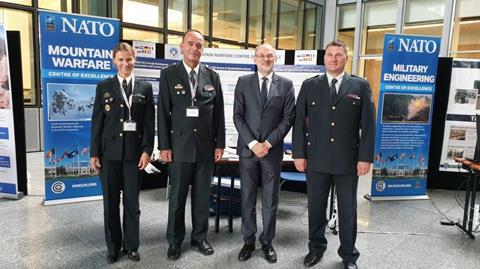 NATO HQ to Host the 2022 Centres of Excellence Marketplace
The 2022 edition of the NATO-Accredited Centres of Excellence Marketplace will take place at NATO Headquarters in Brussels, 10-11 May 2022.
 Upcoming Strategic Engagements
Allied Command Transformation continues a campaign of strategic engagements in support of NATO’s priorities and warfare development.