Across NATO, enlisted leaders and non-commissioned officers form the backbone of the Alliance’s military effectiveness, turning strategic direction into disciplined action on the ground. Their role has evolved well beyond execution: today’s NCOs are decision-makers, advisors, and integrators of increasingly complex capabilities, operating at the intersection of people, technology, and mission delivery. They provide continuity within multinational formations, uphold standards across diverse forces, and ensure that intent is understood, applied, and delivered in real time. Within this context, the Command Senior Enlisted Leader (CSEL) at NATO Allied Command Transformation plays a pivotal role, linking the voice of the enlisted force to the highest levels of command, while shaping the professional development, interoperability, and readiness of NCOs across the Alliance.
Future enlisted and NCOs will be expected to make rapid decisions at all levels in complex, high-tempo environments, translating incomplete information into timely action that keeps teams effective and safe. They will lead not only soldiers, but also integrate, employ, and manage advanced technology and autonomous systems as part of everyday operations. At the same time, they must remain flexible and innovative in problem solving—adapting quickly to changing conditions—while operating strictly within the Commander’s intent and maintaining discipline, standards, and accountability.
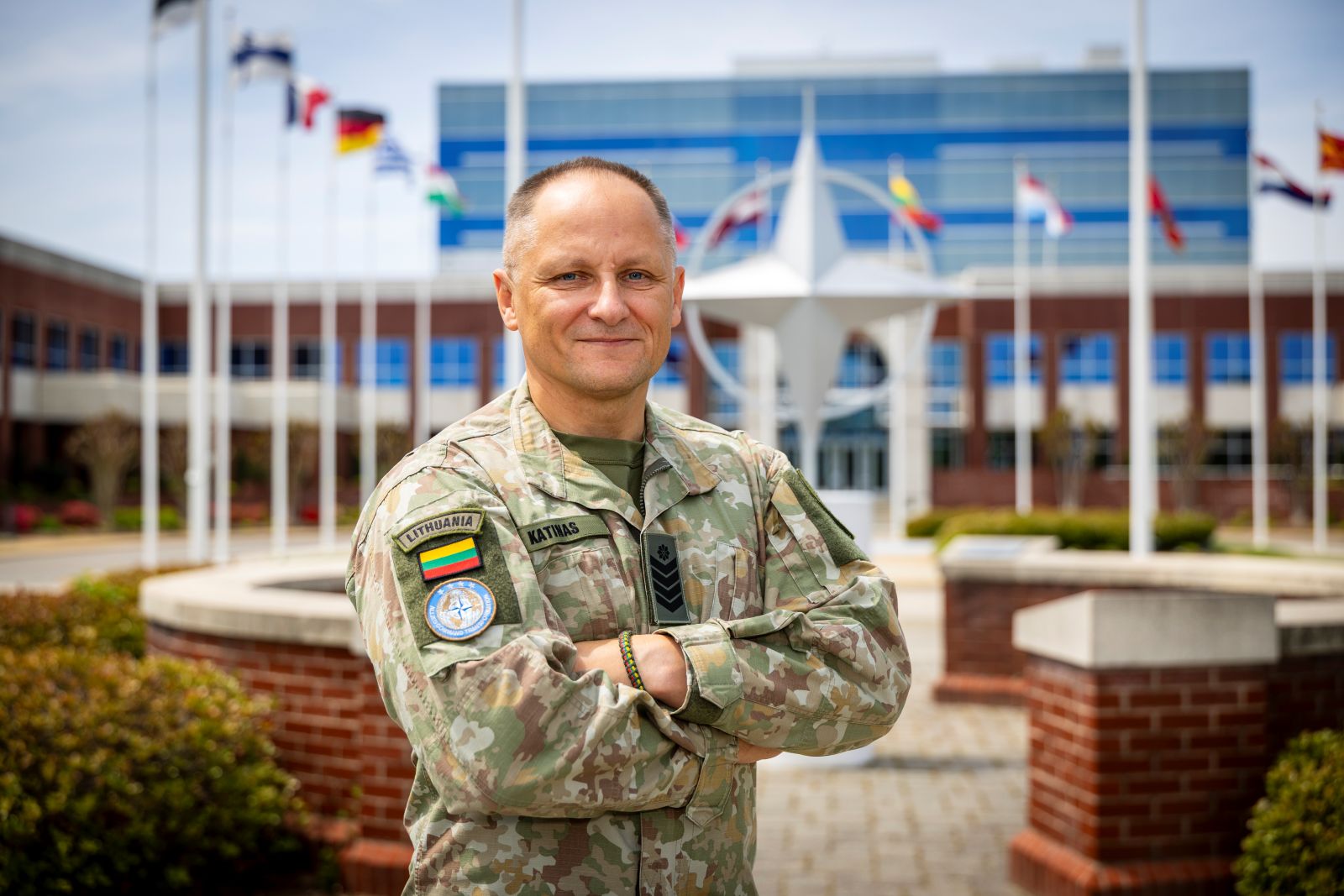
– Sergeant Major Remigijus Katinas,
ACT Command Senior Enlisted Leader
The ACT Command Senior Enlisted Leader (CSEL) drives the professional and relevant development of all Other Ranks. Serving at the senior-most enlisted level, the CSEL provides strategic advice to the ACT Command Group—Supreme Allied Commander Transformation (SACT), Deputy SACT (DSACT), and Chief of Staff (COS). In this capacity, the CSEL supports the Command Group by providing oversight of Headquarters effectiveness and efficiency.
Governance, oversight, and professional development
The ACT CSEL Office serves as the Office of Primary Responsibility (OPR) for oversight of the NATO School Oberammergau NCO Department, including ensuring curriculum development and working group alignment, in accordance with SACT and NATO directions.
The ACT CSEL also chairs the NATO CSEL Working Group / NATO NCO Professional Development Council (NNPDC), which leverages lessons identified to recommend improvements to NATO NCO professional development.
Responsibilities and scope of engagement
The ACT CSEL Office executes a broad range of tasks across Headquarters SACT, ACT’s subordinate commands, and the wider NATO enterprise, including Allied Command Operations (ACO), the NATO Command Structure (NCS), the NATO Force Structure (NFS), Allied Nations, and Partner Nations.
Internally, the primary effort is to support SACT by engaging and facilitating:
- Enlisted and NCO professional development;
- Ceremonial duties;
- Compliance with policies, adherence to standards, and performance expectations.
Key activities include providing subject-matter expertise for SACT-led ceremonies and supporting the selection of students for NCO professional development courses.
The ACT CSEL Office convenes the Headquarters SACT Senior Enlisted Advisors (SEA) monthly through the Senior Enlisted Advisor Council (SEAC). The SEAC fosters Senior Enlisted development, strengthens internal communication, highlights senior-enlisted-led initiatives, and synchronizes efforts to improve Headquarters efficiency.
Externally, the ACT CSEL collaborates closely with the ACO CSEL and a core network of international senior enlisted leaders across the NCS, NFS, and Partner Nations. Engagements include:
- Co-hosting the annual International CSEL Conference (ICC);
- Conducting visits to Allied Nations to review NCO systems and their alignment with NATO standards and directives;
- Delivering keynote addresses at NCO courses, conferences, and symposia;
- Pushing doctrine and policy changes, and direction down to the Enlisted and NCO.
Governance, oversight, and professional development
The ACT CSEL Office serves as the Office of Primary Responsibility (OPR) for oversight of the NATO School Oberammergau NCO Department, including ensuring curriculum development and working group alignment, in accordance with SACT and NATO directions.
The ACT CSEL also chairs the NATO CSEL Working Group / NATO NCO Professional Development Council (NNPDC), which leverages lessons identified to recommend improvements to NATO NCO professional development.
During 2025 and early 2026, the ACT CSEL Office finalised on and supported multiple tasks high level taskings, engagements and projects:
- The Analysis and review of multiple Ukraine lessons learned reports from an NCO perspective;
- Review of NATO Discipline 17 (Education, Training, Evaluation and Exercise—ETEE) as applied to NCO leadership courses, in close coordination with the MDFD Directorate;
- Review of the three existing NATO NCO Bi-Strategic Command strategy and NCO guidelines;
- Establishment of the NATO NCO Professional Development Council (NNPDC) and execution of the first annual meeting (December 2025);
- Delivery of an NCO professional development seminar for Headquarters SACT NCOs, supported by NATO School Oberammergau (October 2025);
- Keynote engagements at NATO School Oberammergau; the International NCO Academy (Switzerland); the NATO MP Centre of Excellence CSEL Forum (Romania); the Baltic Defence College (Estonia); and Joint Special Operations University (JSOU);
- Reporting with recommendations on NCO Corps Development from visits to Belgium, Bulgaria, Italy, Norway, Poland, Portugal, Romania, Spain, and Sweden;
- Reporting on the Lessons Learned from the War in Ukraine by regularly engaging with the Ukrainian Armed Forces CSEL and visiting Ukraine;
- Co-hosting the 21st annual International CSEL Conference (ICC) and preparations to serve as main host for the 22nd annual ICC (June 2026).