NATO’s training enterprise is adapting to a security environment that changes quickly and rarely follows a script. That is the logic behind Audacious Training, the Bi-Strategic Command effort led by Allied Command Transformation (ACT) and Allied Command Operations (ACO) to make Collective Training and Exercises more realistic, more adaptive, and more useful to Alliance readiness.
Central to this effort is a shift in how exercises are used: not only to assess performance, but to actively drive warfare development across the Alliance. By deliberately using exercises to test ideas, expose gaps, and generate insight, NATO is strengthening training as a mechanism for both readiness and continuous adaptation.
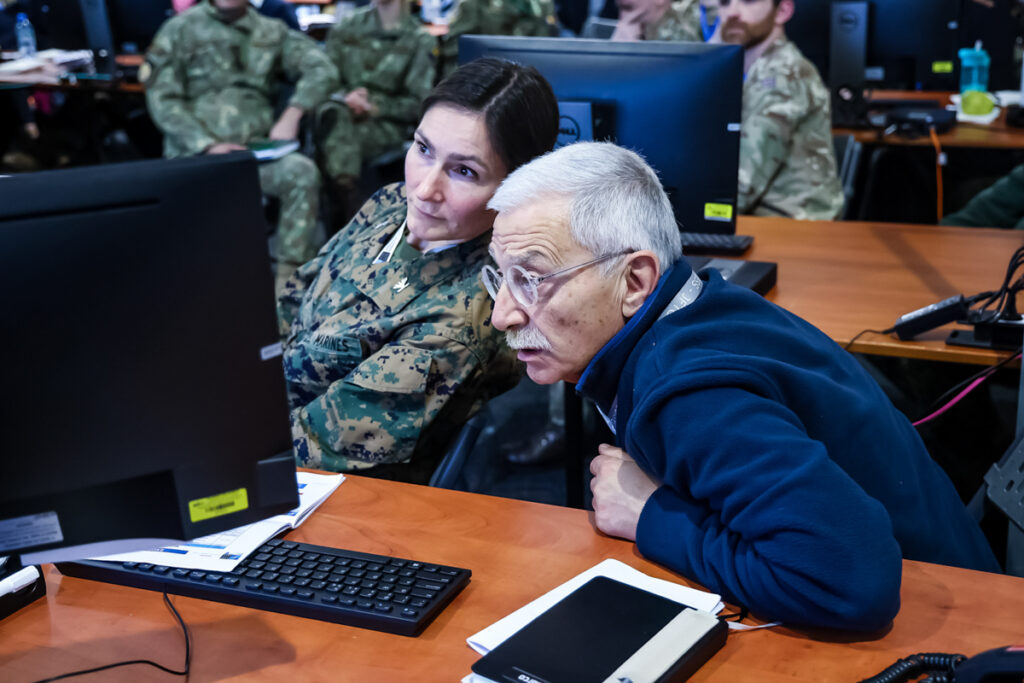
To deliver this approach, “Warfare Development in Exercise” (WDiE) provides a structured mechanism. Its purpose is not simply to observe training or add another layer of process. Instead, it ensures that insights generated through exercises are systematically captured, analysed, and translated into actionable outcomes for NATO’s broader warfare development.
From validation to adaptation
The core idea is straightforward. Exercises should not only confirm whether headquarters can perform to standard. They should also create the conditions for NATO to learn under pressure. Traditional exercises remain essential for assessing readiness, but modern training cannot stop there.
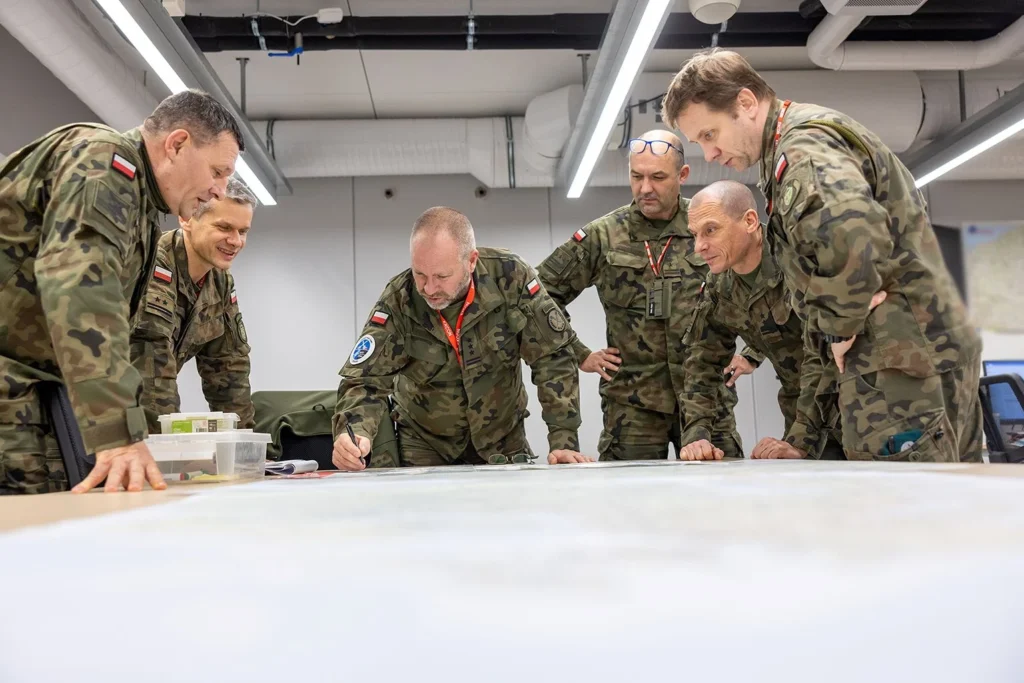
Headquarters must be exposed to friction, uncertainty, and the kinds of operational challenges they are likely to face in reality. Audacious Training is built around that idea, shifting away from overly predictable activity and toward environments that demand adaptation.
Warfare Development in Exercise supports that shift by making exercises a venue not only for validation, but also for learning and development. It helps connect what NATO is training for today with what the Alliance must be ready for tomorrow.
Making realism more useful
One of the clearest lessons from recent work is that realism must be built deliberately. That includes stronger opposing-force activity, dynamic scripting, and training conditions that force decision-making under pressure. The aim is to move away from rehearsed sequences and toward scenarios that challenge assumptions and reveal vulnerabilities early.
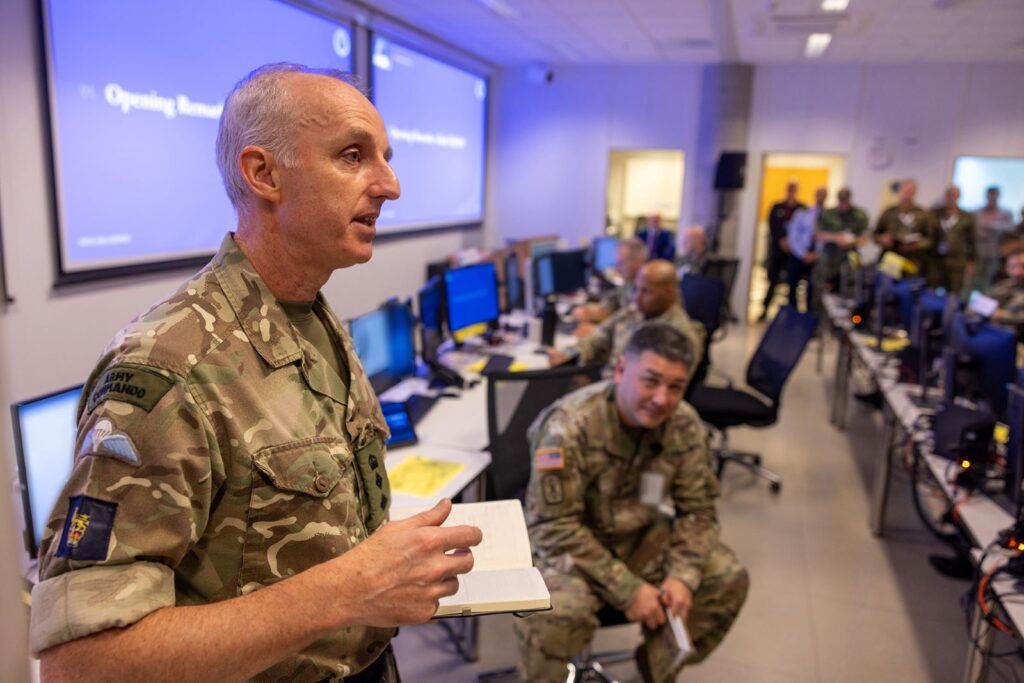
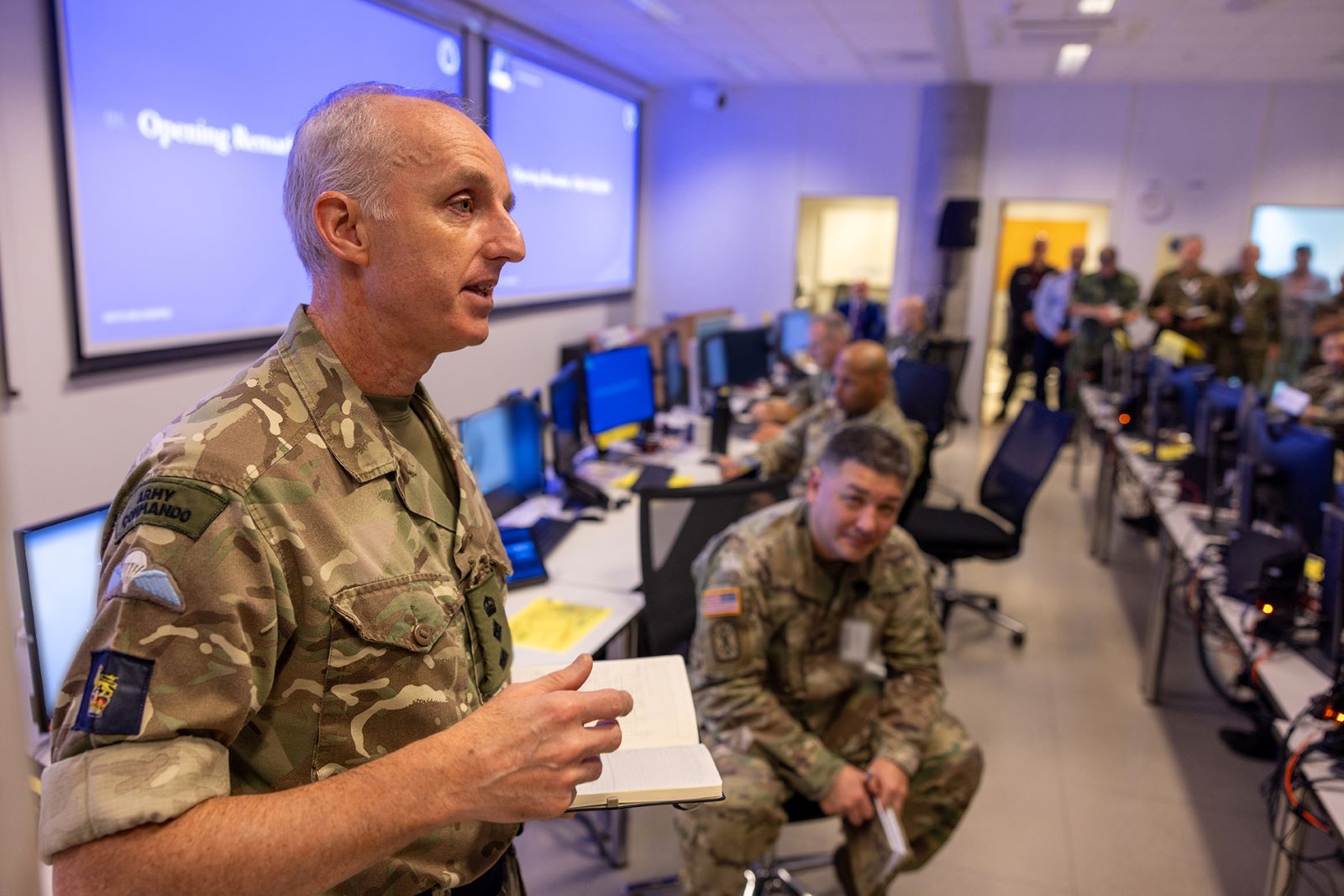
This approach was reflected in STEADFAST DUEL 2025, where warfare development efforts looked not only at specific exercise features such as 24/7 operations and free play, but more broadly at how exercises can better support adaptation across the Alliance. In this model, an exercise becomes more than a training event. It becomes a place where NATO can observe, test, and improve how it prepares for future challenges.
The same work also pointed to a broader opportunity. Dynamic opposing-force activity, better “red teaming”, and the growing involvement of Ukrainian expertise through the NATO-Ukraine Joint Analysis Training and Education Centre (JATEC) can make NATO exercises more operationally relevant by injecting current adversary behaviour, pressure, and realism into the scenario.
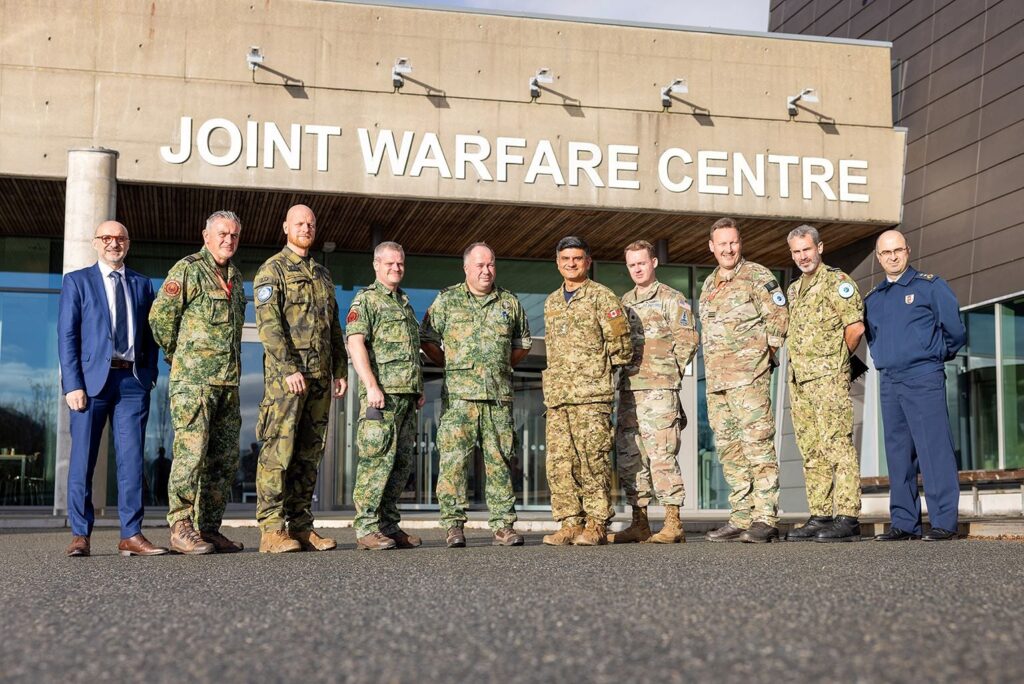
Warfare Development in Exercise should help integrate exactly these kinds of inputs while also drawing on expertise from the wider ACT enterprise, the Centres of Excellence, the Joint Warfare Centre, the Joint Force Training Centre, the Joint Analysis and Lessons Learned Centre, and JATEC.
Linking readiness and transformation
That is where Warfare Development in Exercise adds value. It helps balance two essential needs. For ACO, exercises must continue to support readiness, performance, and credible deterrence. For ACT, they must also support warfare development by helping operationalize concepts, identify gaps, and connect exercise outcomes to broader transformation efforts.
Allied Command Transformation and Allied Command Operations are working together to shape a clearer framework that aligns warfare development with Audacious Training and the wider exercise campaign. The goal is a practical model that allows subject matter experts to contribute at the right stages of planning and execution, without distracting from training objectives.
What comes next
The next step is to make this approach more consistent across selected exercises. Warfare Development Exploitation Teams are expected to support several major NATO exercises in 2026, helping observe priority themes and contribute to a longer-term programme of work.
This work is intended to operate as part of a broader, campaign-based approach, ensuring that insights from individual exercises are not isolated, but contribute to a coherent and cumulative warfare development effort across the Alliance.
The clear, broader, objective is to create a training system that not only evaluates readiness but actively improves it. That means capturing insights faster, connecting lessons to real change, and ensuring exercises serve as a bridge between present-day readiness and future warfighting requirements.
Warfare Development within Audacious Training is fundamental to ensuring NATO’s readiness remains credible, relevant, and responsive to a changing security environment. NATO’s advantage depends not only on capability, but on how quickly the Alliance can learn, adapt, and improve together. By embedding warfare development systematically into exercises, NATO is strengthening its ability not only to assess performance, but to drive continuous improvement and maintain its operational edge.