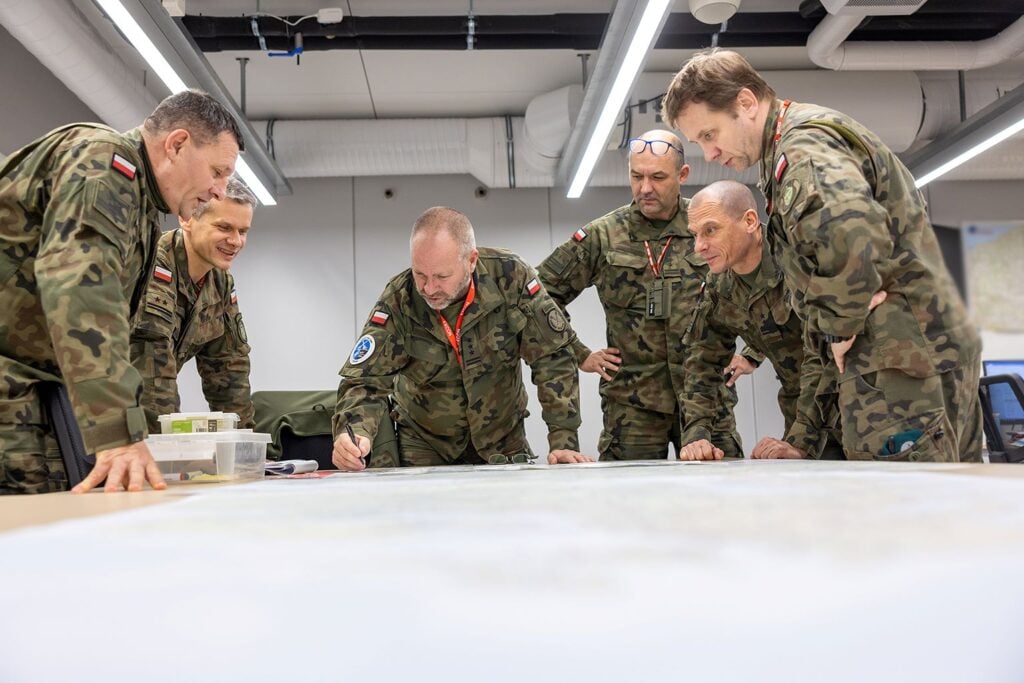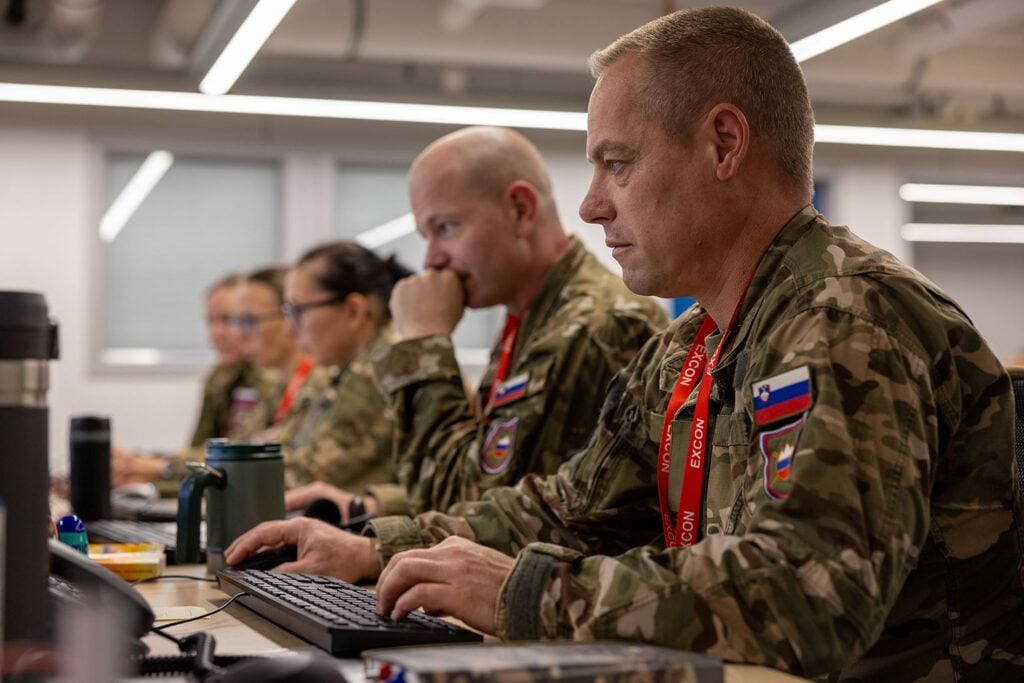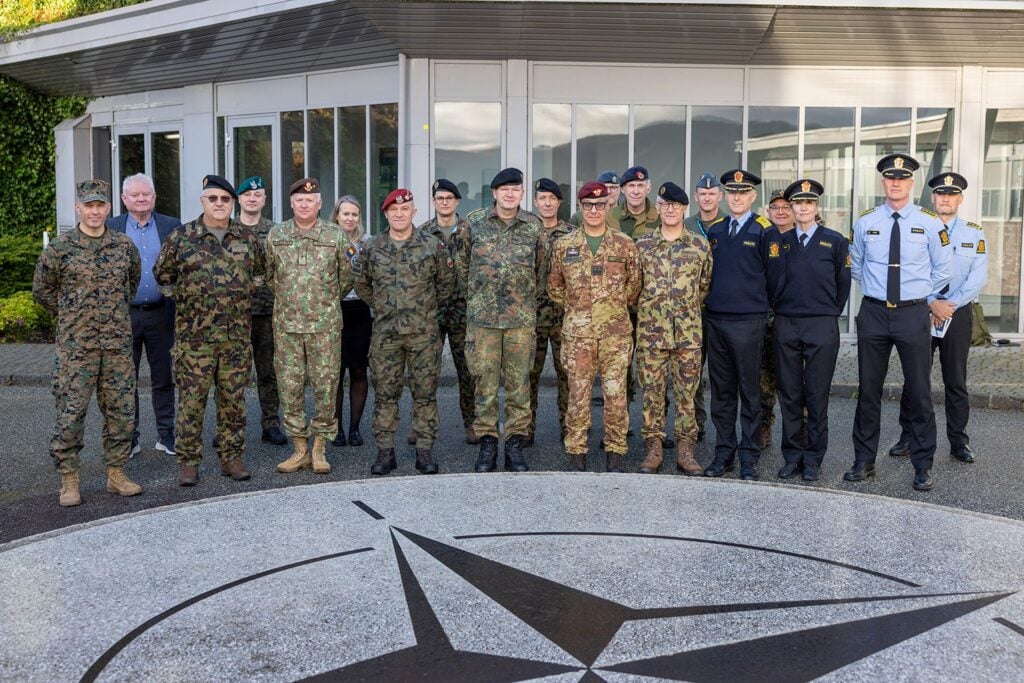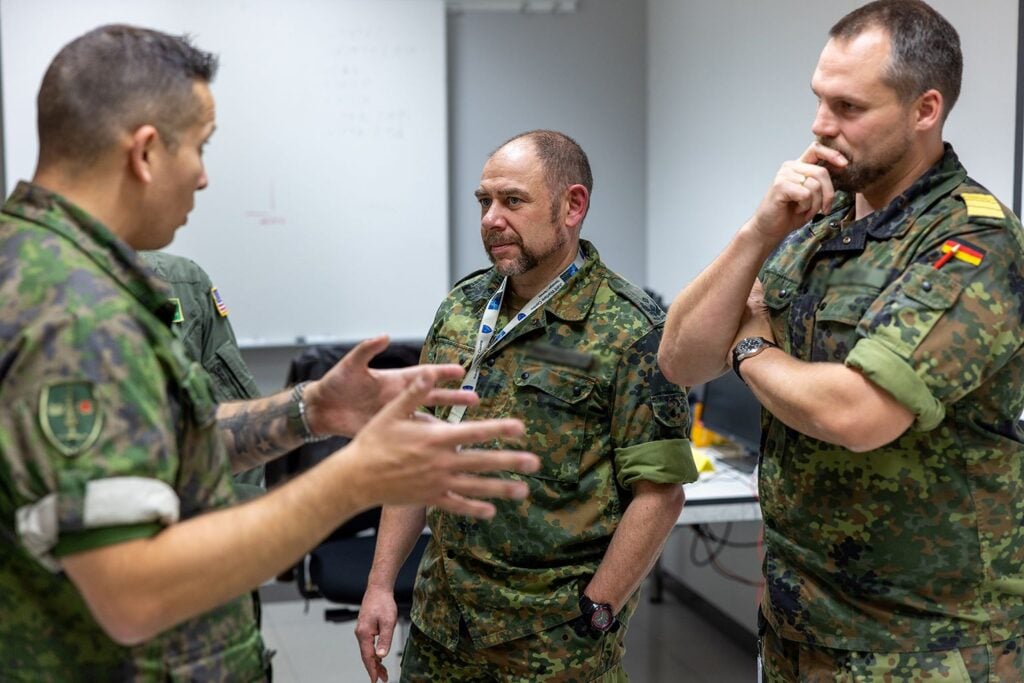

Exercise STEADFAST DUEL 2025 brought NATO’s vision of integrated deterrence and defence to life, uniting all 32 Allies in a realistic test of command, coordination, and transformation. The exercise represented far more than a test of readiness, it was tangible proof of how transformation, experimentation, and digital innovation now converge across the Alliance.
As NATO’s largest computer-assisted command-post exercise of the year, STEADFAST DUEL 2025 was the first Article 5 exercise involving all 32 Allied Nations, including NATO’s newest members, Sweden and Finland. This inclusion underscored a fundamental principle of transformation: that credible defence begins with full Allied integration across every domain and region.
The exercise, directed by NATO’s Joint Warfare Centre in Stavanger and scheduled by Supreme Headquarters Allied Powers Europe, exercised the full suite of NATO’s Deterrence and Defence of the Euro-Atlantic Area family of plans. In doing so, it tested how strategic guidance translates into coordinated regional defence across land, air, maritime, cyber, and space. From Allied Command Transformation’s perspective, this was a practical demonstration of NATO’s ability to synchronize complex planning architectures under real-world conditions.
At the operational level, STEADFAST DUEL 2025 tested NATO’s strategic and operational command system and integration of national forces, uniting sixteen training audiences from both the NATO Command and Force Structure. Joint Force Commands Brunssum, Naples, and Norfolk trained concurrently for the first time under a continuous twenty-four-hour battle rhythm, an evolution reflecting ACT’s commitment to support the enhancement of realism and multi-domain integration in NATO’s collective training architecture.
The success of this complex undertaking reflected the deep cooperation across NATO’s training enterprise. As Major General Ruprecht von Butler, Commander of the Joint Warfare Centre, explained: “Exercise STEADFAST DUEL 2025 significantly contributed to NATO’s warfare development and strengthened the Alliance’s readiness as well as its deterrence and defence of the Euro-Atlantic area. It was our most complex and realistic exercise to date. Within Allied Command Transformation, the JWC is evolving how we think, how we train, and how we deliver value to the NATO warfighter.”
Throughout the exercise, Allied Command Transformation conducted targeted experimentation activities spanning doctrine, organization, training, material, leadership, personnel, facilities, and interoperability. Among these was the operation of a digital command-and-control system enhanced by large language models and artificial intelligence, accelerating NATO’s progress toward a digitally enabled, multi-domain-operational Alliance. These experiments allowed ACT to evaluate how emerging technologies can enhance decision-making speed, situational awareness, and cross-domain coordination.
To support this effort, Allied Command Transformation deployed a team of observers under the Warfare Development in Exercises (WDiE) framework to advance the implementation of Multi-Domain Operations. The WDiE is an initiative that better links warfare development with current operational processes during exercises. To further enhance the realism of NATO training, ACT also included observers from the NATO-Ukraine Joint Analysis, Training and Education Centre. As NATO’s first joint civil-military organization with Ukraine, JATEC plays a transformative role in strengthening collective security and fostering interoperability. Its participation in STEADFAST DUEL 2025 enabled NATO to draw immediate benefit from this unique and growing partnership.
Observers from the Joint Force Training Centre also took part in STEADFAST DUEL 2025 before overseeing their own exercise, LOYAL DOLOS 2025, later this year. Through this reciprocal support during NATO exercises, these training centres within Allied Command Transformation’s network strengthen one another’s efforts and, in doing so, enhance the overall realism and coherence of the Alliance’s collective training and exercise programmes.
For Allied Command Transformation, STEADFAST DUEL 2025 offered a vital opportunity to advance experimentation and validate NATO’s approach to Multi-Domain Operations. Major General Juan Soto Rodriguez, Deputy Chief of Staff for Multi-Domain Force Development at ACT, observed during his visit to the Joint Warfare Centre that “JWC is a forward-thinking command with numerous internal initiatives, including ways to integrate Warfare Development in Exercises, validate Multi-Domain Operations, and pursue increased realism through a more challenging enemy, free play and 24/7 operations. Steadfast Duel 2025 was a very realistic exercise based on operational plans, and with an impressive scope and width with regards to training audiences and the Exercise staff.”
Ultimately, STEADFAST DUEL 2025 delivered tangible readiness for the Alliance. It validated not only NATO’s ability to command and control large-scale Multi-Domain Operations but also its growing capacity to translate strategic transformation into operational advantage. For ACT, the lessons learned process will inform future doctrine, shape training standards, and guide the continued modernization of NATO’s command structure. The exercise reaffirmed that readiness and innovation are inseparable, and that NATO’s collective strength lies in its ability to adapt faster than the challenges it faces.