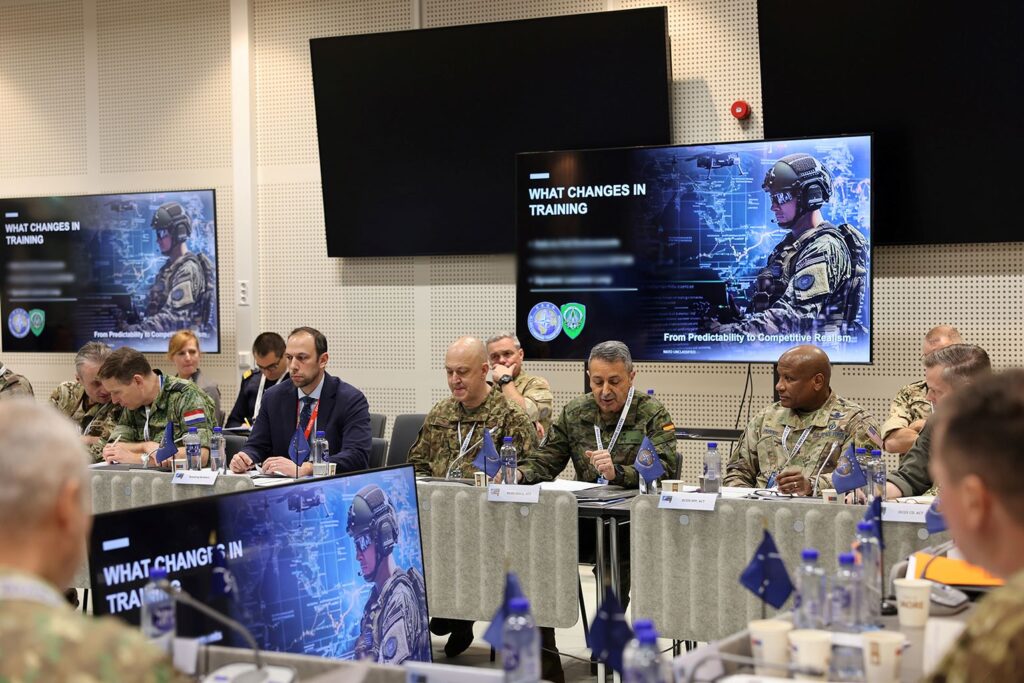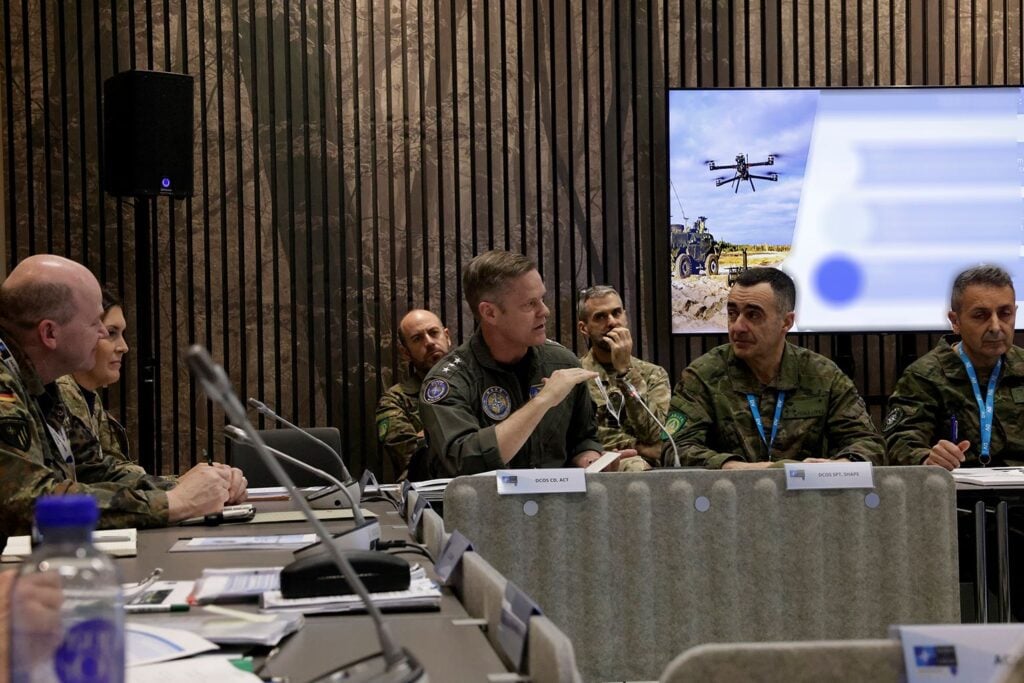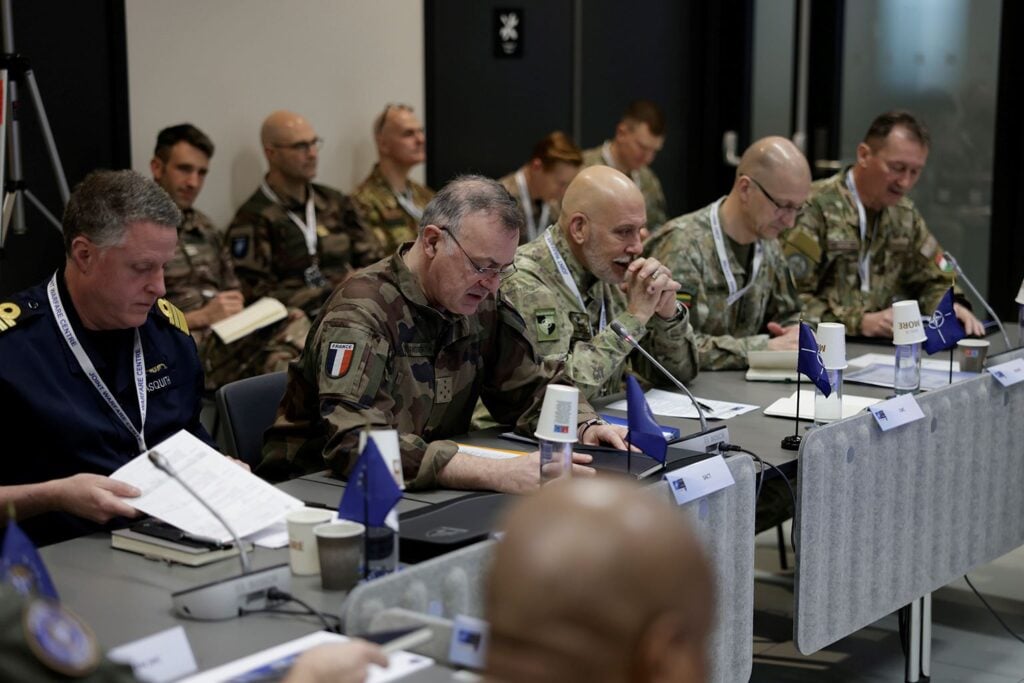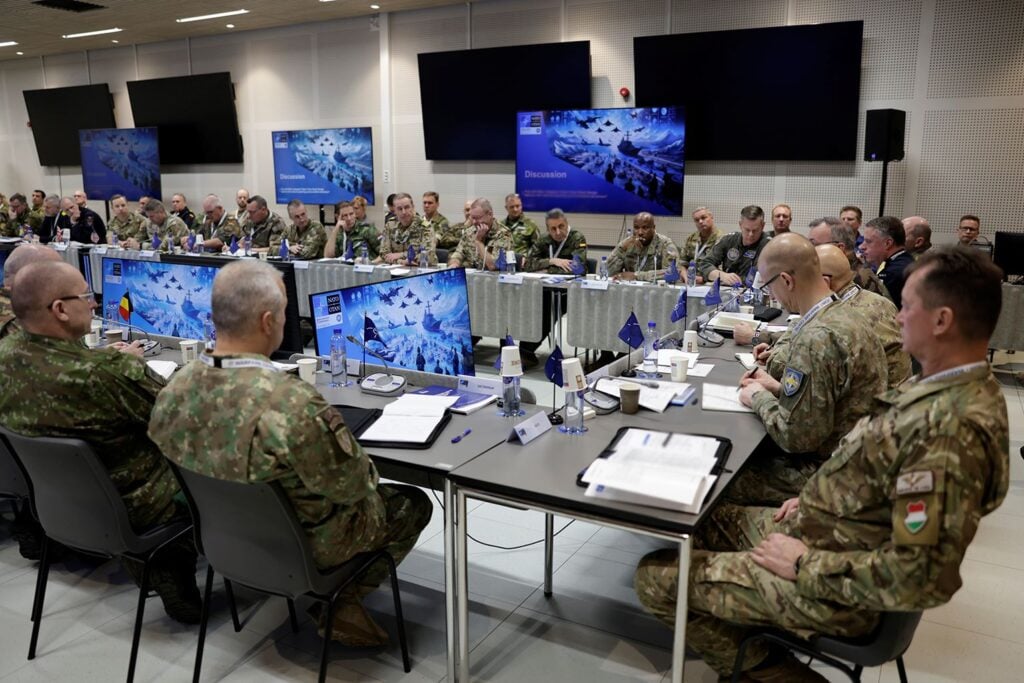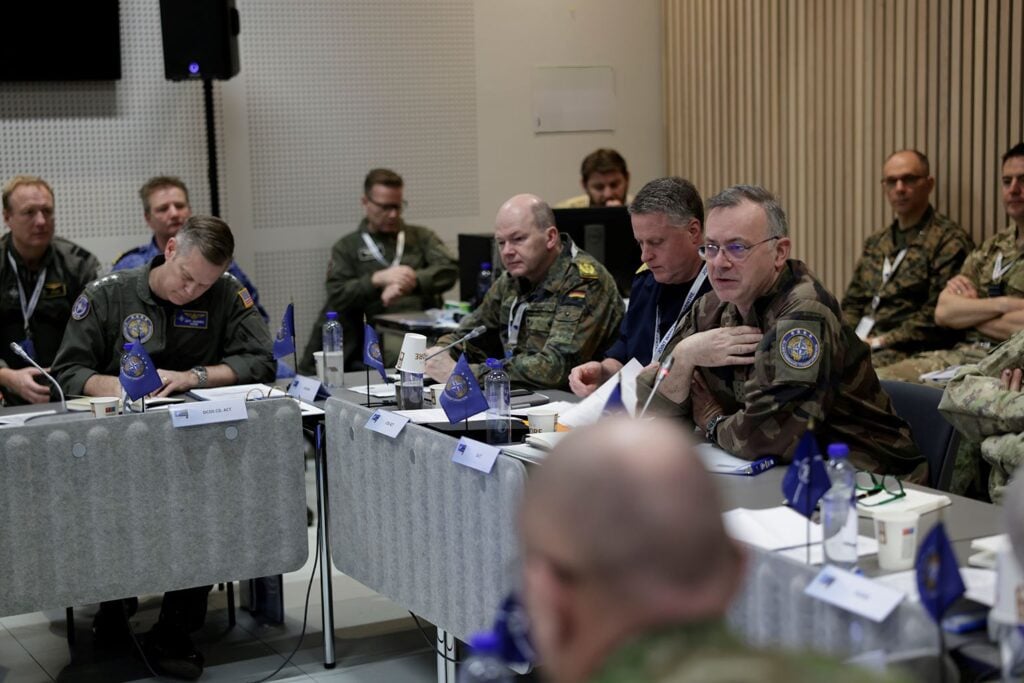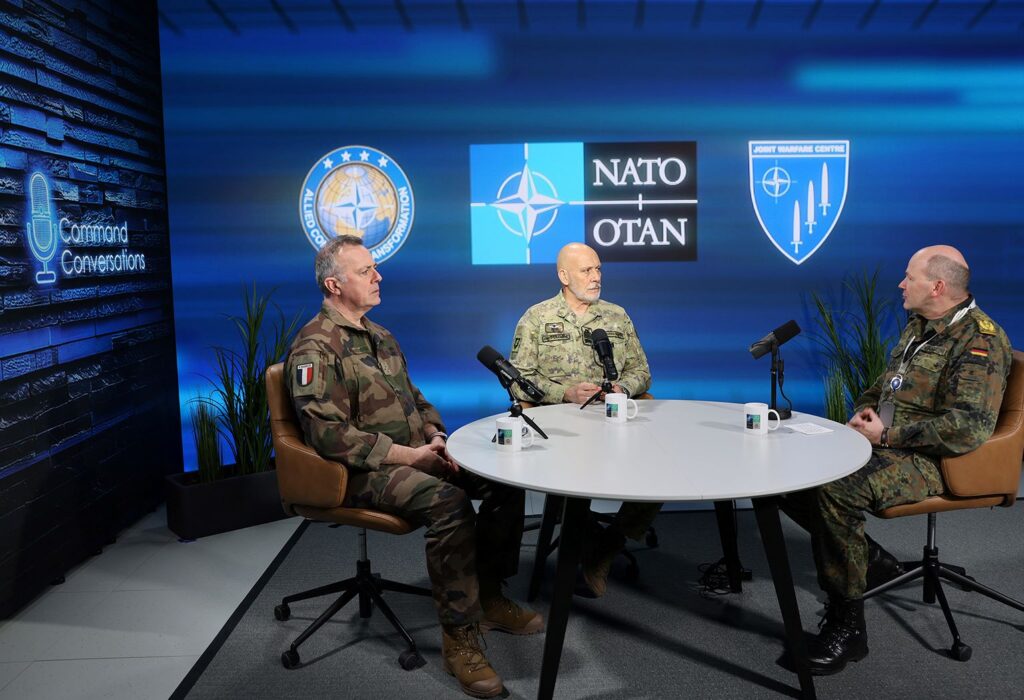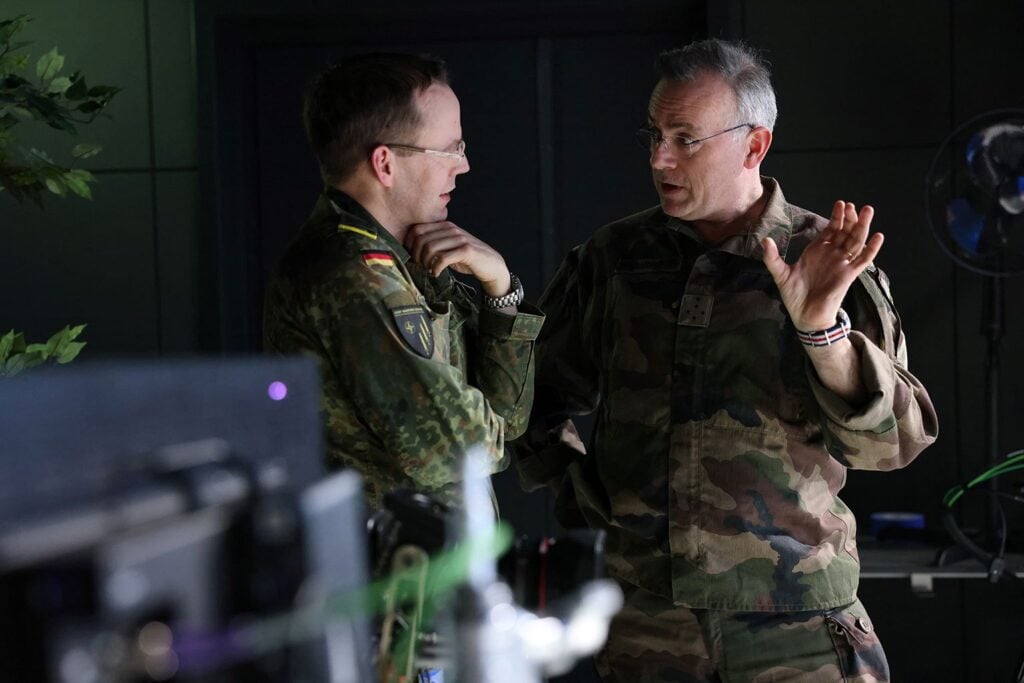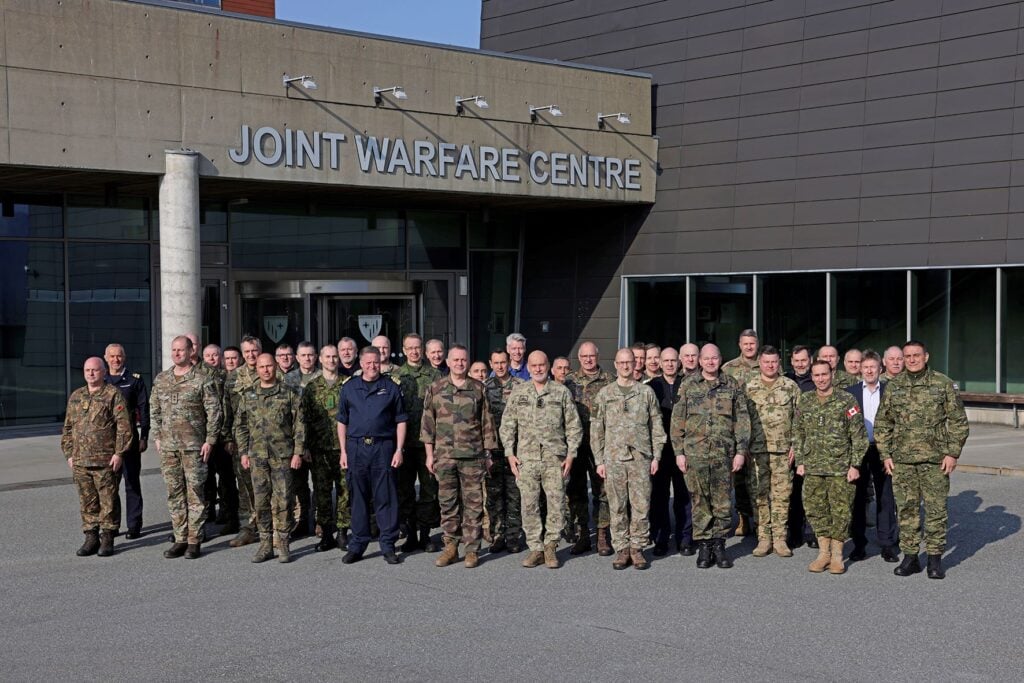
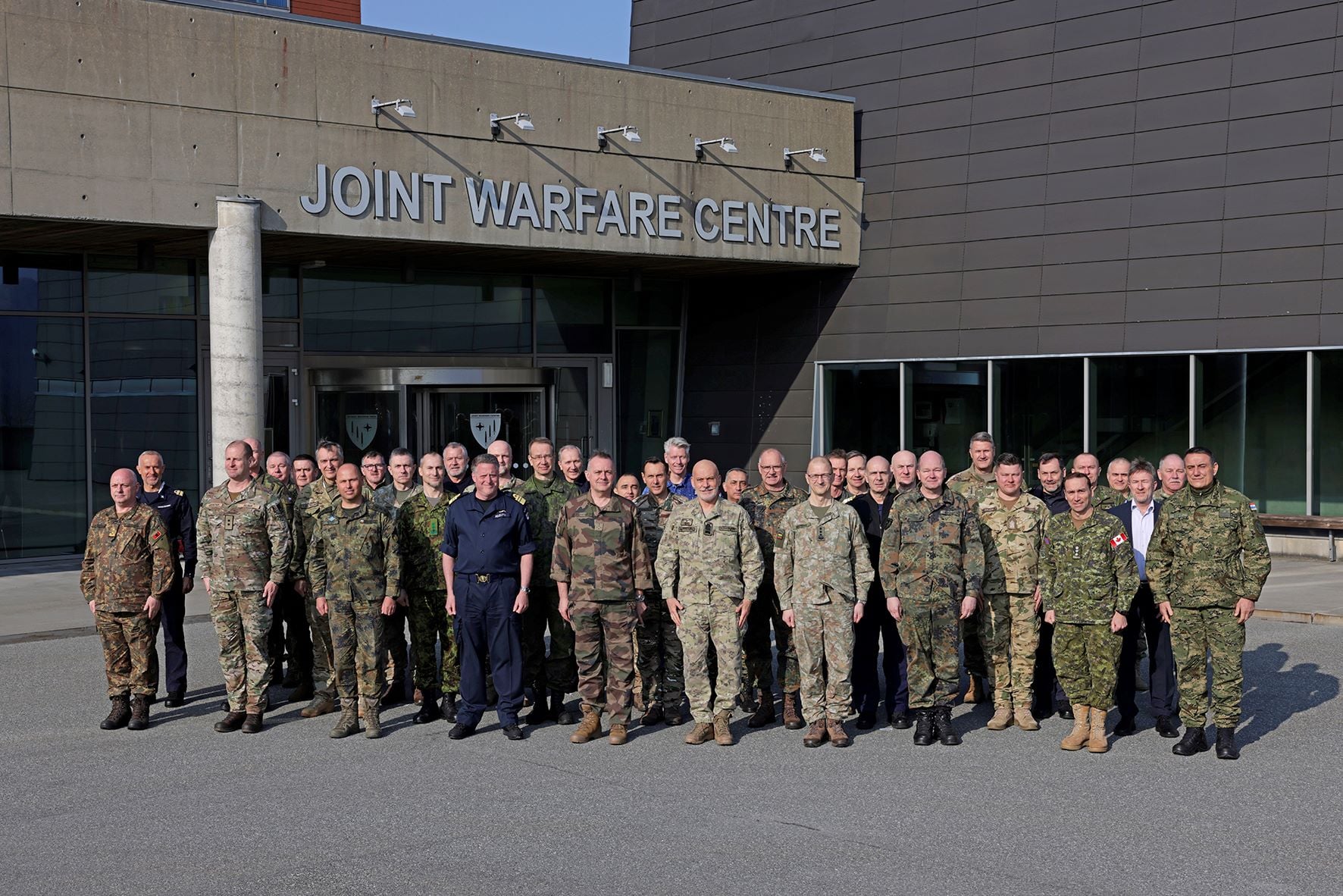
This week, NATO’s Military Committee visited Allied Command Transformation (ACT) during a programme hosted at the Joint Warfare Centre (JWC) in Stavanger, Norway, one of ACT’s subordinate commands.
The visit focused on near-term transformation priorities for the Alliance, with discussions covering capability development and delivery, training modernization, interoperability and rapid adoption, and the military application of artificial intelligence in decision-making.
During the visit, Admiral Giuseppe Cavo Dragone, the Chair of the NATO Military Committee, said: “There is no doubt that JWC here in Stavanger plays a central role in contributing to Alliance’s adaptation and innovation, in the face of modern warfare’s evolving demands.”
He added that, in today’s interconnected and unpredictable world, the ability to train effectively, enhance interoperability among Allied forces, and leverage cutting-edge technologies, like AI, is paramount. “With challenges growing in scope and sophistication, our mission here – to push forward NATO’s technological edge – has never been more crucial.”
As NATO’s Warfare Development Command, ACT helps translate Alliance priorities into practical military adaptation by aligning efforts across NATO and the nations, strengthening interoperability, and accelerating the adoption of new capabilities, technologies and innovative approaches in support of readiness.
During the event, Admiral Pierre Vandier, Supreme Allied Commander Transformation, set the tone for the programme by framing the Military Committee’s visit to ACT as a working session focused on the Alliance’s adaptation priorities, the barriers slowing progress, and the practical steps needed to accelerate delivery.
Emphasizing the central role of training in NATO’s adaptation and readiness, he said: “That brings me to the importance of training. Short of war, training is all we have to make ourselves better. We therefore need to rebuild the training machine – making it harder, more realistic, and more demanding, because training must be the place where we can fail, learn, and adapt before war forces us to.”
Military Committee briefed on priority NATO transformation efforts
During the visit, ACT engaged Military Committee members on current work designed to improve how NATO develops, fields, and integrates capability more rapidly across the Alliance.
Topics discussed included:
- Supporting NATO Defence Planning Process with innovative capability packages: ACT highlighted work supporting Allies in meeting NATO capability targets, through projects such as Force Lethality Enhancement (FLE), Force Lethality Enhancement Extended (FLEX) , and Future Force Study (FFS), with discussion focused on practical progress, implementation barriers, and how nations can use these valuable studies to accelerate meeting NATO’s capability needs.
- Audacious Training and Audacious Learning: ACT outlined efforts to modernize how NATO designs and delivers training, including initiatives harnessing AI aimed at reducing workforce-intensive processes and improving the speed and realism of exercise development.
- Interoperability and Rapid Adoption: ACT provided updates on interoperability-focused delivery efforts and rapid adoption mechanisms, including how proven solutions can be tested and adopted faster for NATO use. Spotlight was put on Beacon Projects, CWIX and DiBaX exercises.
- AI and decision advantage: A dedicated discussion addressed how AI-enabled tools can support military decision-making by improving speed, analysis, and workflow integration in operational contexts, and highlighted risks if adoption is delayed or stalled.
Short of war, training is all we have to make ourselves better. We therefore need to rebuild the training machine – making it harder, more realistic, and more demanding, because training must be the place where we can fail, learn, and adapt before war forces us to.
– Admiral Pierre Vandier
Supreme Allied Commander Transformation
The JWC sessions highlighted operationally grounded transformation and credible deterrence
The Joint Warfare Centre’s (JWC) sessions and demonstrations gave Military Committee members a view of how transformation priorities are tested and developed in practice through NATO training and warfare development at the operational and strategic levels.
The programme included JWC-led discussions and station-based engagements covering the JWC Campaign Plan, the ongoing adaptation to NATO’s evolving collective training and exercise requirements, new warfare development functions, exercise support, and digital transformation of the Centre’s exercise planning and delivery processes.
The JWC’s programme focused on four areas:
- How the JWC manages evolving complexities in delivering NATO’s largest and most complex multi-domain exercises at the operational and strategic levels;
- What new opportunities JWC can offer by digitalizing the exercise environment;
- How the JWC supports warfare development through NATO’s Audacious Training initiative, with a stronger focus on realism, agility, and opposing forces capability;
- How the JWC’s mission support adapts to transformation, including its workforce, infrastructure, and financial management.
In recent years, the JWC has embarked on a major transformation to the exercises it delivers, reflecting shifts in NATO policy and doctrine, the changing nature of conflict and technology, and NATO’s complex operating environment.
The JWC must adapt continuously in order to realistically test NATO’s operational and strategic levels of command, including in a potential Article 5 conflict; challenge NATO’s defence plans; replicate a highly complex multi-domain environment; create scenarios that reflect NATO’s 360-degree geostrategic environment; and deliver in accordance with the ambitions of the Audacious Training Initiative.
The JWC’s current priorities include delivering Allied Command Operations’ (ACO) campaign approach to exercises; innovating with digital technology to deliver a fully integrated and interoperable exercise environment; creating a combined opposing forces and warfare development capability and enabling a deeper use of modelling and simulation.
Major General Ruprecht von Butler, Commander JWC, said, “It was a great experience to host this year’s NATO Military Committee visit to ACT at the Joint Warfare Centre. The Joint Warfare Centre has a clear and realistic vision of what it can provide to exercise the ACO Warfighting System and simultaneously address NATO’s evolving warfare development requirements. Our aim is to ensure that the NATO Command Structure can develop warfighting skills to operate, to deter, and to win. The JWC provides NATO with the most realistic training environment available to achieve this training continuum, and to drive warfare development from concepts to execution.”
A core ambition of the JWC is to implement and align to Allied Command Operations’ Deterrence and Defence of the Euro-Atlantic Area Concept (DDA) and Allied Command Transformation’s NATO Warfighting Capstone Concept (NWCC).
The takeaway
The visit gave Military Committee members a direct look at how NATO transformation is being advanced in practice: from capability development and training modernization to interoperability, rapid adoption and AI-enabled decision support. By hosting the programme at the Joint Warfare Centre, Allied Command Transformation linked strategic discussion to the operational environments where new approaches are tested, refined and prepared for broader Alliance use. It also helped build shared understanding across the Alliance of future capability priorities and where continued NATO, and national, efforts and investment can deliver the greatest operational value.