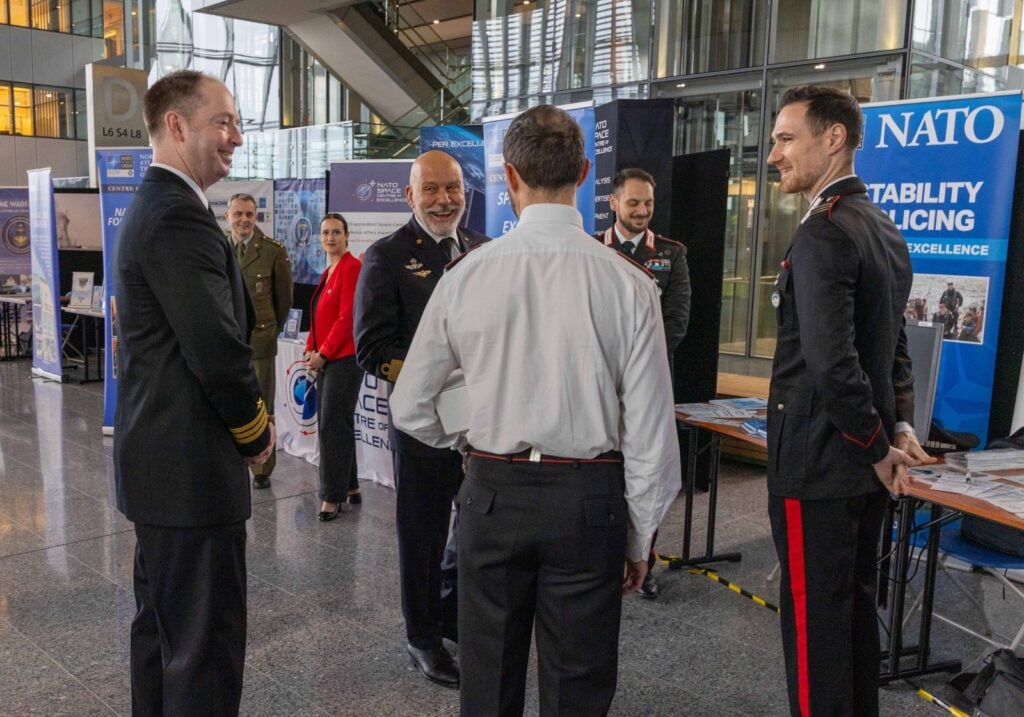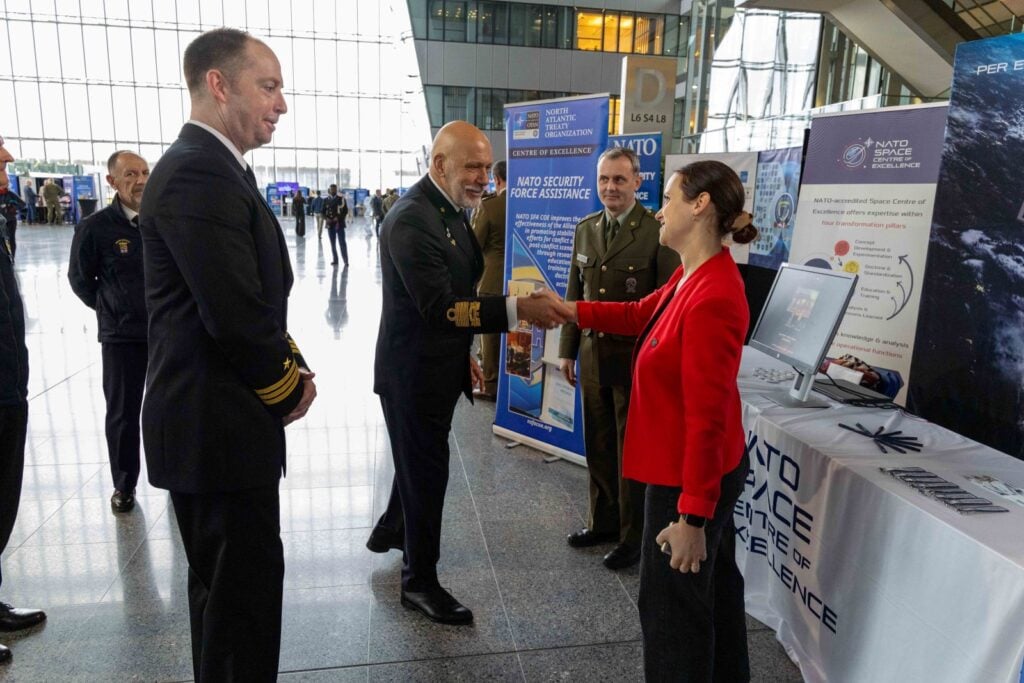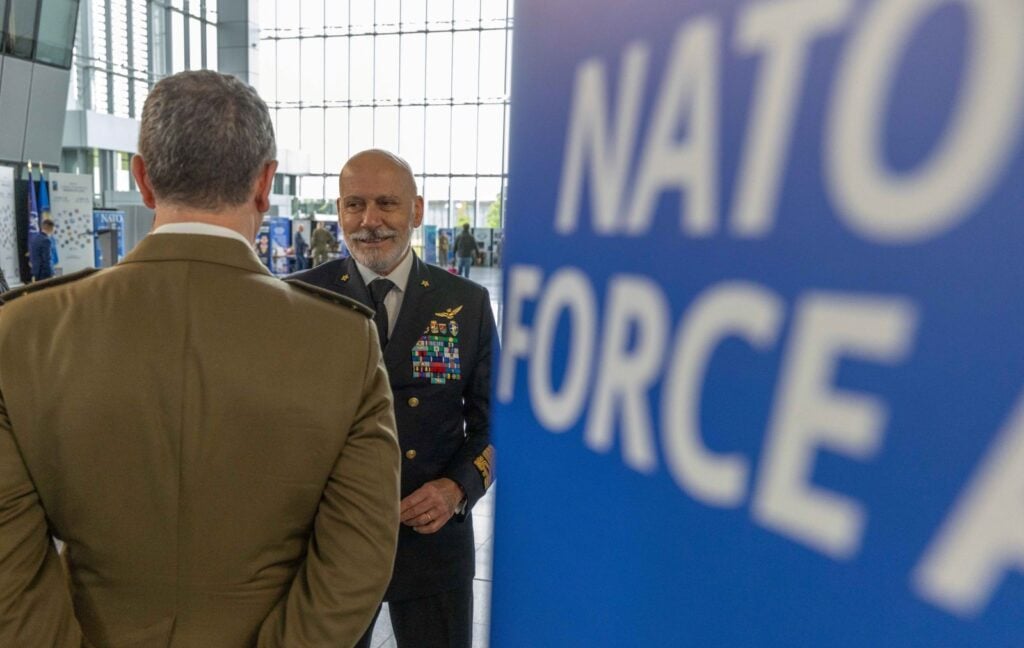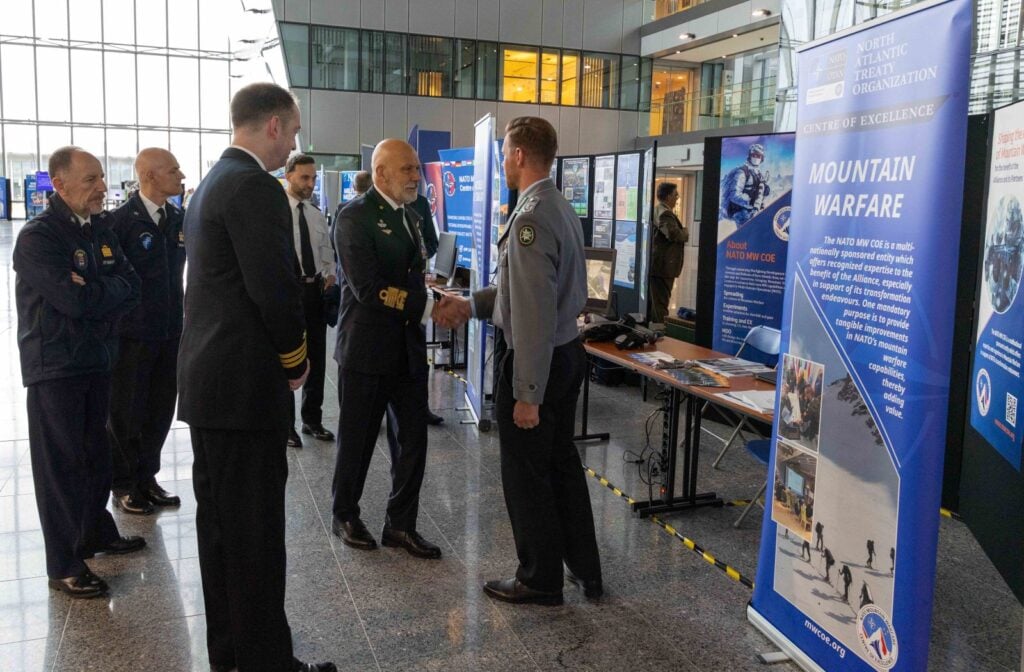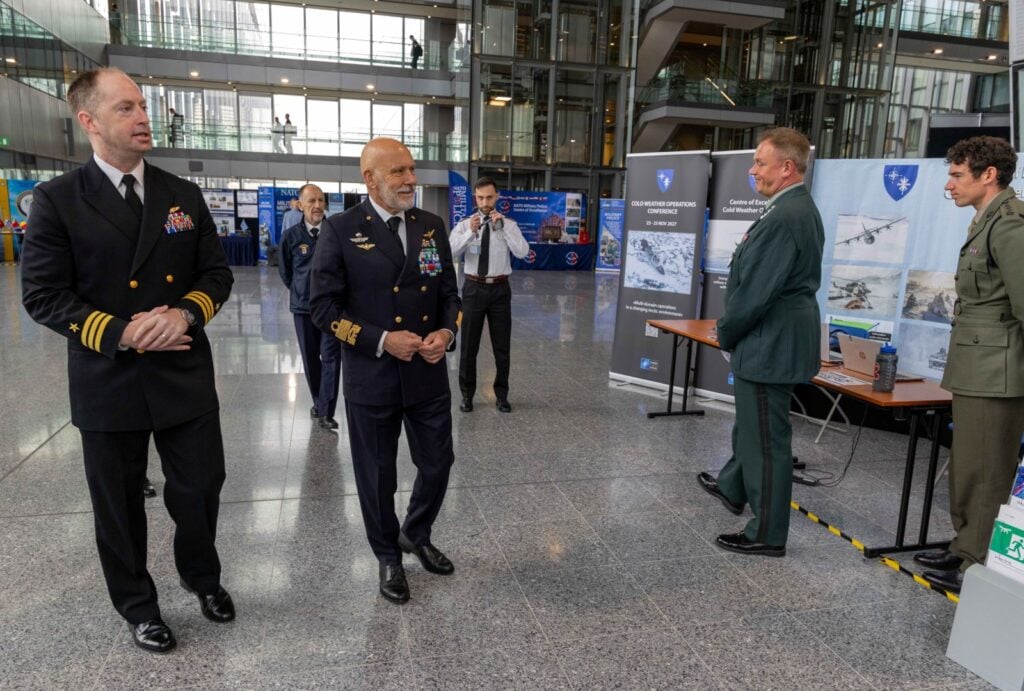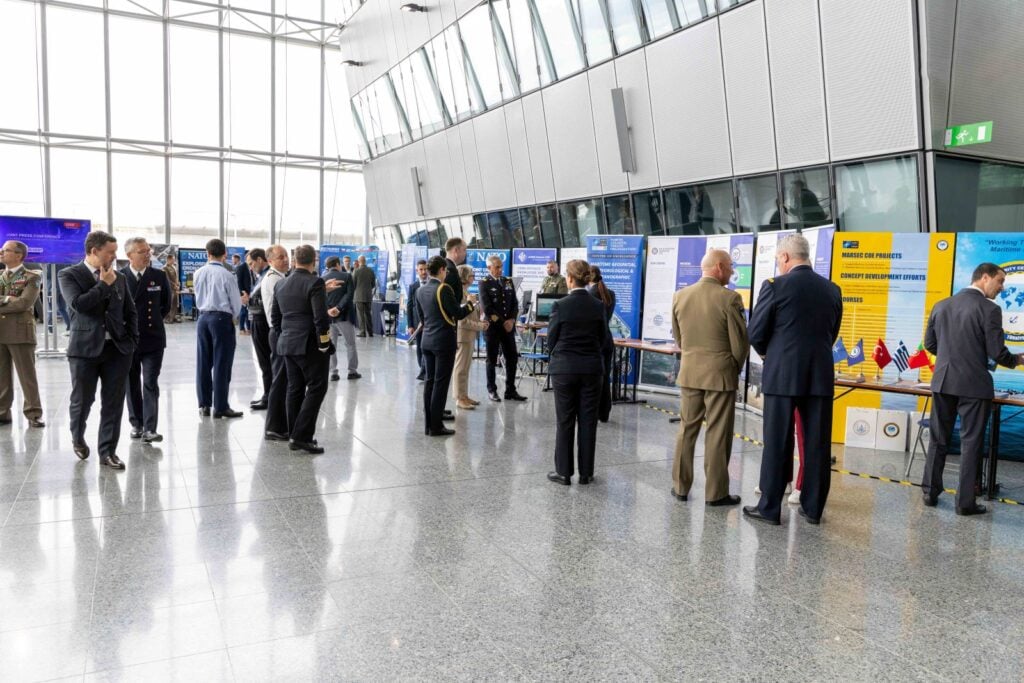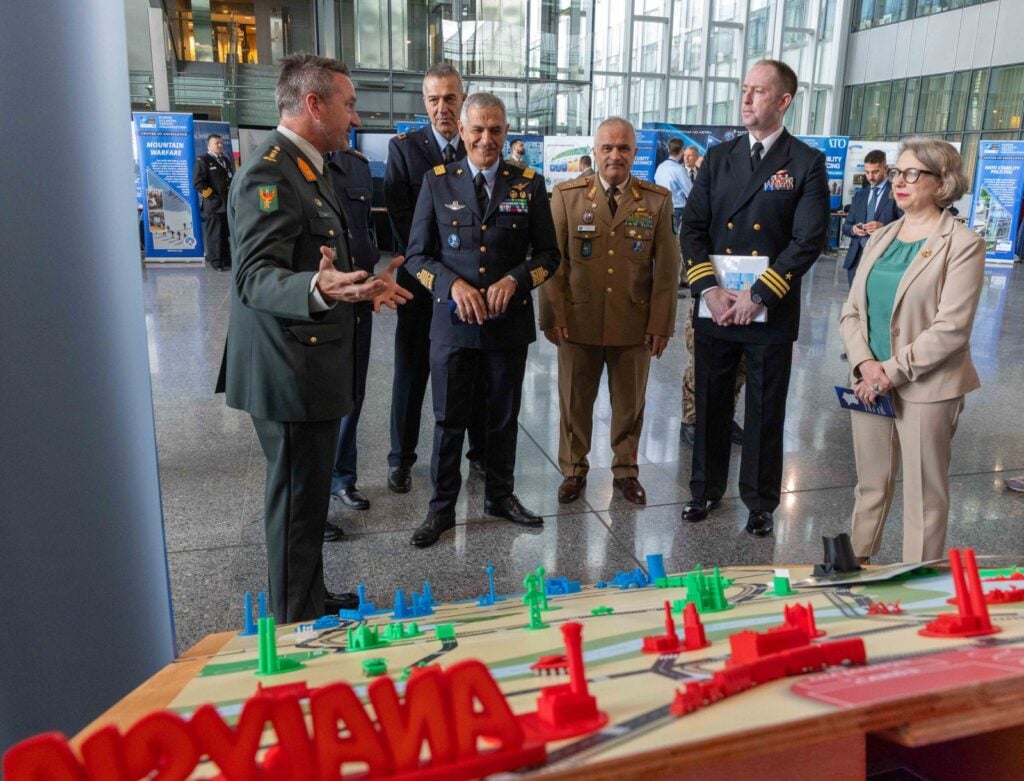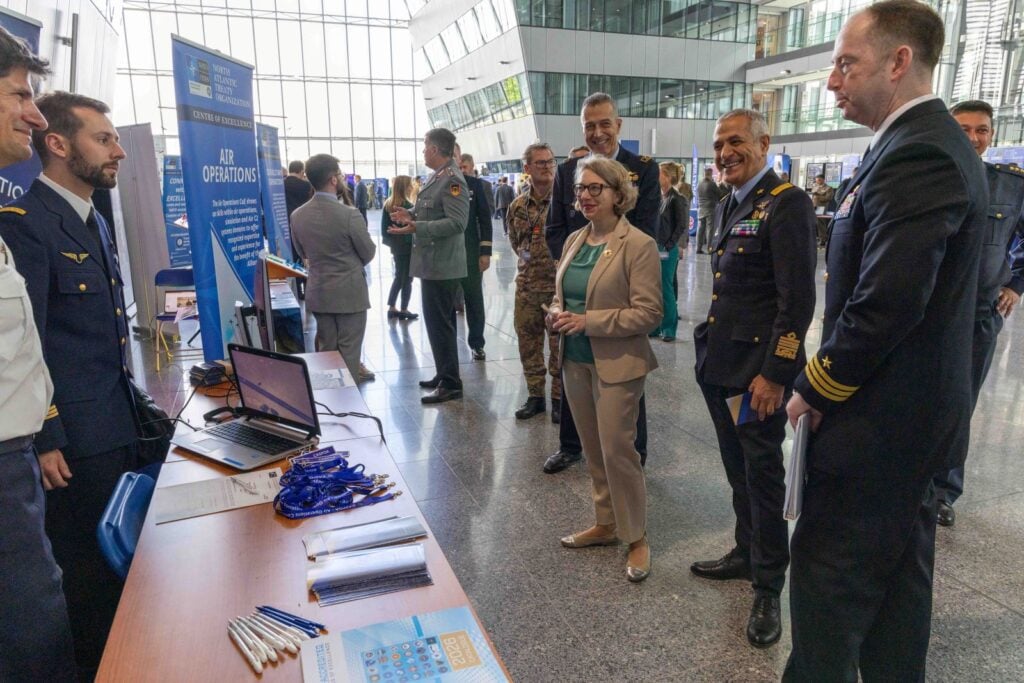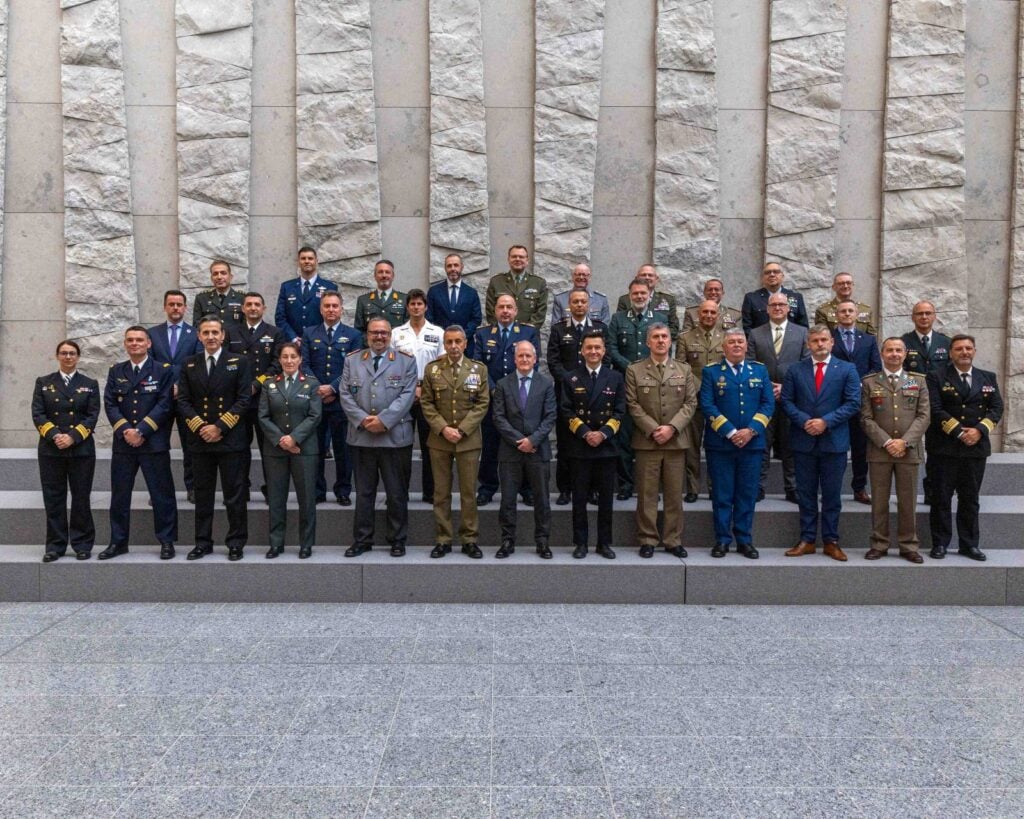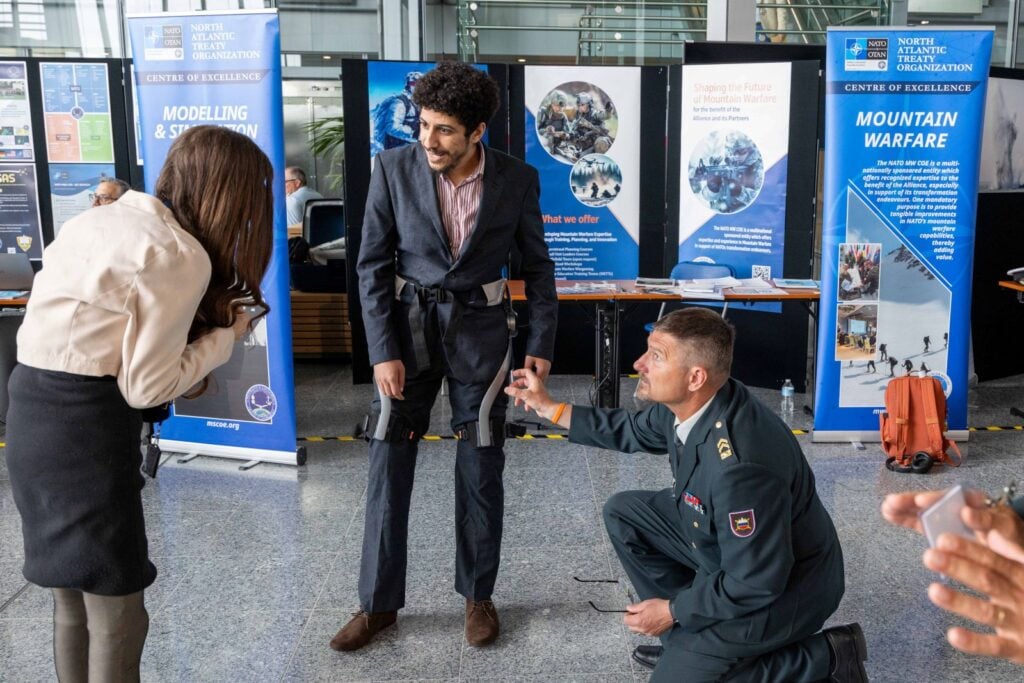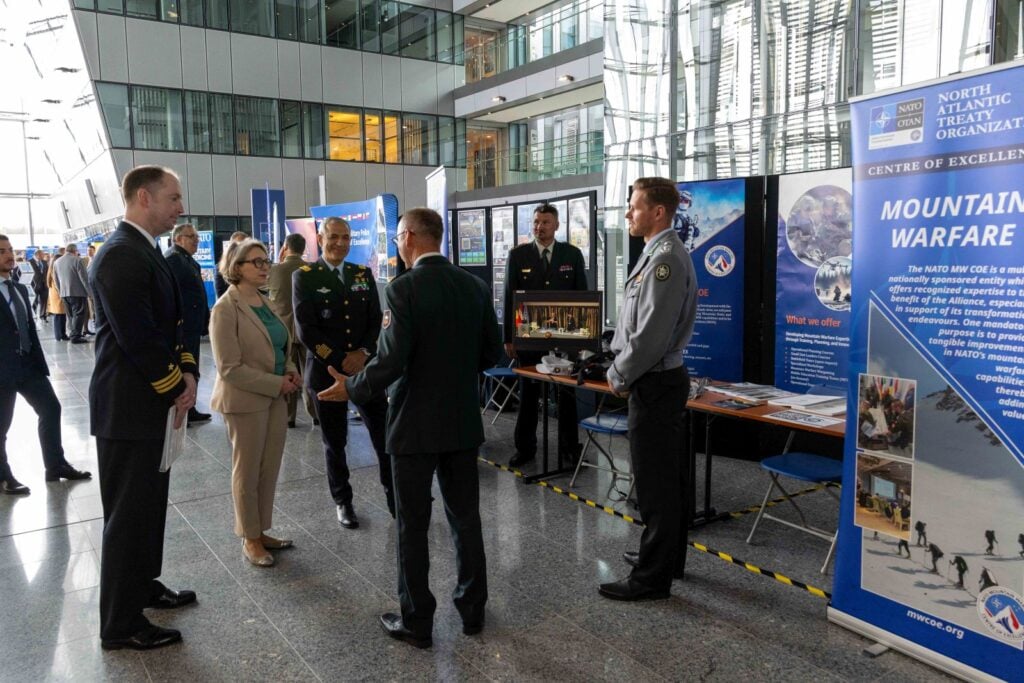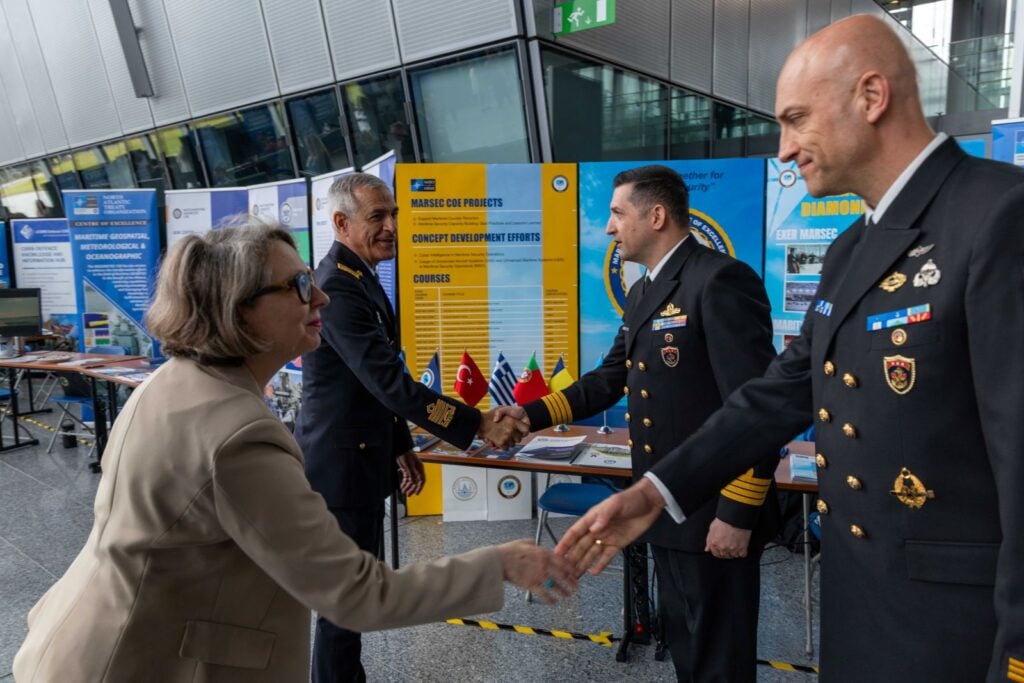

This week, NATO-accredited Centres of Excellence (COEs) gathered at NATO Headquarters in Brussels for the 2026 Centres of Excellence Marketplace, an event that brings together the COE community and its leadership to show how their work supports the Alliance.
Held every two years, the COE Marketplace gives NATO leaders, national representatives, International Staff, International Military Staff and other stakeholders a direct opportunity to engage with the Centres, understand their contributions, and connect their expertise to current and future NATO priorities.
The COEs are not a peripheral part of NATO’s work. They are a vital part of how the Alliance develops capability, strengthens interoperability, and turns ideas into practical support for our missions and priorities.
– General Aurelio Colagrande
Deputy Supreme Allied Commander Transformation
A multinational model of expertise
NATO-accredited Centres of Excellence are nationally or multi-nationally sponsored institutions that provide recognized expertise in specific subject areas. Though they are not part of the NATO Command Structure, they support NATO’s transformation through a wider collaborative framework.
Through this model, Allied and Partner Nations contribute specialized knowledge, personnel, and resources at no direct cost to NATO. In return, the Alliance benefits from expertise in doctrine, education and training, concept development, experimentation, standardization, analysis and lessons learned across a wide array of specialties and domains.
Allied Command Transformation coordinates the COE network and helps align its work with NATO’s strategic priorities, including capability development, exercises, training priorities, and transformation initiatives.
Practical contributions to the Alliance
The Centres of Excellence make measurable contributions to NATO. In 2025, the COE network supported more than 300 concept development and experimentation projects, delivered more than 150 NATO-approved courses, trained nearly 20,000 personnel annually, supported NATO exercises, and served as custodians for 42 Allied doctrine publications.
Recent examples show the breadth of that contribution. The Air Operations Centre of Excellence developed ALEXO, a real-time air-to-air refuelling planning tool that replaces manual workflows with automated decision support. The Cold Weather Operations Centre of Excellence launched HEIMDALL, an Arctic innovation arena for testing uncrewed systems and autonomous sensors in sub-zero terrain. The Explosive Ordnance Disposal Centre of Excellence is developing a virtual reality-based training tool for complex bomb disposal scenarios.
Strengthening interoperability
Interoperability remains one of NATO’s most important advantages, and the Centres of Excellence help strengthen it through common standards, shared doctrine, aligned training and multinational understanding.
The Maritime Geospatial, Meteorological and Oceanographic Centre of Excellence is supporting Federated Mission Networking through real-time environmental data sharing. The Military Engineering Centre of Excellence is contributing to standardization through a Universal Floating Bridge Adapter to improve compatibility between national bridging assets. The Cooperative Cyber Defence Centre of Excellence is helping address legal interoperability through tools and publications that support coordinated multinational cyber operations.
These examples show that interoperability is built through sustained technical, doctrinal, and educational work before it is needed in crisis or conflict.
Adapting to emerging challenges
The COE network also helps NATO anticipate and respond to emerging challenges in areas such as cyber, space, the Arctic, maritime security, climate change, and uncrewed systems.
The Space Centre of Excellence recently held its second annual conference in 2026, focused on integrating space capabilities into NATO Multi-Domain Operations. The Climate Change and Security Centre of Excellence is providing foresight and analysis on how environmental change affects Allied operations. The Naval Mine Warfare Centre of Excellence is supporting uncrewed systems experimentation through events such as REPMUS and CWIX.
Connecting knowledge to NATO priorities
Hosting the Marketplace at NATO Headquarters places the Centres’ work in front of the Alliance’s political and military decision-making community. It creates a link between COEs, national representatives and NATO stakeholders, making it easier to exchange ideas, identify cooperation opportunities, and align specialized expertise with NATO’s needs.
The Marketplace is therefore more than a display of products and services. It is an opportunity to connect, to listen, to exchange ideas, and to identify new ways of turning expertise into impact.
– General Aurelio Colagrande
Deputy Supreme Allied Commander Transformation
As NATO continues to transform, the COE network remains one of the most practical mechanisms for turning national expertise into shared benefits to the Alliance. The Marketplace demonstrates how multinational cooperation, specialized knowledge and sustained innovation help prepare NATO for future challenges while still delivering consistent success with their continued contributions to training, exercises, and doctrine.
To learn more about NATO-accredited Centres of Excellence, including the COE Catalogue and how to request support through the Programme of Work process, visit Allied Command Transformation’s Centres of Excellence page.