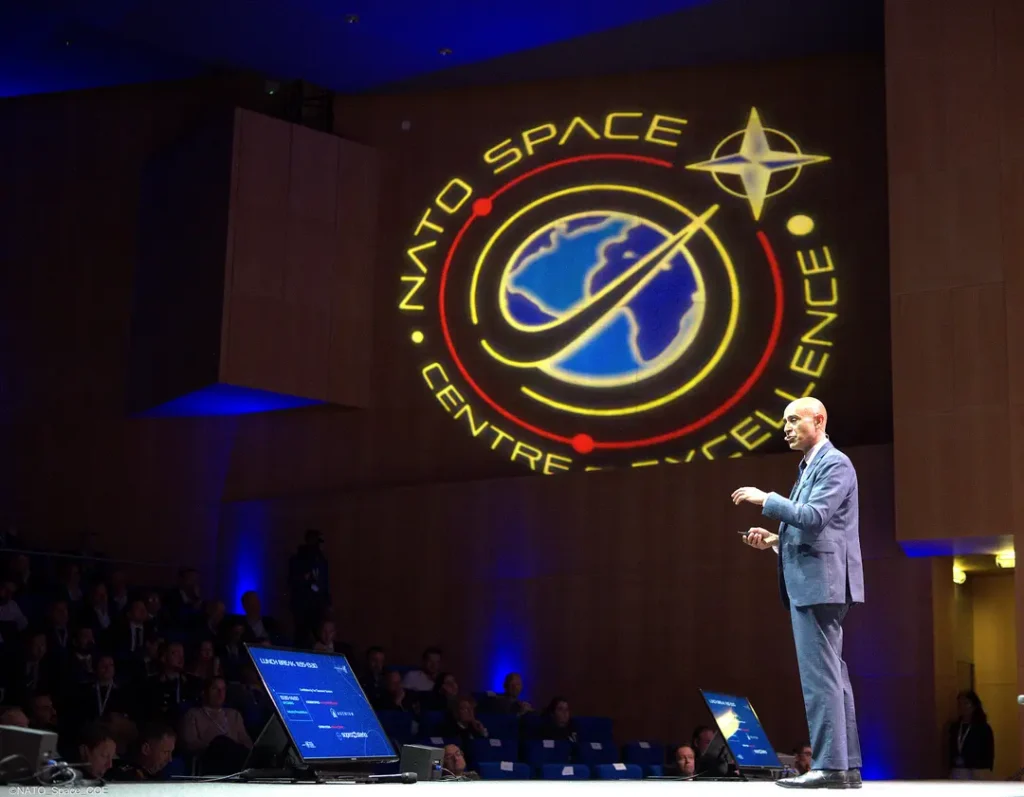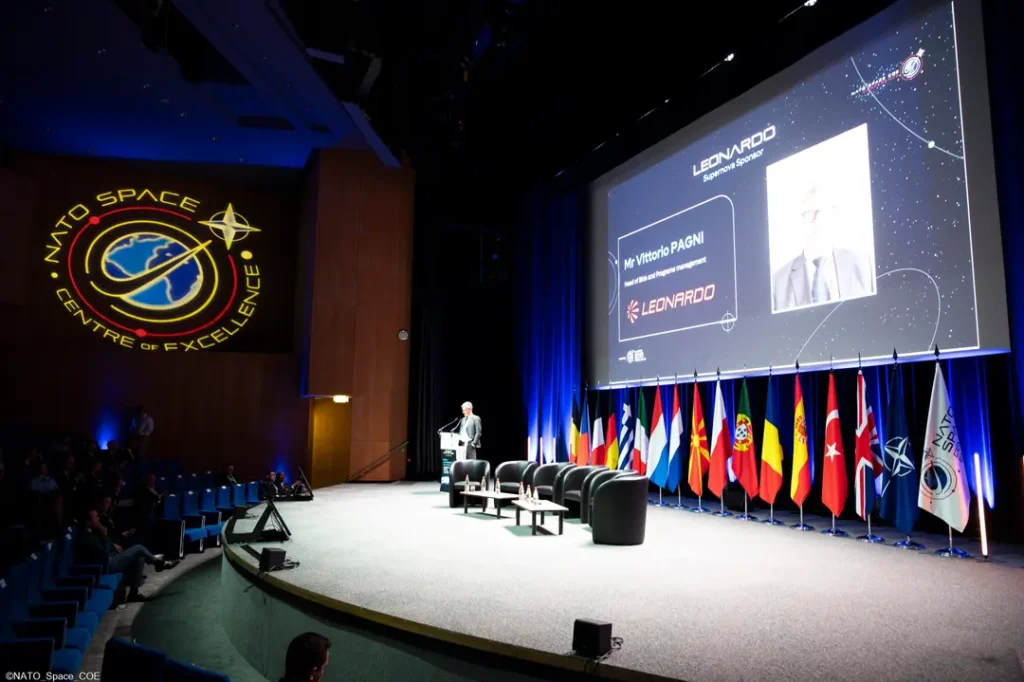

This week the NATO Space Centre of Excellence hosted its second annual conference, bringing together more than 500 participants from 33 NATO and Partner Nations, as well as industry and international organizations. The discussions reflected a clear shift in mindset across the Alliance: space is no longer a supporting function, but an operational domain that underpins NATO’s deterrence and defence.
As Allies work to translate strategy into action, lessons from Ukraine continue to shape the conversation. Participants pointed to how, in the opening hours of Russia’s full-scale invasion in February 2022, a cyberattack against a commercial satellite network disrupted communications, highlighting the immediate operational impact of targeting space-enabled systems. The example reinforced both the vulnerability of these capabilities and their central role in modern warfare.
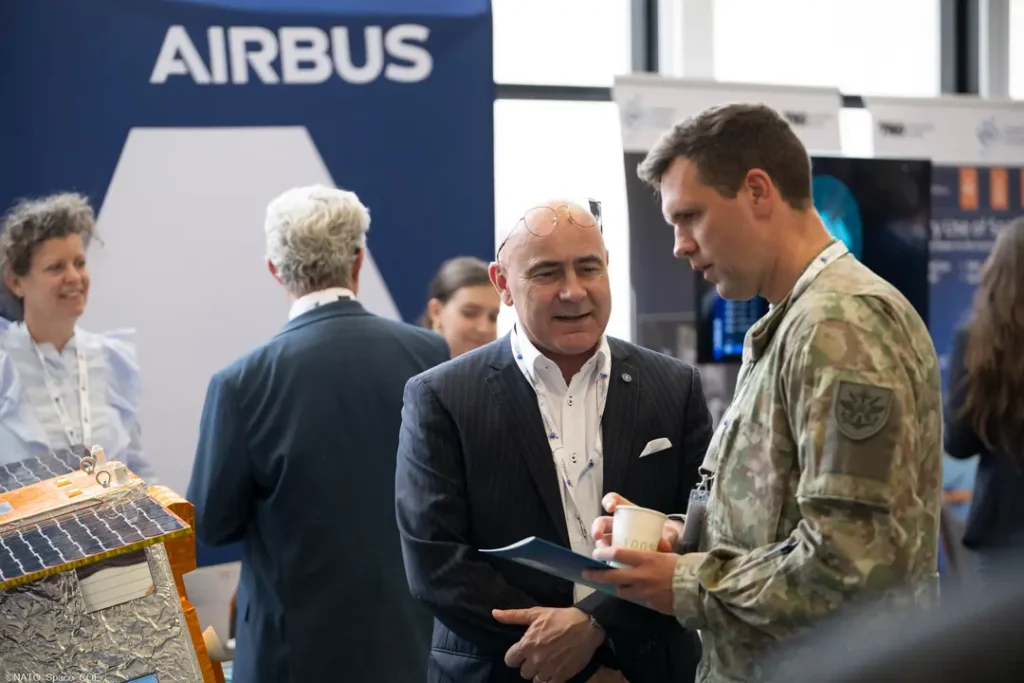
The concept of civil-military fusion also featured prominently, underscoring the need to better align military requirements with the pace of commercial innovation.
The conference was structured around three core themes that define NATO’s path forward.
Escalation Management and Effective Deterrence in Space
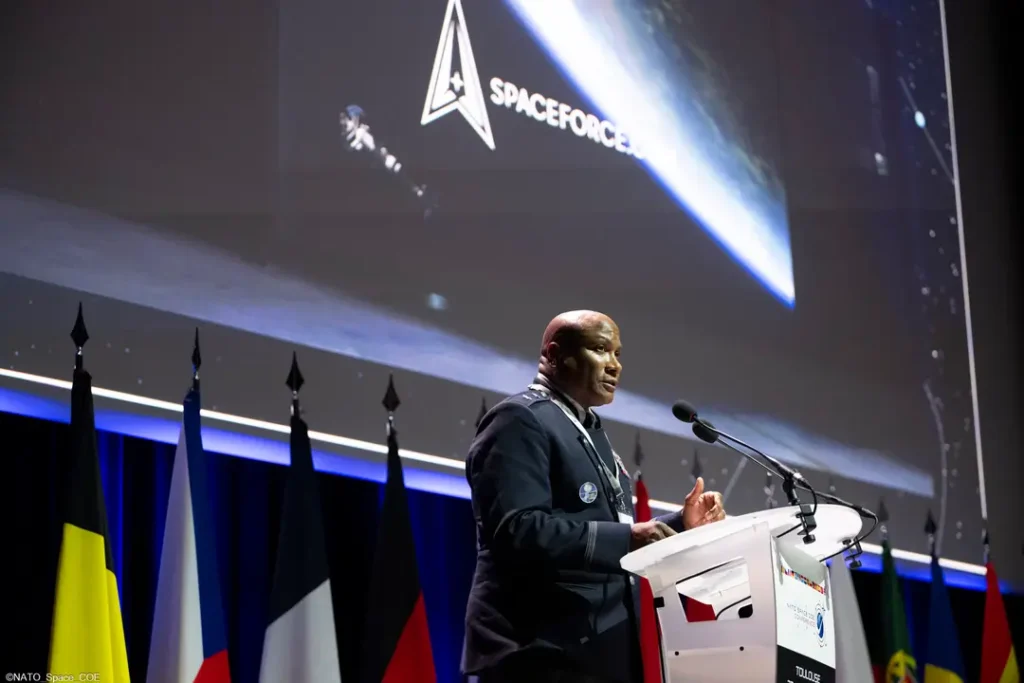
Major General Devin Pepper, Deputy Chief of Staff for Strategic Plans and Policy at Allied Command Transformation, set the tone for the discussion by describing space as a domain shaped by the same competitive dynamics seen on Earth. “Wherever human beings go, competition follows,” he said, pointing to developments such as Artemis II and China’s growing ambitions in going to the moon.
He emphasized that deterrence remains central to NATO’s approach, noting that the Alliance has stated it could invoke Article 5 in response to an attack on Allied space capabilities. In his remarks, he outlined three key elements of effective deterrence in space: making it harder for adversaries to achieve their objectives, maintaining the credible option of deterrence by punishment, and ensuring integration across domains. “Our actions must be linked to our adversary’s next decision, not their last,” he added.
Lieutenant General Richard Zellmann, Deputy Commander of United States Space Command, reinforced these points by focusing on the capabilities and approaches required to achieve credible deterrence in space. He stressed the importance of shared understanding across Allies, noting, “when we all see the domain with the same clarity, we can make a unified approach.” His remarks highlighted that common situational awareness is fundamental to coordinated decision-making and effective deterrence.
Across the session, discussions emphasized that deterrence in space depends not only on capability, but also on resilience, attribution, and cohesion among Allies. Strengthening space domain awareness and reinforcing responsible behaviour were identified as critical to managing escalation and preserving stability.
Operationalizing Space in a Multi-Domain Context: Maximizing Effects Through Integration
The second theme focused on how NATO can better embed space capabilities in NATO’s Multi-Domain Operations framework. Capabilities such as satellite communications, positioning, navigation and timing, and intelligence, surveillance, and reconnaissance are already integral to operations. The challenge is ensuring they are fully integrated into planning and execution across all domains.
Participants stressed the importance of interoperability, shared standards, and a common operational picture that incorporates space-derived data. Without that integration, NATO risks treating space as a separate enabler rather than as a domain that directly shapes operations across land, air, maritime, cyber, and space.
This effort aligns closely with Allied Command Transformation’s mandate to ensure the Alliance remains fit for purpose. Operationalizing space is a strategic requirement for preparing NATO to operate in a security environment where speed, resilience and integration will determine operational advantage.
Integrating Capabilities in Space: Dual-Use Solutions and Challenges
The final theme examined how NATO can better leverage dual-use space capabilities. With much of the innovation in space driven by the commercial sector, civil-military fusion is increasingly essential. As Mr. Laurent Jaffart, Director of Resilience, Navigation and Connectivity at the European Space Agency, noted, “we are together a force multiplier.”
Participants explored how commercial technologies, from satellite constellations to data services, can enhance operational effectiveness. At the same time, discussions addressed the challenges of dependency, resilience, and security when relying on commercially provided capabilities.
Strengthening collaboration between military, industry, and organizations such as the European Space Agency will be critical. By aligning operational needs with technological innovation, NATO can maintain its edge in an increasingly dynamic domain.
Together, these themes reflect a decisive shift from awareness to action.
“Embedding space into NATO operations means strengthening deterrence, deepening integration, and harnessing the full potential of Allied and commercial capabilities,” said Colonel Sylvain Debarre, Director, NATO Space Centre of Excellence.
Through the conference, the NATO Space Centre of Excellence helped move the Alliance’s conversation from recognizing space as an operational domain to embedding it more fully into NATO’s planning, deterrence and defence. That shift will be essential as NATO works to strengthen deterrence, improve integration and maintain advantage in an increasingly contested domain.