NATO Allied Command Transformation brought together national representatives from across the Alliance for the first NATO Transformation Champions Symposium, a strategic effort designed to strengthen alignment between NATO and national efforts in interoperability, digital transformation, and federated mission networking.
The symposium marks the first time NATO’s national champions on Interoperability and Digital Transformation, as well as Federated Mission Networking Senior Operational Champions, have come together in a unified forum. These Champions serve as senior points of alignment from their respective countries and help orchestrate, drive and direct national activity for some of NATO’s most important transformation priorities: the delivery of interoperable, digitally enabled forces and capabilities for the execution of Multi-Domain Operations.
A New Forum for National Alignment
The Champion construct reflects NATO’s growing emphasis on national accountability and senior-level engagement in transformation. Following senior military discussions in early 2025 on the need to improve interoperability and accelerate digital transformation, Supreme Allied Commander Transformation invited Chiefs of Defence to nominate national Digital Transformation and Interoperability Champions. Their role is to help ensure national efforts are better aligned with NATO’s broader objectives, while supporting innovation, operational effectiveness, interoperability, and the digitalization of Alliance forces.
Holding the symposium during the Coalition Warrior Interoperability Exercise, or CWIX, was intentional. CWIX brings Allies together to test, refine, and improve the digital interoperability needed for NATO operations. By convening the Transformation Champions in that environment, Allied Command Transformation connected senior-level alignment with the practical work of testing whether national and NATO systems, networks, standards, and procedures can operate together in realistic coalition conditions.
Connecting Strategy to Implementation
The first NATO Transformation Champions Symposium brought these efforts together by convening the three communities to identify shared priorities, address common implementation challenges, and strengthen coherence across the Alliance. Rather than treating interoperability, digital transformation, and federated mission networking as separate lines of effort, the symposium recognizes that NATO’s ability to operate at speed depends on aligning standards, networks, data, procedures, exercises, and implementation timelines across nations.
That alignment is a technical requirement and is central to NATO’s ability to operate as one Alliance.
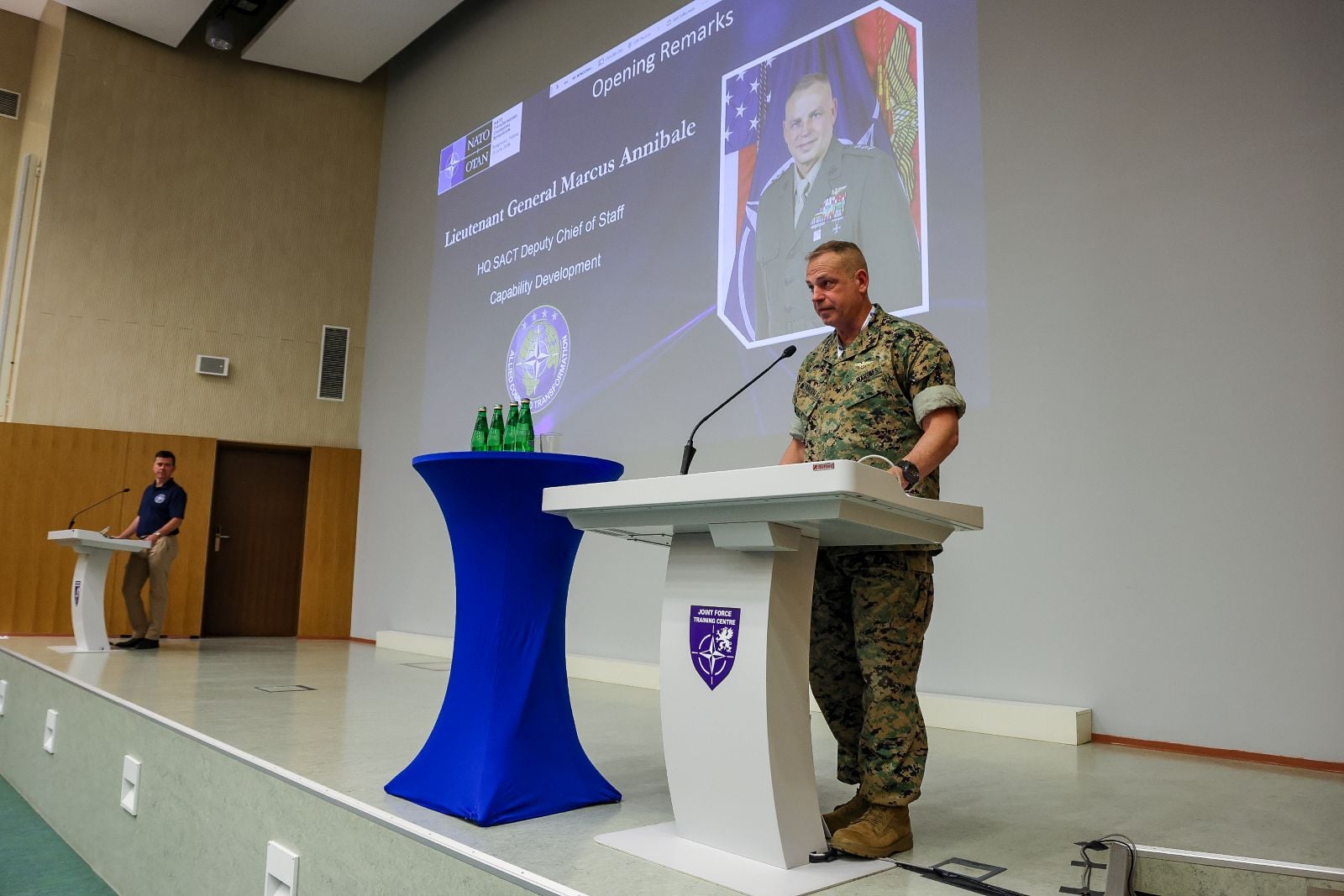
“Interoperability is not a technical aspiration; it is a military necessity,” said Lieutenant General Marcus Annibale, Deputy Chief of Staff Capability Development at Allied Command Transformation. “It is what allows nations with different systems, processes, and traditions to act as one force when it matters most.”
Testing Interoperability in Practice
During the symposium, Champions discussed practical ways to better connect national efforts with NATO priorities. Topics included how nations implement interoperability standards, how digital transformation progress can be measured, how the Alliance can share data more effectively across domains, and how exercises and experimentation can help test whether Allied forces, systems, and networks are able to operate together in realistic conditions.
The discussion also underscored that NATO’s digital transformation challenge extends beyond adopting new technology, focusing on the Alliance’s ability to field, connect and sustain digital capabilities at operational speed.
“The strategic problem is not access to technology, but the readiness to deploy it,” said Samantha Paarlberg, Head of Digital Transformation at Allied Command Transformation. “We need to have the ability to engineer, integrate and sustain interoperable digital capabilities within a federated system of sovereign actors at a pace the security environment demands.”
Outcomes from the symposium also pointed to several practical areas for continued work among the Champion communities. These include identifying and supporting national interoperability and digital transformation priorities for the next 12 to 24 months, improving coordination between the Interoperability, Digital Transformation, and Federated Mission Networking networks, using exercises and experimentation to provide stronger evidence of progress, and developing concrete opportunities to advance data sharing across the Alliance.
Moving from Policy to Practice
These issues are closely connected across the Alliance. A new digital tool, network, or data-sharing approach only creates operational value if Allies can use it together. That requires common standards, compatible procedures, trusted data, trained personnel, and opportunities to test those capabilities through exercises and experimentation.
The purpose of the symposium was to help connect those efforts across NATO. It was a successful first step. Now the work continues with concrete actions this year including collaboration between ACT and nations to develop the Alliance Data Sharing Ecosystem and measuring Digital Transformation progress. By bringing together national and senior operational Champions responsible for interoperability, digital transformation, and Federated Mission Networking, ACT is helping Allies move from policy to practice and strengthen NATO’s ability to operate together across domains at the pace required by the current security environment.