A Strategic Hub for Shallow Water Operations
Located in Kiel, Germany, the NATO-accredited Confined and Shallow Waters Centre of Excellence plays a vital role in addressing the unique security challenges of coastal, archipelagic, and inland maritime regions. Since 2009, this Centre has united experts from ten Allied nations (Denmark, Estonia, Germany, Greece, Italy, Lithuania, The Netherlands, Poland, Türkiye, and the United States) working together to advance NATO’s maritime posture in these critical areas.
With strong connections to academia, civil authorities, industry, and military institutions, the Centre serves as both a conceptual incubator and a practical enabler for joint maritime solutions.
Integrating Emerging Technologies for Maritime Advantage
The Centre is actively engaged in experimentation related to Task Force X, a NATO initiative led by Allied Command Transformation, exploring the integration of autonomous systems and artificial intelligence in maritime operations. The focus of this work includes surveillance, threat detection, and enhanced situational awareness using a fleet of uncrewed systems. The Centre’s contributions concentrate on information technology infrastructure, specifically the challenges of secure data transfer and interoperability, ensuring that these technologies function seamlessly in operational environments.
In parallel, the Centre is advancing efforts in Harbour and Force Protection. This includes developing and testing countermeasures against uncrewed systems and maritime improvised explosive devices. These capabilities are being applied both in training and during real-world exercise support, such as during the Baltic Operations exercise earlier this year.
Wargaming for Tactical and Operational Decision Superiority
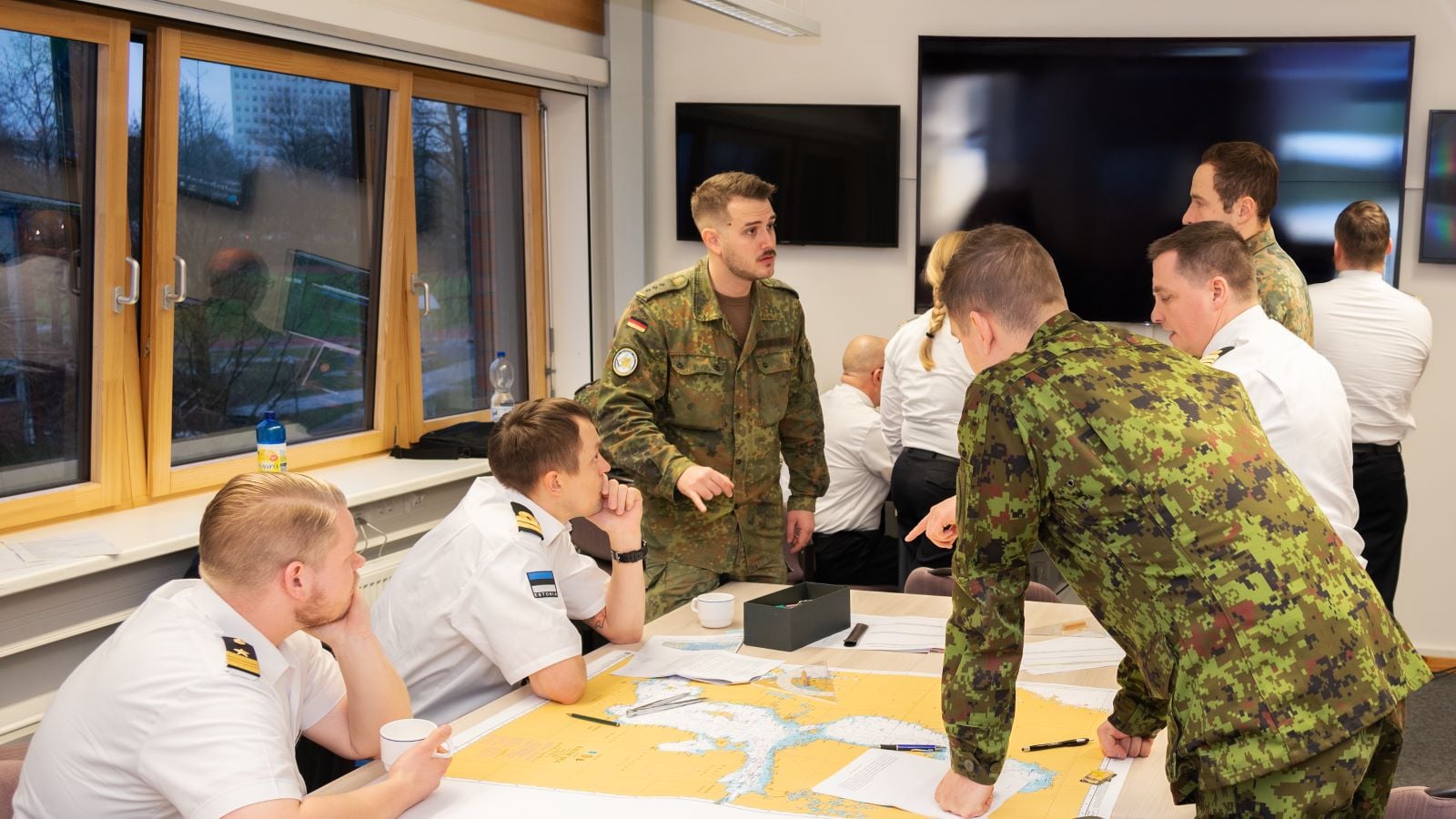
A notable achievement of the Centre is the development of a cutting-edge wargaming capability, designed to enhance decision making training for Maritime Staff Elements on the tactical level, including the NATO High Readiness Forces Maritime. This initiative leverages advanced simulation technology to refine decision-making processes in complex operational environments. Later this year the Centre will expand the portfolio to include operational level entities in Matrix-Wargaming, including looking at current maritime NATO defence plans.
Safeguarding Critical Maritime Infrastructure
The protection of undersea cables, pipelines, and related maritime infrastructure has emerged as a pressing concern. Through the RUBIKON exercise series, the Centre is advancing cross-border coordination to ensure the security of this essential infrastructure.
RUBIKON brings together Maritime Security Centres and stakeholders from a growing number of nations, enabling collaboration on shared responsibilities and joint responses. Partnering with the European Defence Agency, the Centre is helping enhance coordination, information sharing, and protective measures. Future iterations of the exercise will expand in scale and scope to reflect evolving operational needs.
Innovation from Seabed to Space
Through the Seabed to Space Project, the Centre is pioneering new methods to integrate surface, subsurface, and space-based sensors for improved maritime awareness. This initiative combines satellite data, artificial intelligence analytics, and data fusion software to provide a more complete and timely picture of activity in the maritime domain.
The project’s goal is the development of a prototype Multi-Sensor-Data-Fusion Cell that will support threat detection and navigational safety by merging data from multiple sources into a single operational picture. The effort is supported by both civilian and military partners and directly contributes to enhancing NATO’s surveillance and response capabilities.
Contributing to Strategic Dialogue and Legal Understanding
Beyond technical innovation, the Centre also plays a leading role in policy and legal discourse. It contributes to NATO’s strategic engagement through regular participation in global events such as the Munich Security Conference. It also fosters understanding of operational maritime law through international workshops and conferences, supporting a shared legal framework for maritime operations across the Alliance.
Through its broad portfolio of experimentation, training, legal education, and operational integration, the Centre of Excellence for Operations in Confined and Shallow Waters remains a key enabler of NATO transformation. Its work ensures that Allied maritime forces are equipped, informed, and interoperable—ready to secure the world’s most complex and contested littoral environments.
Learn more by visiting the Centre’s official website or following on Facebook or LinkedIn.