NATO’s ability to adapt to an unpredictable security landscape depends on more than technology, strategy, and resources. It must trust and rely on the ideas, perspectives, and energy of the next generation. Today’s youth brings fresh thinking, challenge entrenched assumptions, and offer early insight into emerging trends that will shape the future of the Alliance.
Recognizing this, NATO Allied Command Transformation is investing in the next generation of thinkers, leaders, and problem-solvers. Through initiatives like NATO Student Challenges, Model NATO, Student Visits, and the NATO Youth Summit, Allied Command Transformation is giving young voices a platform to shape ideas that could influence the future of international security.
The Model NATO events introduce students to the workings of NATO through a dynamic North Atlantic Council simulation. Students act as Ambassadors and represent their assigned nation. In the Model NATO event in Norfolk, local students are also mentored by military officers who are stationed at Allied Command Transformation.
Claire Giglio, one of the Model NATO winners, experienced this first-hand while representing Poland. Facing hesitation for collaboration in the room, she spoke up:
I laid out the case for collective defence… strongly believing it was the just and right response. That moment stayed with me, not just because the other Ambassadors eventually agreed, but because I learned how to not be afraid to speak directly when it mattered most. It affirmed the kind of person I want to be as I pursue international law.
Claire Giglio
Her persistence shifted the debate and forged consensus, showing how determined young leaders can influence outcomes and strengthen NATO’s commitment to principled, collective decision-making.
For many participants, these experiences bridge the gap between theory and practice. Open to both undergraduate and postgraduate students, the NATO Student Challenge invites young people to tackle a thought-provoking question on how NATO can empower younger generations to counter information threats, then share their ideas in response.
This year, students from across allied and partner nations answered that call, offering their vision for strengthening resilience in the face of these challenges. Julia Salabert, a NATO Student Challenge winner, described the moment she realized her team’s proposals could directly inform policy:
One general even took notes on how to pilot our ideas in his command, and we have been invited to NATO Allied Command Transformation headquarters… to continue the conversation. In that moment, it was clear that NATO saw us not as students presenting an academic exercise, but as partners whose recommendations could shape real policy.
Julia Salabert
This initiative not only encourages innovative thinking but also strengthens NATO’s ties with future leaders, ensuring a continued commitment to the Alliance’s values and principles.
Igor Tiam, whose joint submission with Julia was one of one of the winners of this year’s NATO Student Challenge, focused his graduate research on disinformation so he felt like it was a natural continuation of his work. He also saw it as an excellent opportunity to contribute directly to Alliance resilience.
It wasn’t just symbolic; it was a genuine dialogue. The leaders were approachable and attentive. It reminded me that behind titles and uniforms, we are all people concerned about our collective future.
Igor Tiam
Janthe Van Schaik saw the NATO Student Challenge as an opportunity to align her non-profit, OSINT For Ukraine, with NATO’s mission. Her submission focused on wargaming as a strategic and educational tool, offering practical ways to build resilience against hostile information.
When provided with a platform, we can directly contribute to NATO’s mission to uphold digital literacy. The future of security requires active collaboration, and these partnerships will be essential in countering information threats.
Janthe Van Schaik
For her, the experience demonstrated how grassroots initiatives and international organizations can work together toward common goals. It also highlighted that NATO’s engagement with youth is not just about listening; it’s about creating space where creative field-tested solutions can be considered and potentially integrated into Alliance efforts.
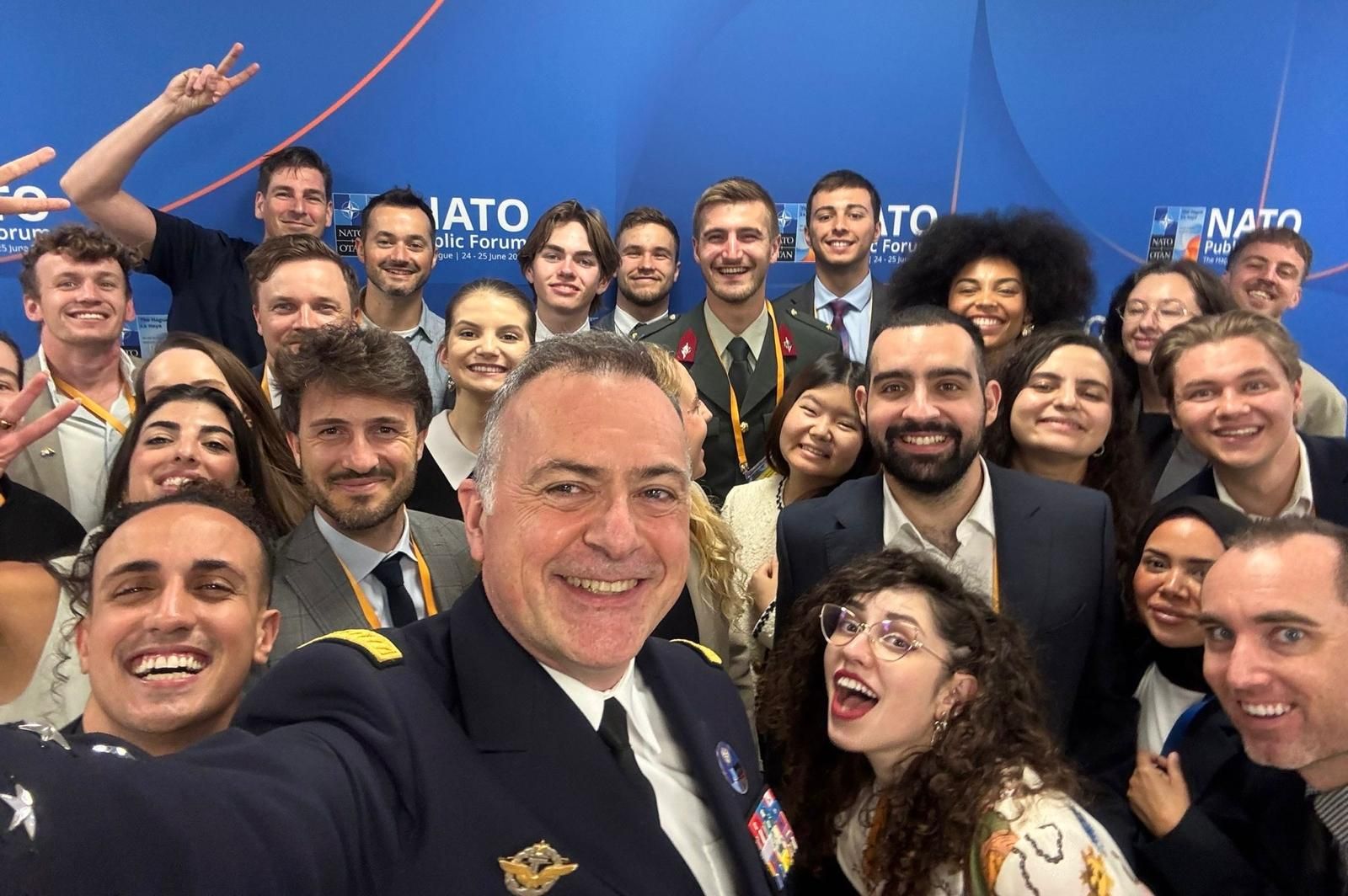
For some, the impact is personal as well as professional, shaping not only career ambitions but also a sense of confidence and purpose. Maria-Eleni Vallonasi entered the NATO Student Challenge out of a passion for international relations and a willingness to share ideas that others might see as unconventional. Her participation affirmed that bold thinking can resonate at the highest levels of NATO. “Do not be afraid to take risks,” she advised, reflecting on how stepping forward with authenticity can open unexpected doors.
I was invited to the NATO Summit in The Hague to present my work to NATO senior leaders. At that moment I realized the significance of this presentation – that those ideas I was considering crazy could potentially become reality in the future.
Maria-Eleni Vallonasi
Her experience underscores a common theme among participants: that youth engagement with NATO is as much about developing one’s own voice as it is about contributing to the Alliance’s mission.
NATO engages the next generation of leaders through initiatives that combine dialogue with direct experience. The NATO Youth Summit, organized by NATO Headquarters and supported by Allied Command Transformation, brings emerging leaders together to debate pressing issues such as resilience, disinformation, and democracy. Complementing these exchanges, Allied Command Transformation hosts high school and university students at its Norfolk, Virginia headquarters, offering mentorship from subject matter experts and opportunities to deepen their understanding of NATO’s mission.
Stavros Piperidis had the opportunity to moderate a panel at this year’s NATO Summit and take part in a Student Visit to Allied Command Transformation headquarters. Reflecting on the experience, he emphasized how vital it is for NATO to hear directly from young leaders:
Youth voices matter because they are a strategic forecast: they are a direct view of the social, technological, and ethical landscape of the next decade. They are essential for driving the innovation NATO needs to maintain its technological edge against next-generation threats.
Stavros Piperidis
Across these diverse experiences, young people bring urgency, creativity, and a willingness to ask difficult questions. They offer early warnings on emerging trends, from AI-driven disinformation to shifting public expectations. As Claire Giglio put it,
Make space for discomfort, because that is where growth happens. Youth engagement is about being open to perspectives that push you to think differently. If NATO wants to evolve, it needs to continue to be willing to listen even when it is not easy. That is where the real change begins.
Claire Giglio
Allied Command Transformation’s proactive youth outreach, an integral part of NATO’s broader effort, brings fresh perspectives into the conversation and helps ensure the Alliance stays as dynamic and adaptable as the challenges it confronts.
Follow NATO Allied Command Transformation on Facebook, LinkedIn, and X to hear more from the young voices shaping the Alliance’s future.