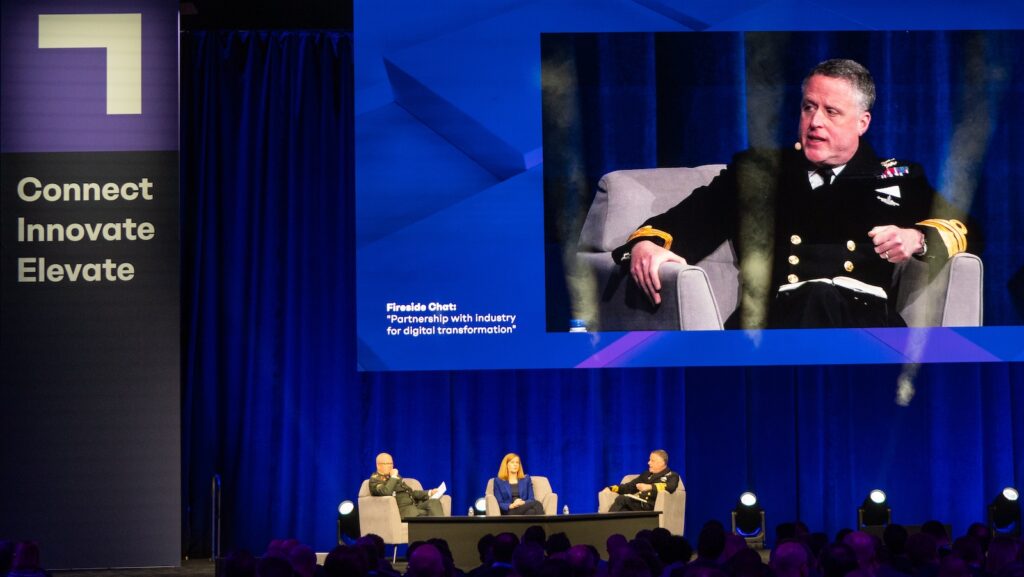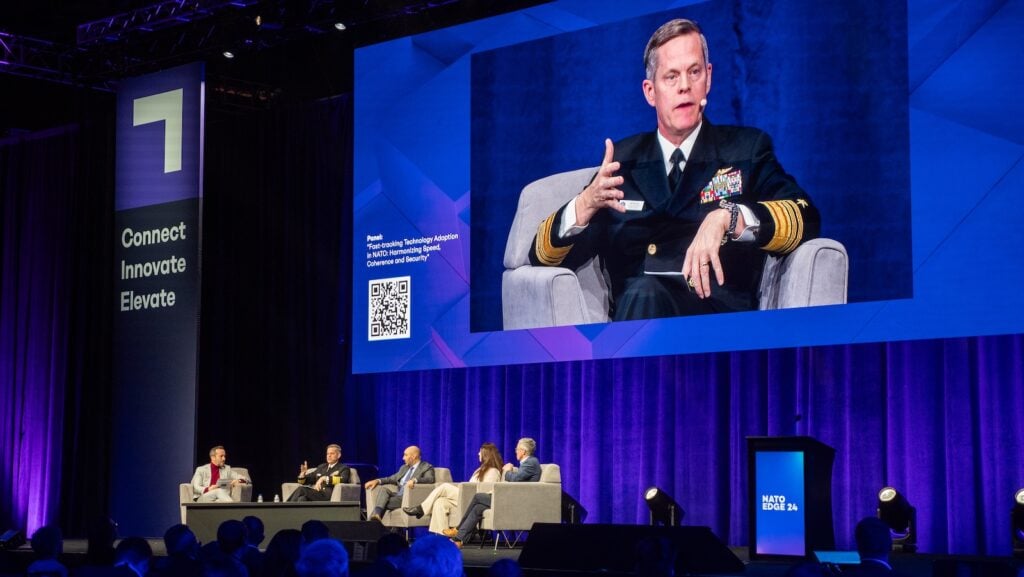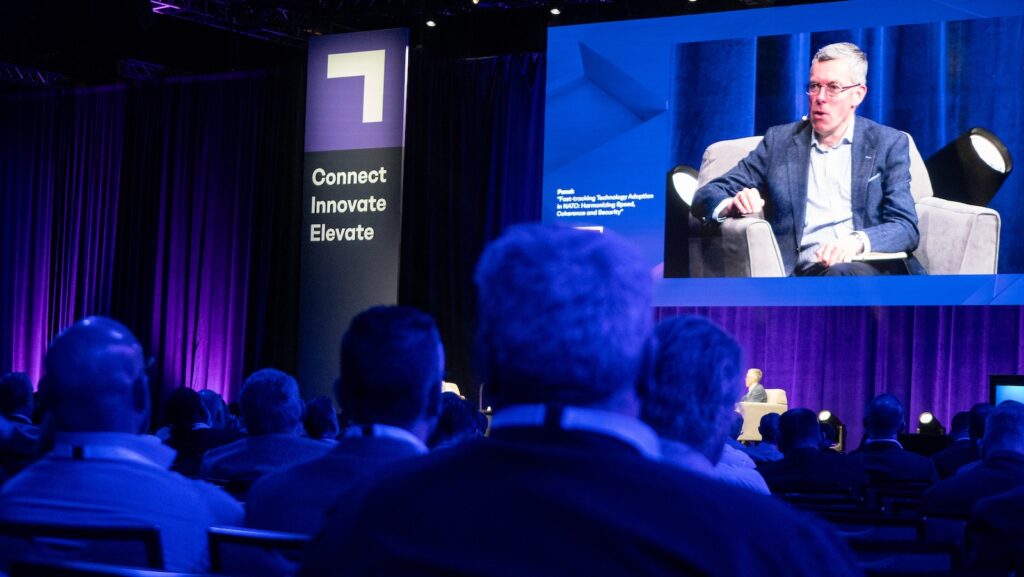

NATO’s short to long-term military success is defined, in part, by the ability of its industrial partners to determine and sustain an ability to out-pace adversaries. This requires new warfighting thinking, new industrial partnerships, and the implementation of technology -– to deliver military advantage. Allied Command Transformation is driving innovative solutions to support warfighters – today and tomorrow. This week at NATO EDGE, the Command engaged with decision-makers and industry leaders to shape the future of defence.
THE NEED TO ADAPT
In 1960, the United States defence research and development budget accounted for more than 36% of the global total. That total is now 3%.
The United States federal share of total research and development has fallen from 65% to 21% while industry has more than doubled to 71%.
These trends are consistent across Allied Nations. In order to deliver capability, NATO and individual nations rely on collaboration with traditional industry as well as emergent and disruptive technology companies, academia and agencies.
NATO EDGE 2024
It is more important than ever that NATO and its member nations harness the innovation and speed of the private sector to deliver the right capabilities at the right time and, through this, build credible, enduring deterrence across the Alliance. At NATO EDGE 2024, Vice Admiral Simon Asquith, Allied Command Transformation’s Chief of Staff, and Vice Admiral Jeffrey Hughes, Deputy Chief of Staff for Capability Development, discussed transformative initiatives that define NATO’s ability to shape, contest and fight – now and into the future.
To drive warfighting advantage, we in NATO need to connect more closely with the defence industry. We need to innovate together, especially in areas of emergent and disruptive technologies, digital transformation and cloud-based technology, and we also need to elevate the conversation around reducing regulation and improving interoperability.
– Vice Admiral Simon Asquith, Chief of Staff to Supreme Allied Commander Transformation
We have a clear mandate to deliver a Multi-Domain Operations enabled Alliance by 2030. There are plenty of private-sector technologies that may hold a military application that would help us achieve this goal and deliver on an operationally relevant timeline.
– Vice Admiral Jeffrey W. Hughes, Deputy Chief of Staff Capability Development
DELIVERING RESULTS
Allied Command Transformation delivers NATO coherent, interoperable capabilities to build NATO’s operational superiority. Through partnerships with industry, the Command is developing:
- A multilayer cloud that is scalable up to NATO SECRET; improving overall operational resilience and enabling more efficient decision making when conducting Multi-Domain Operations.
- Space domain awareness and artificial intelligence integration; critical enablers of NATO’s long-term resilience and operational effectiveness.
- Alliance Future Surveillance and Control (AFSC) and Artificial Intelligence-enabled Multidomain Effects Demonstrator (AIMED); integrating technologies into a cohesive, operational framework that enhances Alliance-wide interoperability.
- Experiments to build the autonomy and connectivity of maritime forces; offering Commanders a force multiplier to address threats and deter Russia.
WHAT COMES NEXT
Allied Command Transformation is reconquering the ability to outpace adversaries, fostering new doctrines that are supported by audacious training programs and orientating NATO to implement solutions at the speed of technological advances.