The Security Force Assistance Centre of Excellence promotes stability and reconstruction efforts for (post-) conflict scenarios by delivering specialized insights to NATO, Allies, and Partners.
The Security Force Assistance Centre of Excellence is located in Rome, Italy, and received its official accreditation on December 3rd, 2018. Acting under Italian leadership, the Centre aims to improve the effectiveness of the Alliance by promoting stability and reconstruction efforts for conflict and post-conflict scenarios. The Centre provides a specialized capability to the Alliance and Partners by sharing expertise and knowledge, as well as supporting NATO’s broader efforts in this area. A critical component of the Centre’s efforts is its outreach efforts with academia and international organizations, which helps it to deliver high quality and insightful analysis.
The Programme of Work currently being undertaken by the Centre is structured along the four pillars of Education and Training, Analysis and Lessons Learned, Concept Development, and Doctrine Development and Experimentation. It also seeks to develop projects within each of these pillars along three lines of effort: Policy, Human Capital, and Support to Operations. Currently, the Centre’s 2023 Programme of Work includes developing a proposal to NATO for a new joint function called ‘Assistance,’ enhancing current training offerings, and deepening cooperation with the Security Force Assistance Community of Interest. One aspect of this effort has been the upcoming book project on Stabilization and Reconstruction in a Post-Conflict Environment. Building on its previous publications, this book will foster collaboration between, and research from, leading academics, students, and practitioners in the field.
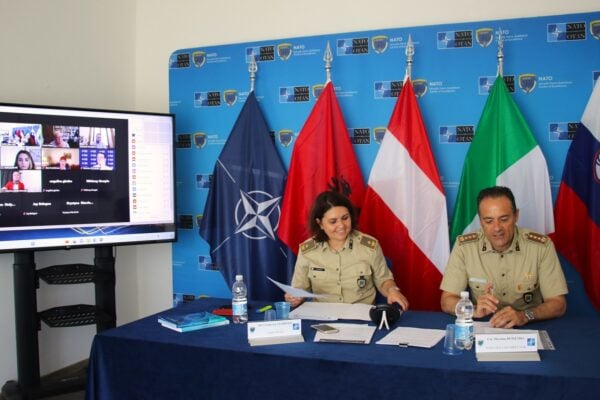
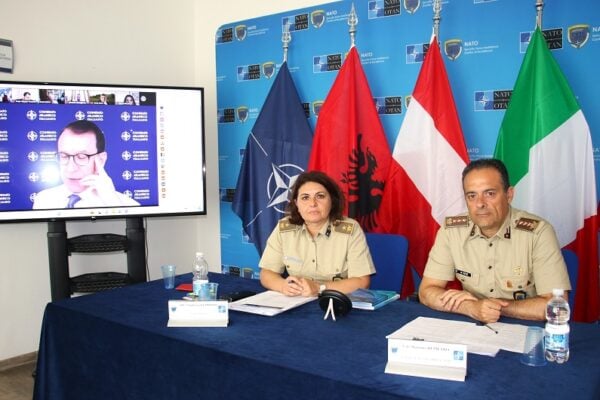
Another highlight of the Centre’s Programme of Work is its support to NATO’s stability projection efforts on the Eastern and Southern Flanks by any means within its remit. A recent activity supporting this effort was the Centre’s hybrid roundtable Geopolitical Update and Ongoing Security Force Assistance Activities in Libya. During the event, participants discussed issues facing Libya and the importance of understanding the local context for all actors involved in the operational theatre to enable the delivery of substantial support. They also emphasized the ties between stabilization of Libya and the greater Sahel region, and the challenges and opportunities involved in deploying civilian and military assistance and support missions in Libya.
Security Force Assistance aims to prevent regional crises and conflict by providing military assistance to local security forces to generate and maintain sustainable capabilities and create legitimate institutions. It is encompassed by NATO’s broader initiatives such as the Defence and Related Security Capacity Building Initiative which enhances the Alliance’s role in projecting stability as part of its 360-degree approach.
NATO-accredited Centres of Excellence are (multi-) nationally established and sponsored entities, which offer recognized expertise and experience within a defined subject matter area to the benefit of the Alliance. Centres of Excellence are not part of the NATO Command Structure, but form part of the wider framework that contributes to the functioning of the Alliance. Headquarters Supreme Allied Commander Transformation coordinates the activities of the Centres of Excellence, ensuring that their outputs align with Allied Command Transformation’s Programme of Work. For more information about NATO-accredited Centres of Excellence, see the 2023 Centres of Excellence Catalogue.