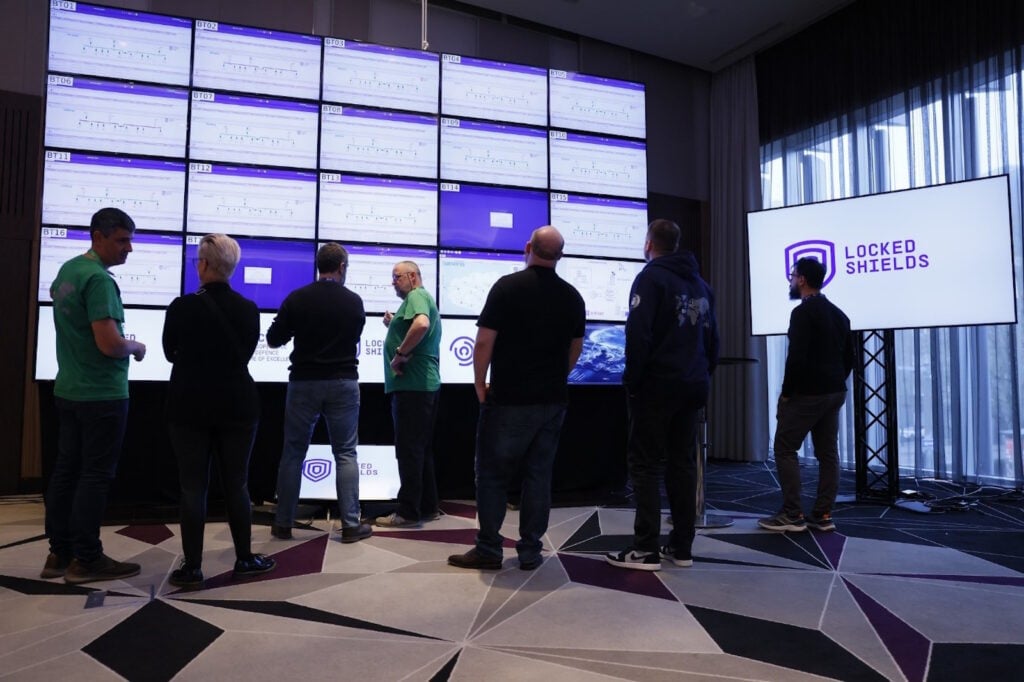

Locked Shields, organized by the NATO Cooperative Cyber Defence Centre of Excellence, is the most complex live-fire cyber resilience exercise in the world, challenging its participants for 15 consecutive years. This year’s exercise brought together 4000 cyber experts from more than 40 nations, who demonstrated the power of collaboration in enhancing collective security.
The goal of this one-of-a-kind cyber and strategic exercise is to provide a training platform for the Centre’s member nations and to help them develop their capabilities to face cyber threats as a coalition.
Each year, Locked Shields evolves to incorporate the latest technological innovations and address current geopolitical tensions. With artificial intelligence and 5G technology being essential parts of the exercise, participants engage directly with cutting-edge cyber defence technology.
During the two-day exercise in April, the 18 multi-national teams of national cyber defenders, including both technical and non-technical personnel, practiced protecting a unique mix of civilian and military information and communications technology systems, critical infrastructure, and crisis handling processes.
Under intense pressure, teams countered a sophisticated and relentless series of cyberattacks from the Red Team, the opposing force. In total, the participating Blue Teams were tasked with defending around 6,000 virtual systems subjected to over 8,000 attacks. This high-paced, crisis-like environment tested their resilience and response strategies, simulating real-world cyber crises.
In addition to the technical element, the exercise stands out by involving experts from various fields to tackle the complex and diverse nature of cyber threats. The participating teams also needed to be effective in reporting incidents, strategic decision making and solving forensic and legal challenges. In cooperation with NATO Strategic Communications Centre of Excellence, this year’s Locked Shields exercise featured a strategic communications track—an essential component of contemporary warfare—using the most innovative artificial intelligence-based Information Environment Simulation Range.
One of the significant highlights of Locked Shields 2024 was the level of cooperation among the participants. Despite the competitive nature of the exercise, teams formed a coalition, sharing information and strategies to enhance collective security. This approach emphasized the importance of collaboration and strongly demonstrated that shared knowledge is key to strengthening cyber defences.
Locked Shields continues to push the boundaries of cyber defence training, offering an unmatched platform for testing and enhancing the cyber resilience of participating nations in a “whole-of-government” approach. Through a combination of technical challenges and strategic decision-making, the exercise aims to fortify global cyber defences and promote international cooperation in the face of growing cyber threats.
In December, the Crossed Swords exercise will continue from where Locked Shields concluded, concentrating on offensive cyber operations integrated with kinetic actions.
The Cooperative Cyber Defence Centre of Excellence is a NATO-accredited knowledge hub located in Tallinn, Estonia, offering a unique interdisciplinary approach to the most relevant issues in cyber defence. The heart of the Centre is a diverse group of international experts from the military, government, academia, and industry, currently representing 39 sponsoring and contributing nations. The Cooperative Cyber Defence Centre of Excellence encourages and supports the process of mainstreaming cybersecurity into NATO and national governance and capability within its closely connected focus areas of technology, strategy, operations, and law. It is also responsible for identifying and coordinating education and training solutions in the field of cyber defence operations for all NATO bodies across the Alliance.