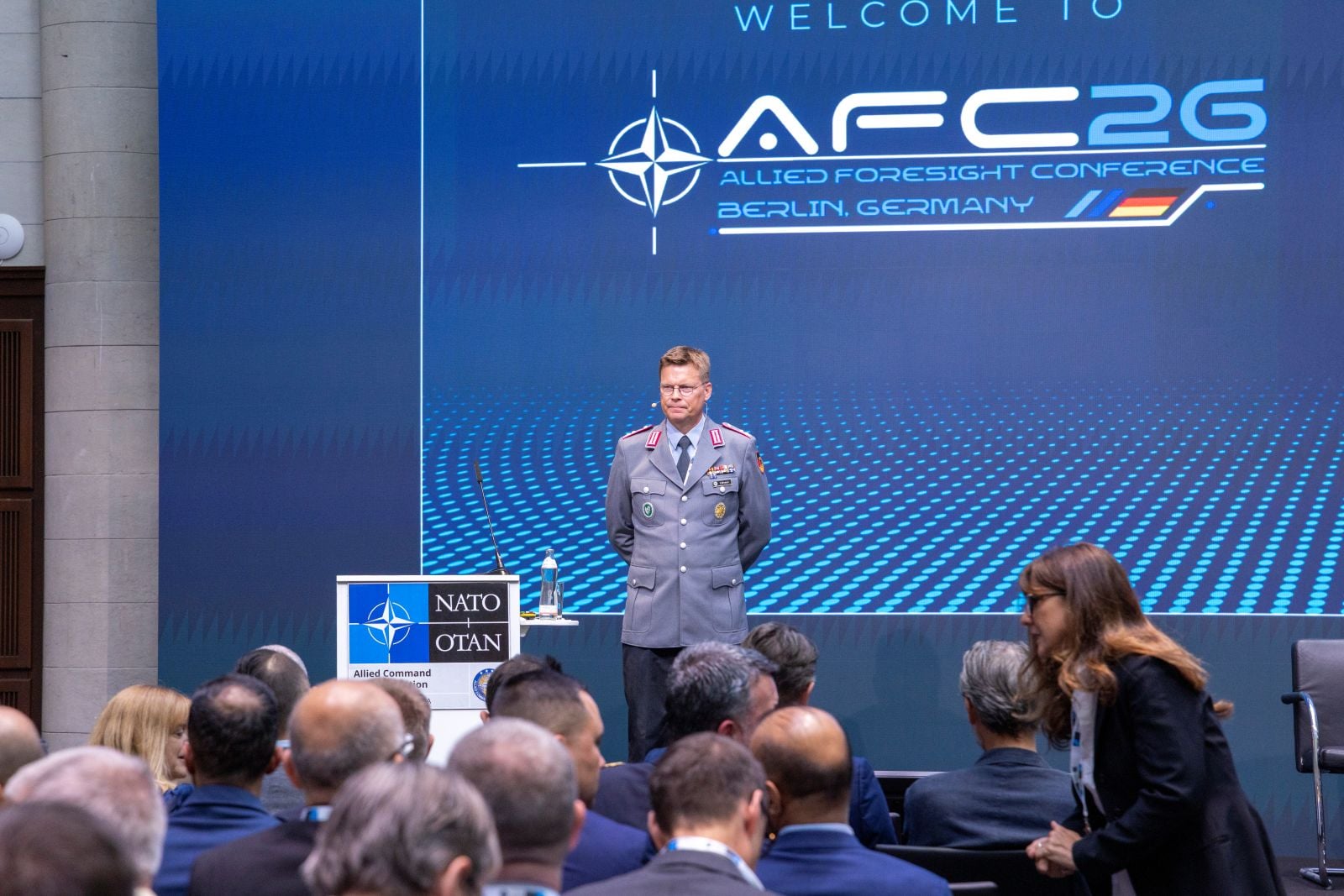
BERLIN, Germany – NATO Allied Command Transformation, in cooperation with the German Bundeswehr Office for Defence Planning, held the Allied Foresight Conference 2026 (AFC26) in Berlin this week, bringing together Allied and Partner representatives, military leaders, planners, foresight experts, academia and industry to examine how NATO can better anticipate and prepare for the future security environment.
From Today to the Fight of Tomorrow
Held under the theme “From Today to the Fight of Tomorrow,” the conference focused on a central challenge for the Alliance: the future is not a distant planning problem. It is already unfolding, shaped by persistent strategic competition, technological disruption, hybrid threats, resource pressures, demographic change and the accelerating pace of modern warfare.
We cannot predict the future, but with foresight, we can prepare, adapt, and even shape it.
General Aurelio Colagrande
Deputy Supreme Allied Commander Transformation
 That message reflected the purpose of the conference itself. AFC26 was designed to move Strategic Foresight beyond prediction and into practical advantage. For NATO, foresight was presented not as an academic exercise, but as a way to identify weak signals, stress-test assumptions, anticipate disruption and connect long-term insight to present-day choices about plans, capabilities and posture.
Connecting Foresight to the Future Force
The conference highlighted how ACT’s foresight work connects to the Alliance’s wider transformation agenda. Discussions drew on the relationship between the Strategic Foresight Analysis, the Future Operating Environment and the Future Force Study, which together help translate long-term trends into implications for warfare, force design and capability development.
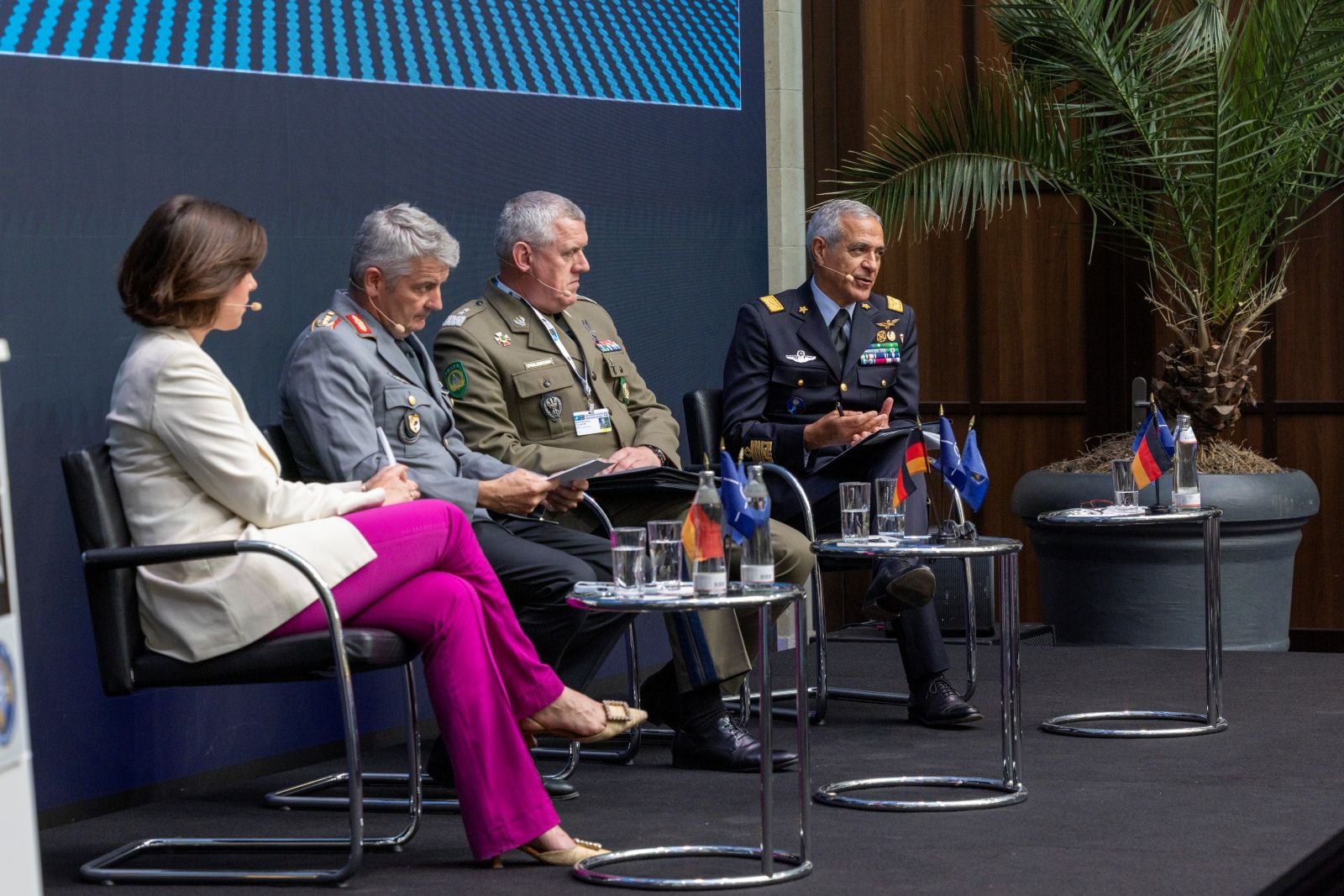
The opening sessions set this context through discussions on grand strategic assumptions, the development of military strategy and the utility of strategic foresight. A panel on “Total Defence to Full Spectrum Defence” examined how nations can integrate military and civilian instruments across domains, strengthening resilience against conventional, hybrid, cyber and other threats below and above the threshold of conflict.
A second panel on “Emerging Tech and Weak Signals” broadened the discussion beyond technology alone, exploring early indicators across societal, political, economic and environmental domains. These weak signals, while often subtle, can compound into strategic disruption. Understanding them earlier gives NATO more time to adapt, decide and act.
Speed, Decision Advantage and Future Operations
The conference also connected today’s operational realities to tomorrow’s requirements through an expert trialogue on “The Fight Tonight & Fight Tomorrow Complex,” bringing together perspectives from Allied Command Operations, Allied Command Transformation and national representatives. This discussion underlined the shared responsibility of preparing for current demands while shaping the future force.
One example of that connection is decision advantage: the ability to turn information into understanding and coordinated action faster than an adversary. That challenge aligns with ACT efforts such as Next Generation Targeting, which is helping NATO examine how data, interoperability and decision-making processes can reduce the time between sensing, understanding and acting. In a future battlespace defined by mass, speed and complexity, the ability will be central to Allied advantage.
Decoding the Future Operating Environment
A major focus of AFC26 was the Future Operating Environment and the different lenses needed to understand it. Breakout sessions examined where the future may unfold, what systems may shape it and who may drive it.
Regional sessions looked at areas including the Arctic, North Africa and the Sahel, the Middle East and the Indo-Pacific. These discussions examined how security dynamics may evolve in strategically relevant regions and what those changes could mean for NATO’s future posture, planning and operations. They also connected naturally to ACT’s rapid adoption Beacon Projects, such as Task Force X-Baltic, which has demonstrated how autonomous systems, artificial intelligence and rapid experimentation can support regional security challenges such as maritime vigilance and critical undersea infrastructure protection. Another Beacon Project, SINBAD, similarly highlights how commercial satellite imagery and analytics can enhance situational awareness across regions of strategic interest.
Functional sessions examined the critical systems that will shape future operations, including special operations forces, artificial intelligence, energy resilience, demography, climate effects and biotechnology. Rather than treating these as separate issues, the discussions explored how supply chains, human capital, power, data and emerging technologies will affect military readiness and operational endurance. That same logic is visible in LCI-X, ACT’s Layered Counter-UAS Beacon Project, which is focused on testing, integrating and accelerating interoperable counter-UAS solutions against one of the most urgent challenges from the current battlefield.
A third set of sessions examined strategic actors and sources of influence, including Sino-Russian cooperation, middle powers, global corporations, Russian perspectives on Allied approaches and the future of space as a contested operational domain. Together, these discussions helped participants consider how major and emerging powers, non-state actors, commercial entities and key domains of competition may influence the strategic landscape.
From Insight to Action
The conference built toward a discussion on how insight becomes advantage. By moving beyond a single predicted future and considering multiple plausible futures, participants examined how NATO can sharpen decision-making, align military and civilian instruments of power and strengthen its ability to compete, deter and prevail.
The workshops carried that work further, translating discussion into implications for nations and NATO. Topics included weak signals, preposterous futures, regional deep dives, Ukrainian scenarios, demographic disruption and optimistic strategic futures.
The goal was clear: foresight must inform action. ACT’s Beacon Projects and broader focus on rapid adoption showed how the command is working to move promising ideas from experimentation toward practical military value more quickly. AFC26 reinforced that this process begins with understanding what may be coming, but only matters if insight shapes the capabilities, concepts and force design NATO will need for the future fight.