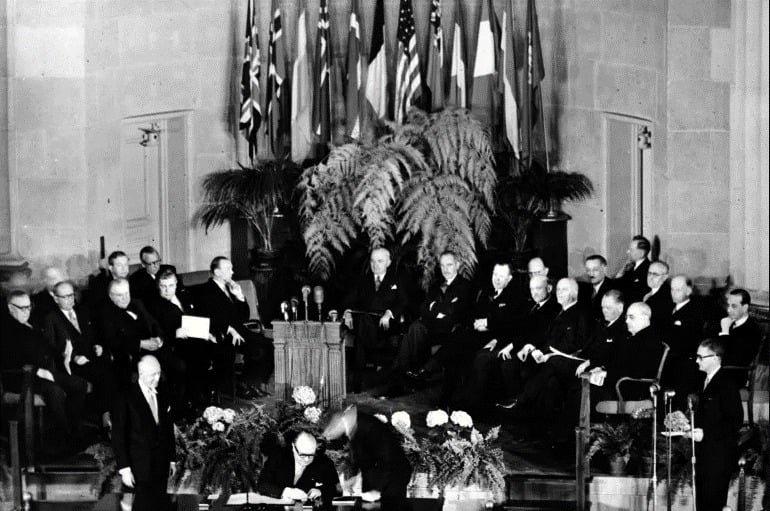
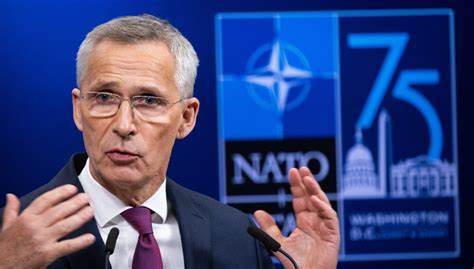
This week, Washington D.C. plays host to a pivotal moment in international security – the 2024 Washington Summit, which also marks 75 years of the Alliance. These high-level meetings serve as crucial junctures, bringing together NATO Heads of State and Government, as well as key partners, to provide specific direction for ensuring the continued collective defenceof the Alliance.
NATO summits act as a platform for leaders to discuss pressing security issues and chart a strategic course. These discussions translate into concrete actions, such as the introduction of new policies, the launch of major initiatives, and the integration of new members.
Landmark Decisions and Milestones
Several summits stand out for their significant decisions. The 1990 London Declaration marked a turning point, outlining a new strategic concept for a post-Cold War world. The 1997 Madrid and Paris Summits invited the first countries of the former Warsaw Pact – Czechia, Hungary and Poland – to join NATO, and established partnerships between NATO and Russia and Ukraine. The 2002 Prague Summit formally invited seven countries to join NATO, a historic expansion that reshaped European security. The 2014 Wales Summit responded to Russia’s annexation of Crimea, implementing the largest reinforcement of collective defence measures in NATO’s history. More recently the 2022 Brussels Summit addressed the consequences of Russia’s unprovoked war in Ukraine, and Allied Leaders agreed to reset NATO’s longer-term deterrence and defence posture across all domains – land, sea, air, cyber and space.
Beyond strategic decisions, NATO summits foster dialogue and consensus building among the top leaders of member states. The summit format provides a platform for open discussion and the forging of common ground. This collaborative spirit is central to NATO’s strength, ensuring a unified response to security challenges because all actions are done so based on “consensus”, meaning all members must agree.
Looking Ahead: A Renewed Alliance for a Challenging World
The Washington Summit this week takes place at a critical juncture. The war in Ukraine and ongoing threats demand a robust and adaptable Alliance. Leaders from the thirty-two allies will tackle an important agenda that includes affirming unwavering support for Ukraine, strengthening deterrence and defence posture, and deepening global partnerships.
Helping to shape the future of NATO, is Allied Command Transformation, one of the Alliance’s two strategic level commands.Headquartered in Norfolk, Virginia, it is the driving force behind the Alliance’s military transformation. It constantly identifies future challenges, explores new concepts and doctrines, and facilitates the acquisition of cutting-edge technologies. This ensures that NATO’s military capabilities remain at the forefront, ready to address any emerging threat.
As NATO celebrates its 75th Anniversary this year, the summits stand as testaments to its enduring strength. They have served as crucial forums for navigating a complex world, fostering cooperation, and ensuring collective defence. The Washington Summit promises to be yet another landmark event, shaping the future of this vital alliance in a world facing unprecedented challenges.