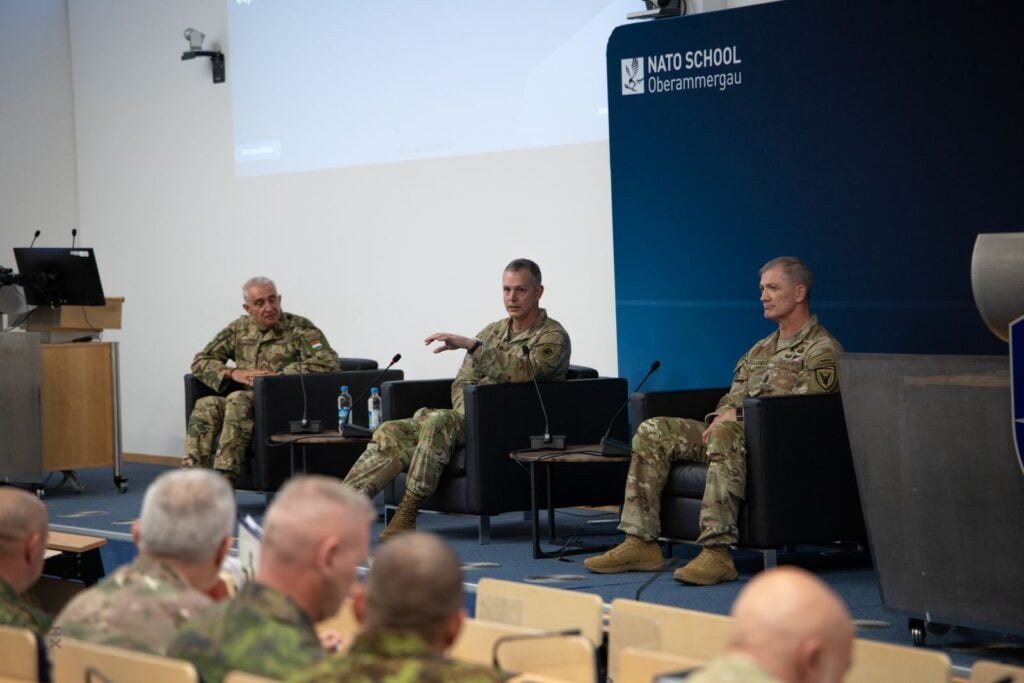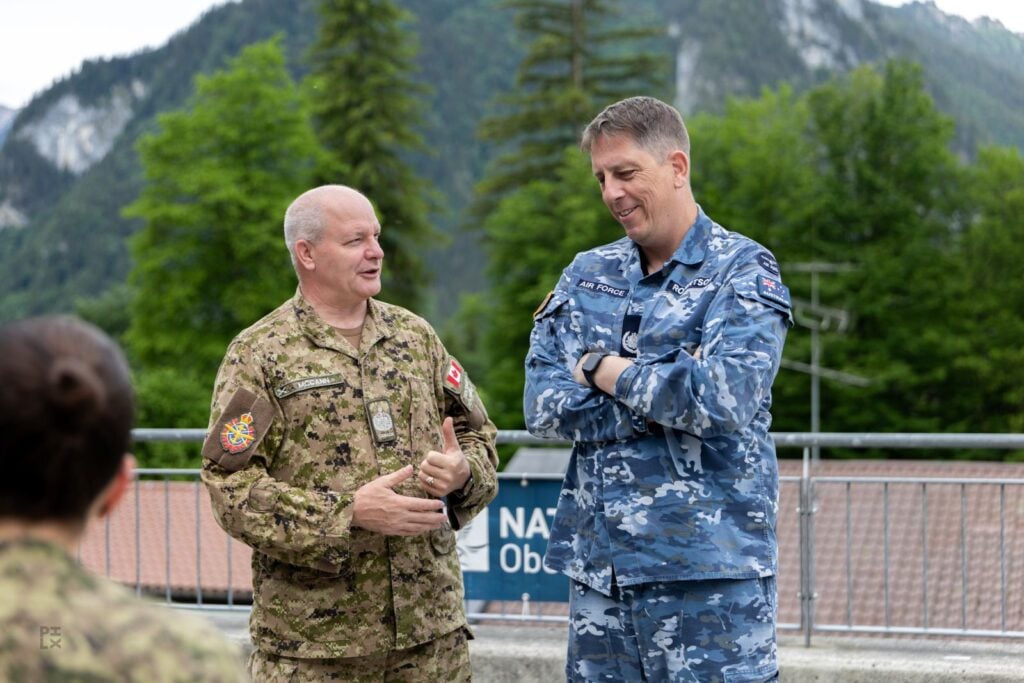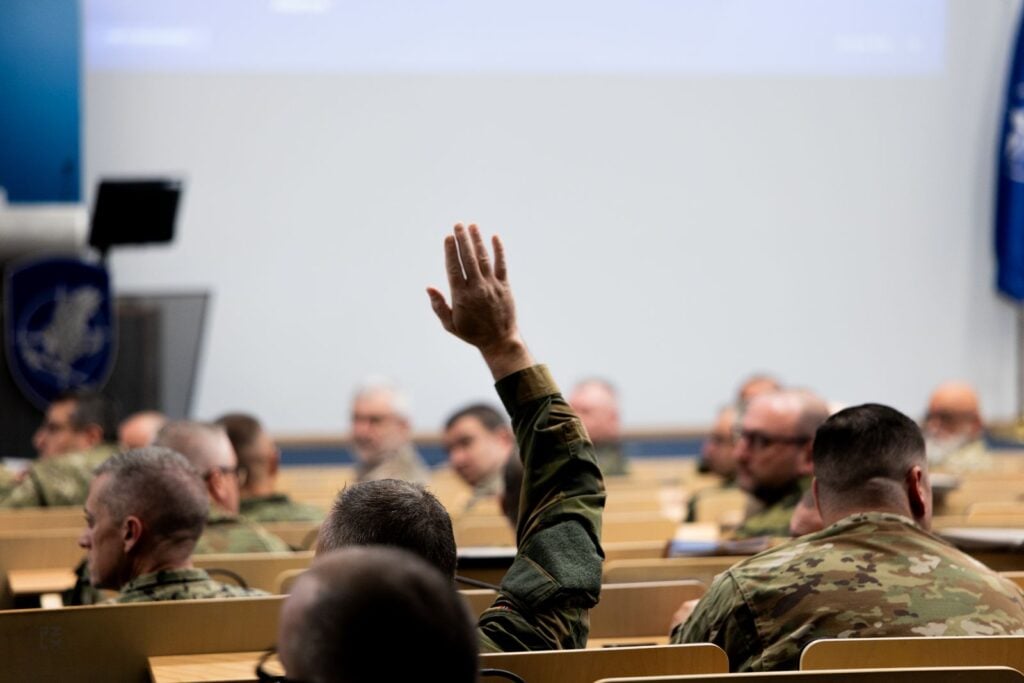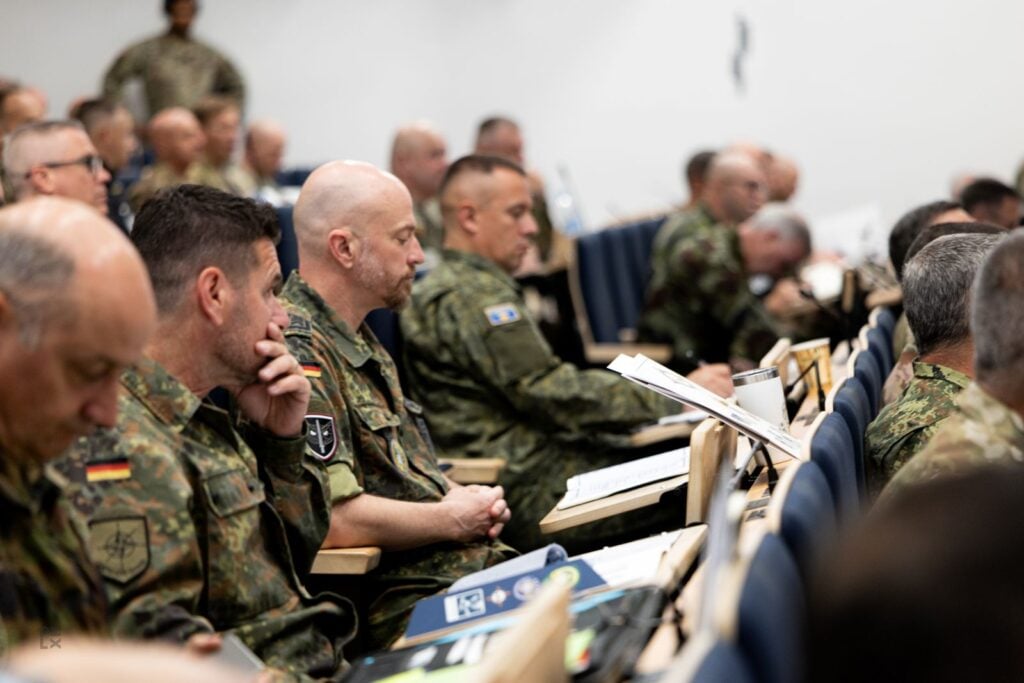
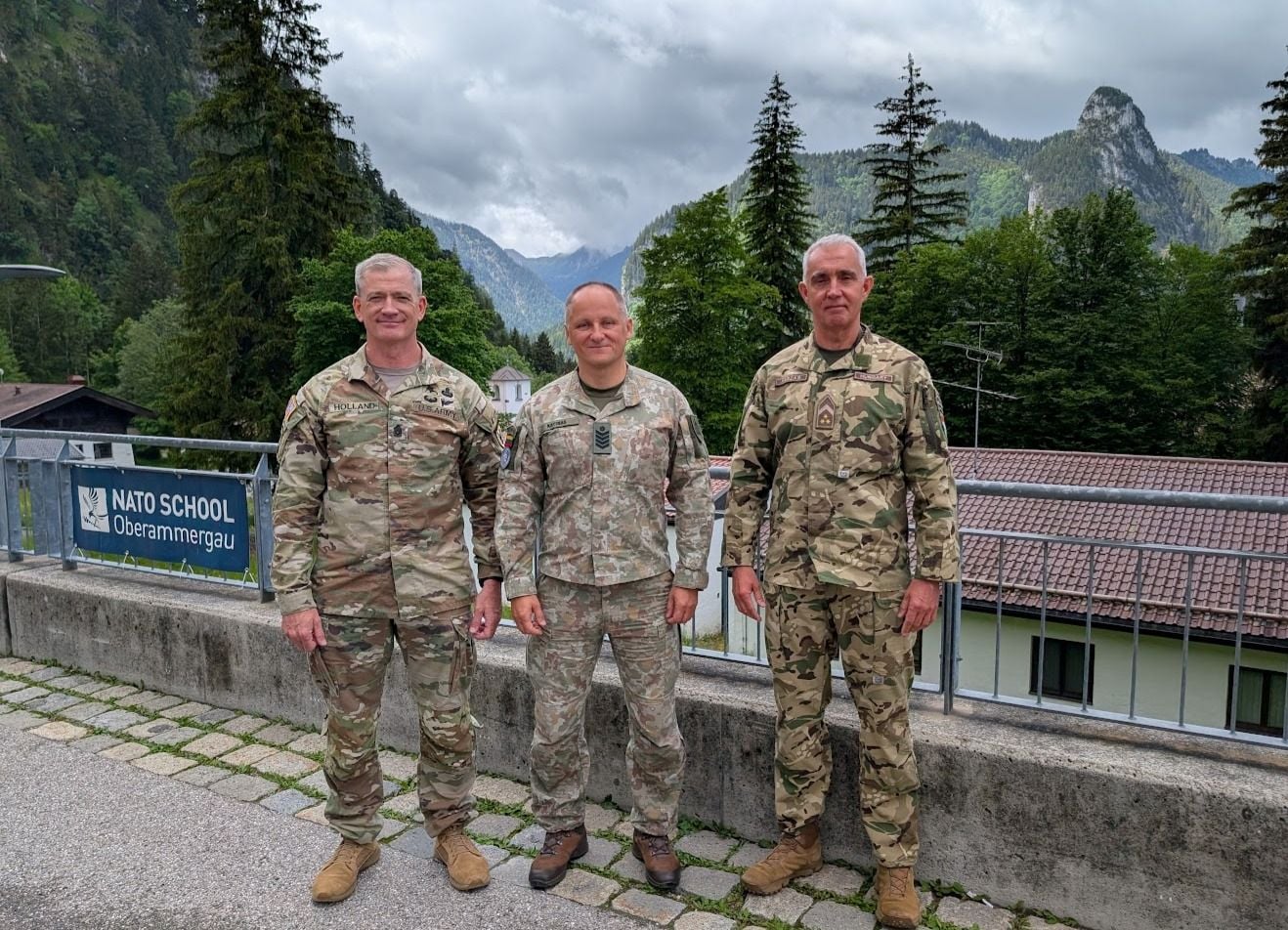
NATO’s International Command Senior Enlisted Leader (CSEL) Conference (ICC) concluded this week at NATO School Oberammergau, bringing together senior enlisted leaders from across the NATO Command Structure, NATO Force Structure, national commands, partner nations, U.S. and NATO initiatives, schools, and institutions.
The conference focused on how NATO’s enlisted leaders can help turn strategic priorities into practical action across the Alliance. Over several days, participants examined the current security environment, lessons from operations and ongoing conflict, emerging technologies, regional challenges, and the evolving demands placed on NATO personnel.
That urgency was reflected in remarks from Supreme Allied Commander Transformation, Admiral Pierre Vandier, who stressed that NATO’s advantage will depend not only on new technologies, but on the ability to adopt, adapt and employ them faster than potential adversaries.
“The decisive strategic advantage is not possessing technology. It is adapting faster than your adversary,” Vandier said.
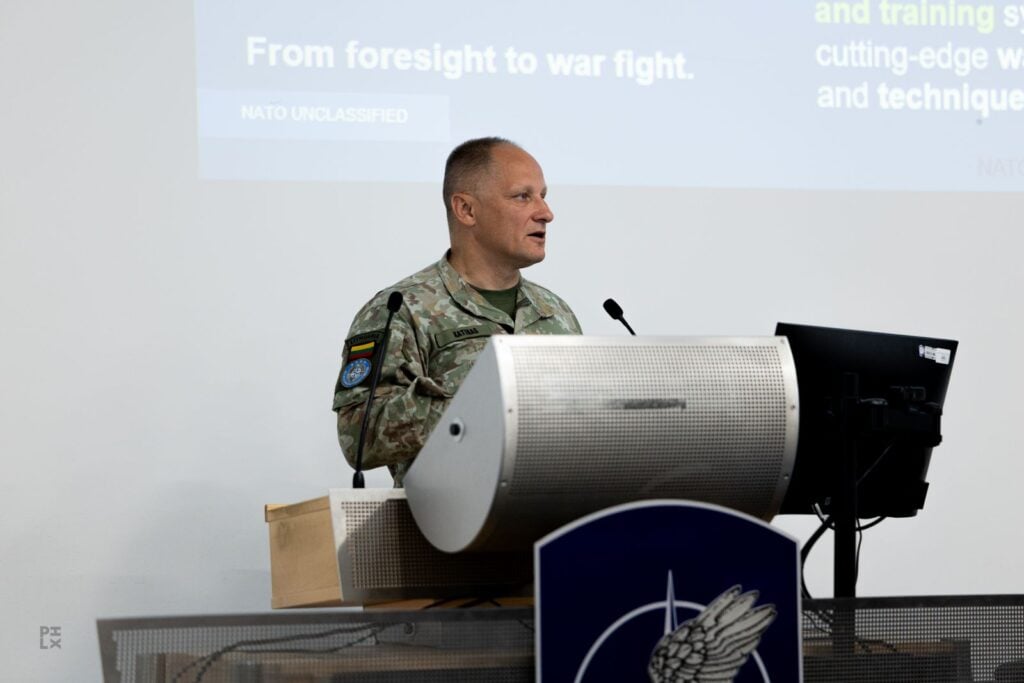
For Sergeant Major Remigijus Katinas, Allied Command Transformation’s Command Senior Enlisted Leader, that connection between strategy, people and execution is central to the conference’s purpose.
The conference bridges NATO strategy and military execution by helping senior enlisted leaders translate high-level policy into practical leadership at the unit level. With this year’s focus on ‘Adapting Now to Shape the Skills of Tomorrow,’ we are addressing the urgent need to modernize the Alliance, apply lessons from ongoing conflicts, and prepare our people for emerging technologies and future operational demands.
– Sergeant Major Remigijus Katinas
Allied Command Transformation’s Command Senior Enlisted Leader
People at the Centre of Transformation
For NATO, transformation is not only a matter of new equipment, concepts, or technology. It depends on people who understand the mission, adapt to changing conditions, and help their formations turn guidance into performance.
That was the central thread running through the conference. Sessions addressed warfighting experiences learned from Ukraine, Force Lethality Enhancement, uncrewed aircraft systems, hybrid warfare, the Indo-Pacific, and updates from NATO and partner senior enlisted leaders. Together, these discussions reinforced a practical point: NATO’s ability to deter and defend depends on personnel who can think, lead, communicate, and act across national and organizational boundaries.
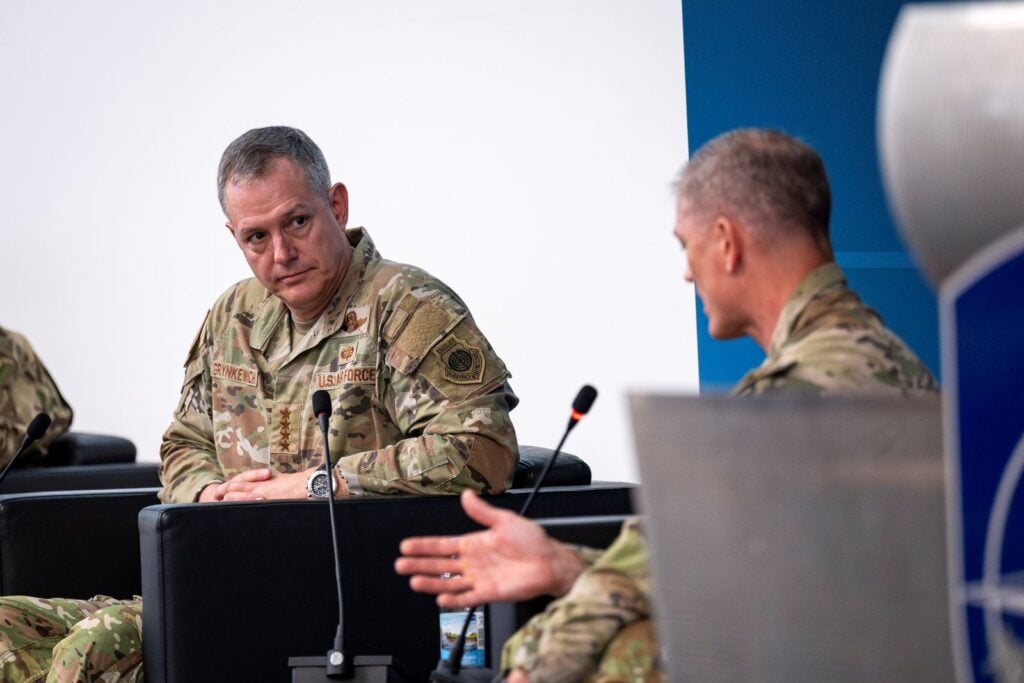
Supreme Allied Commander Europe, General Alexus Grynkewich, also emphasized that readiness begins with people and culture. While military capability, equipment and investment remain essential, he stressed that NATO’s warfighting readiness depends on discipline, resilience, high standards and a clear understanding of purpose.
“Senior NCOs (Non-Commissioned Officers) and CSELs connect strategic objectives from SHAPE (Supreme Headquarters Allied Powers Europe), NATO Headquarters, and national leadership to every level of the chain of command, so every service member understands what they need to do and how they fit into the mission,” Grynkewich said.
Command Senior Enlisted Leaders (CSELs) occupy a critical place in that effort. They advise commanders, develop personnel, strengthen discipline and professionalism, and help ensure that strategic direction is understood by those responsible for carrying it out. In an Alliance of 32 nations, that work is also deeply human. Shared procedures and interoperable systems matter, but so do trust, relationships, common understanding, and the ability to work together under pressure.
Learning from Today to Prepare for Tomorrow
A major focus of the conference was the current operating environment and the lessons NATO must draw from it. Discussions on Ukraine, uncrewed aircraft systems, and hybrid warfare highlighted the speed, complexity, and lethality of modern conflict. They also underscored the growing importance of initiative, adaptability, and informed decision-making at lower levels.
Discussions throughout the conference reinforced that adaptation must move quickly across every level of the force. In a battlefield shaped by drones, robotics, unmanned systems and rapid technological change, lessons cannot remain isolated at one level of command. They must move from tactical units to strategic decision-makers and then return as practical direction that units can act on.
Katinas said that is where non-commissioned officers and enlisted personnel play a decisive role.
“NCOs are critical to NATO’s future readiness because they stand at the point where lessons become action,” Katinas said. “They see the operational reality first, capture what must change, and help translate strategic direction into practical improvements at the tactical edge. In a battlefield shaped by rapidly evolving technology, their role is not only to support execution, but to help the force learn faster, adapt earlier, and stay ready for what comes next.”
The conference also highlighted initiatives such as Allied Command Transformation’s Beacon Projects like Task Force X-Baltic and LCI-X as examples of how experimentation, force design and operational learning can help the Alliance adapt before a crisis rather than during one. These efforts connect emerging lessons with practical testing, helping NATO better understand what works, what must change, and how new capabilities can be integrated across the force.
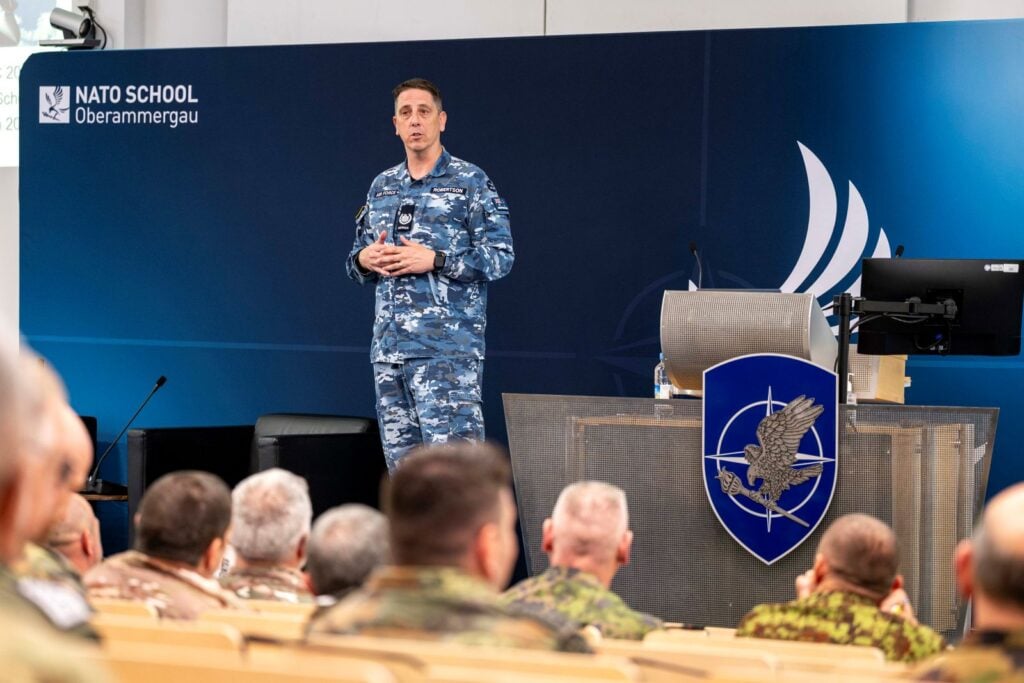
The conference also looked beyond the immediate Euro-Atlantic security environment. Briefings and discussions on China, the Indo-Pacific, and partner perspectives from Australia, New Zealand, and Japan helped place NATO’s challenges in a wider strategic context. These exchanges gave participants a broader understanding of how developments outside NATO’s traditional areas of focus can affect Allied security, planning, and readiness.
Building Networks that Strengthen the Alliance
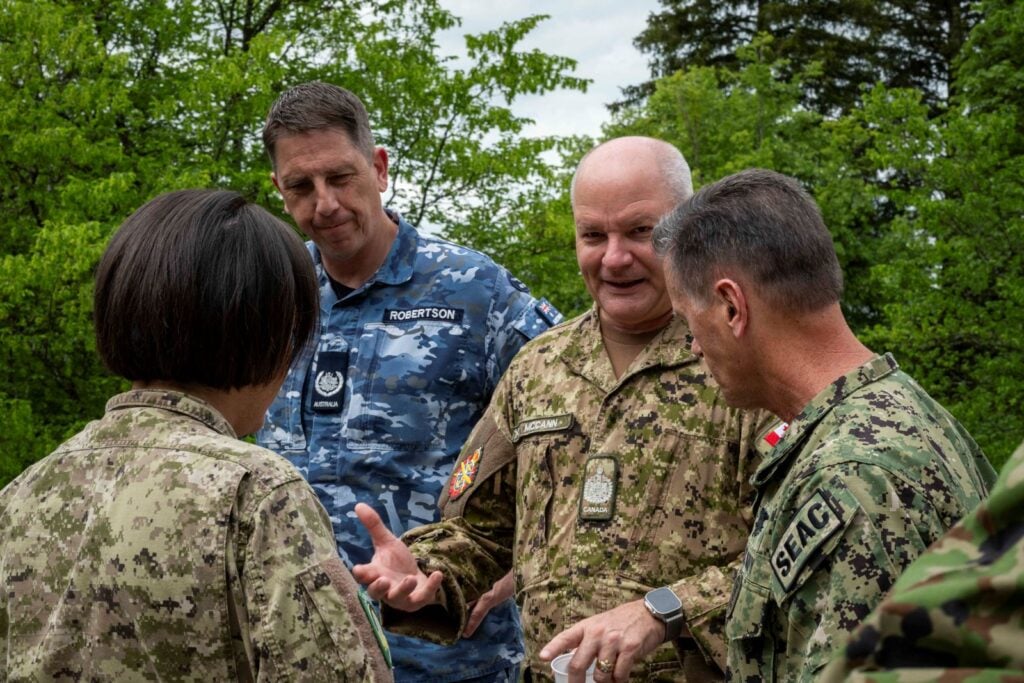
Beyond formal briefings, the conference strengthened the relationships that make NATO work in practice. Participants had opportunities to exchange perspectives, compare national approaches, and identify areas where cooperation can improve operational readiness, policy alignment, education, and partnership.
Those relationships are not secondary to military effectiveness. They are part of it. NATO’s senior enlisted leaders help connect headquarters, commands, schools, and units across the Alliance. Their networks create continuity, accelerate learning, and help ensure that lessons identified in one part of the Alliance can inform action elsewhere.
Command Sergeant Major Zoltán Kaszab, Allied Command Operations Command Senior Enlisted Leader, described that network as one of NATO’s greatest strengths.
The enlisted leadership network is one of NATO’s greatest strengths. What we discuss here reaches hundreds of thousands of service members across the Alliance. The more our people understand how their individual actions contribute to the broader mission, the stronger and more resilient the Alliance becomes.
– Command Sergeant Major Zoltán Kaszab
Allied Command Operations Command Senior Enlisted Leader
Turning Dialogue into Action
The International CSEL Conference was designed not only to share information, but to help participants translate discussion into concrete objectives. For senior enlisted leaders, that means returning to their commands with clearer priorities, stronger networks, and practical ideas that can support readiness, education, interoperability, and adaptation.
Command Sergeant Major T.J. Holland, U.S. European Command’s Command Senior Enlisted Leader, reinforced that innovation is ultimately about building adaptive people and formations, not simply fielding new tools.
Innovation is not about the next piece of technology. It’s about building formations that can adapt faster than the battlefield changes. New capabilities will come and go, but the constant is the NCO corps. When conflict begins, it is our enlisted leaders who turn ideas into action, help formations overcome obstacles, and ensure our forces are ready not for the last fight, but for the next one.
– Command Sergeant Major T.J. Holland
U.S. European Command’s Command Senior Enlisted Leader
As NATO continues to adapt, its decisive advantage will remain rooted in its people. Advanced capabilities, modern systems, and credible plans are essential, but they only matter when trained, trusted, and committed personnel can employ them effectively. The conference reinforced that message: NATO’s future readiness will be shaped not only by what the Alliance builds, but by the people prepared to lead, learn, and act together.