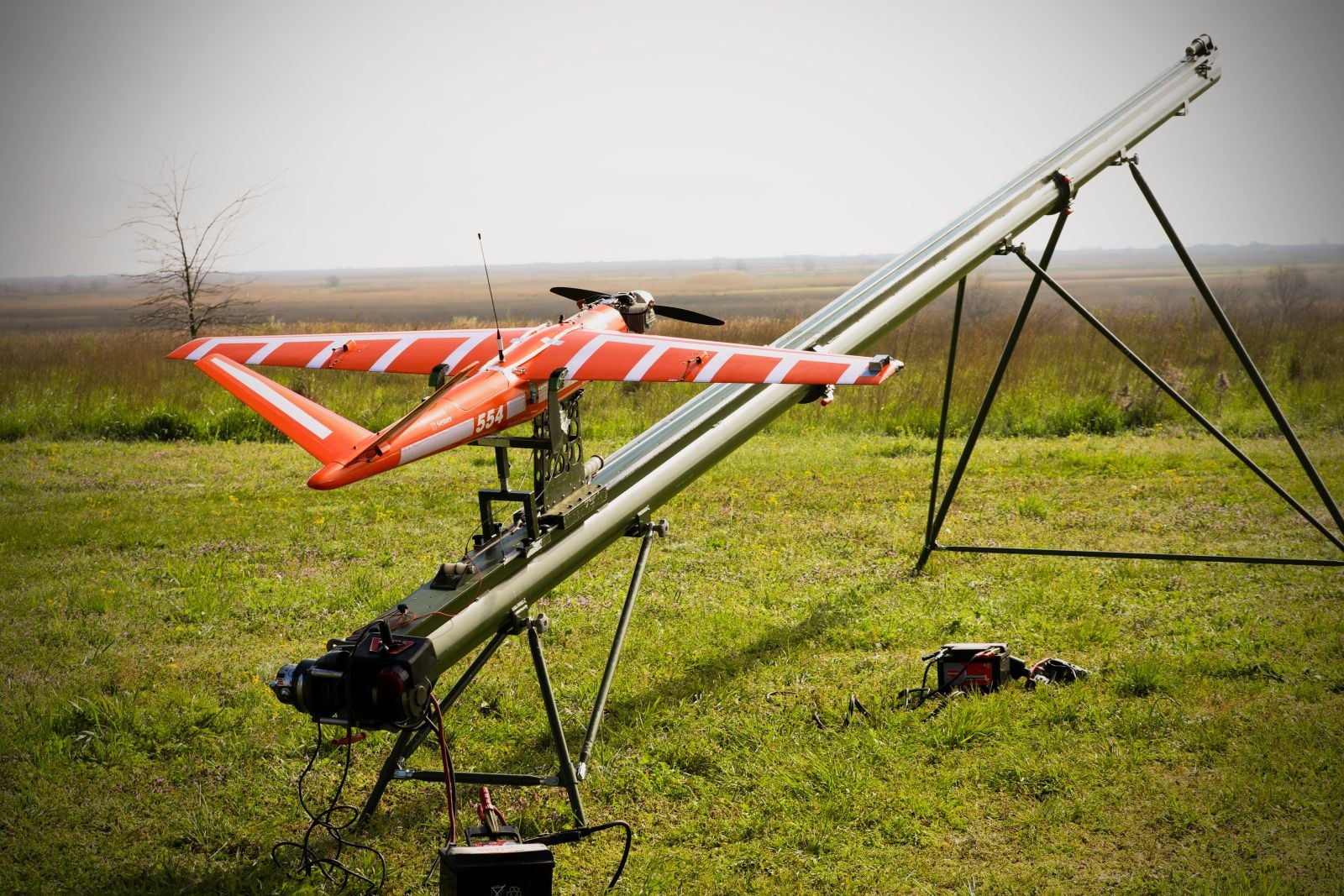
OULU, Finland. NATO Allied Command Transformation (ACT), in cooperation with the Finnish Defence Forces and industry partners, has completed LCI-X Crucible 2-26, the second event in NATO’s Layered Counter-UAS Initiative-X (LCI-X) experimentation series. The initiative focuses on countering Uncrewed Aircraft Systems (UAS), commonly known as drones.
Building on LCI-X Crucible 1-26 in Romania in April, this week’s event in Finland focused on a more complex challenge: connecting the teams, sensors, command systems and response options needed to detect, track and defeat uncrewed aircraft across multiple locations.
Connecting the Counter-UAS Fight
As one of ACT’s Beacon Projects, LCI-X is an operational experimentation framework for accelerating the development of interoperable counter-UAS capability across the Alliance. While nations and organizations routinely test individual technologies, ACT’s unique role is helping connect those capabilities into integrated systems that can support NATO operations.
Recent conflicts have demonstrated that innovation and adaptation are no longer advantages; they are operational necessities. LCI-X brings together Allies, industry and operational users to rapidly test, learn and refine solutions while improving the interoperability required for collective defence.
– Major General Arnoud Stallmann
Assistant Chief of Staff Capability Development,
Allied Command Transformation
Experimenting Under Operational Pressure
During the event, military operators, industry innovators, researchers and government partners worked together in realistic operational conditions to assess how different systems could function as part of a shared counter-UAS capability. The experimentation examined how tactical cells could share information, coordinate responses, and operate within a broader command-and-control environment.
One of the most encouraging outcomes from LCI-X 2-26 was the growing willingness of industry partners to work collectively towards interoperability. Rather than focusing only on individual system performance, companies explored how their technologies could share data, connect with NATO architectures, and operate alongside systems from other vendors. This reflected one of LCI-X’s core objectives: moving beyond isolated technologies toward integrated capabilities that can support NATO operations.
Finland’s location on NATO’s Eastern Flank also gave participants the opportunity to experiment in a demanding operating environment, with exposure to real-world electronic interference and other operational challenges.
Rather than viewing spoofing and jamming as an inconvenience, we use it to our advantage as part of the experimentation process. That allows us to better understand how systems perform under realistic operational pressures and help identify opportunities for improvement and integration.
– Captain Joe Pisoni
Director of LCI-X
Scaling Across the Alliance
A central objective of LCI-X is to move beyond the assessment of individual technologies and towards the development of interoperable, scalable capability. Through progressive experimentation, ACT is exploring how tactical counter-UAS cells can be connected into larger operational networks and integrated within NATO’s wider Air Command and Control ecosystem.
The Crucible Series consists of increasingly complex experimentation events conducted across Europe. Following Romania and Finland, future events will focus on multi-cell connectivity, integration with NATO Air Command and Control systems, and cross-border operations within a wider Alliance architecture. The series will culminate with an experimentation event focused on integrated detect-and-response operations across multiple cells operating within the NATO command and control ecosystem.
As uncrewed threats continue to evolve in scale, affordability, and sophistication, LCI-X provides a mechanism for nations, NATO organizations, and industry to collaboratively develop and refine integrated solutions. By connecting Allied innovation to operational capability, ACT is helping accelerate interoperability, strengthen collaboration between nations, NATO organizations, and industry, and develop the integrated architectures required for the future of collective defence.