The character of conflict is evolving faster than traditional defence structures were ever designed to handle: continuous adaptation is the new paradigm. Emerging and disruptive technologies are redefining the battlespace, supply chains are becoming strategic vulnerabilities, and adversaries are innovating on timelines measured in weeks and months, not decades. In this new era, NATO’s technological edge depends not only on what its militaries can field, but on how effectively they can collaborate with industry, from the largest “defence primes” to the smallest start-ups.
At NATO’s Allied Command Transformation (ACT), this evolution is already underway. More than a military strategic headquarters, ACT is now a catalyst for a fundamental shift: from transactional exchanges with industry to long-term collaboration and shared innovation. This transformation is taking place at speed and at scale, as ACT works across the Alliance to synchronize innovation efforts, experiment at scale, accelerate adoption and deliver solutions.
Industry: From Supplier to Strategic Partner
Historically, NATO’s engagement with industry was largely transactional. Governments issued requirements, and companies delivered platforms. That model still matters, but it no longer meets the pace or complexity of today’s challenges. Since the 2009 creation of the first collaborative framework with industry, Allied Command Transformation has led a new approach built on co-creation, shared risk, and continuous collaboration.
A cornerstone of this evolution is the 2013 Framework for NATO-Industry Engagement (FNIE). The framework is currently being reviewed to reflect today’s security environment and to recognize industry as an essential instrument of power. The new version will be agreed at the next NATO Summit in Istanbul. This evolution must continue while upholding NATO’s democratic values — transparency, fairness, and equity of treatment remain non-negotiable. At the heart of NATO’s engagement with industry lies a commitment to openness and shared access. The Alliance understands that its strength depends on the same industrial base that supports the defence of its member nations. Over the past fifteen years, this base has evolved dramatically, shaped by the growing role of the information technology sector and the accelerating pace of digital transformation.
Commercial companies, including start-ups, are now key partners in developing dual-use solutions. They are fully integrated into NATO’s efforts. For example, the NATO Commercial Space Strategy stands as a clear demonstration of this collaboration. This shift represents a natural progression toward an Alliance ready for Multi-Domain Operations by 2030. It strengthens deterrence and defence for one billion citizens across member nations. To achieve this goal, NATO is fostering an inclusive industrial ecosystem that draws on the full range of societal talent. By embracing opportunities beyond the traditional defence sector, the Alliance is ensuring it maintains its technological edge now and for the long term.
Building an Integrated Ecosystem
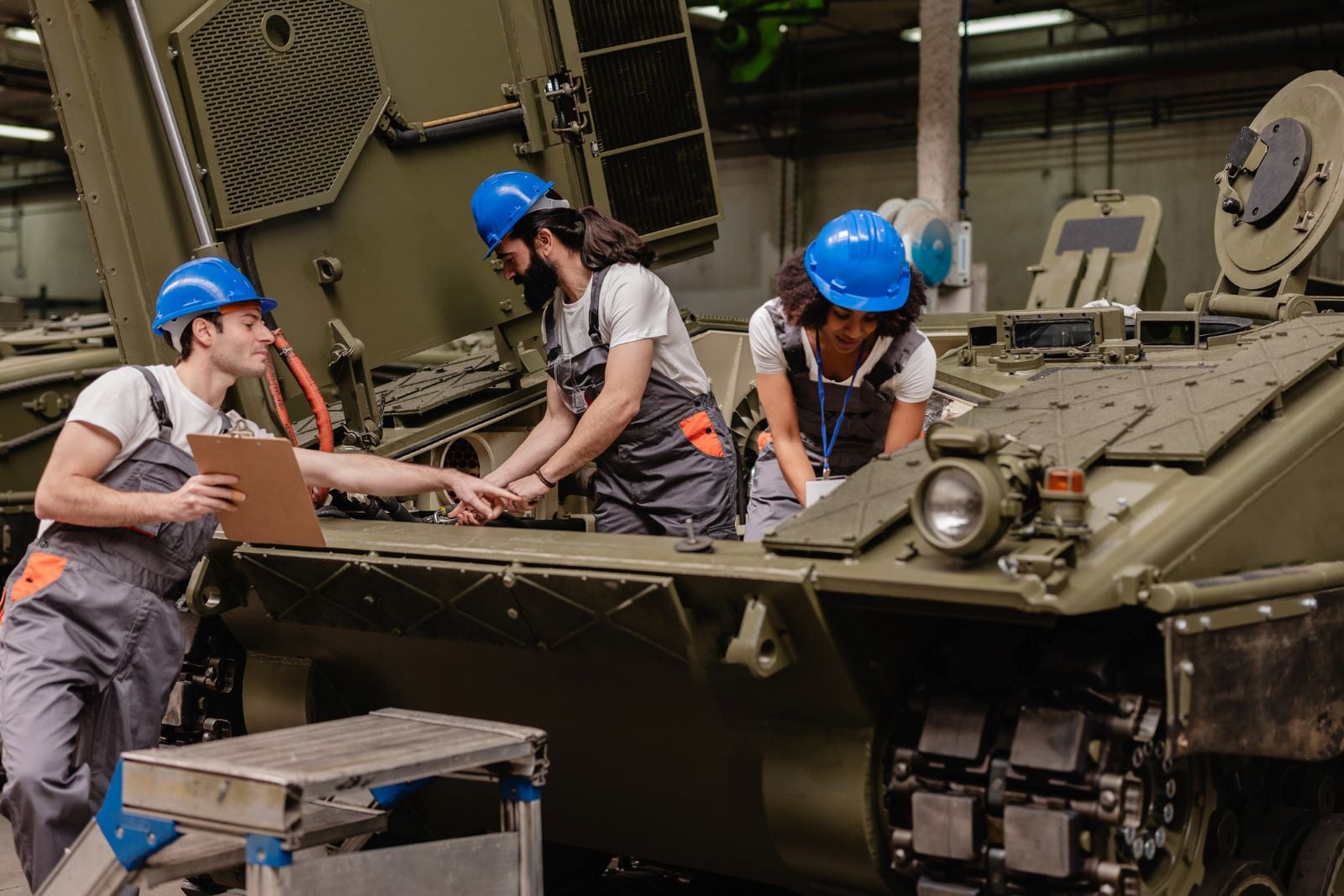
ACT’s approach also recognizes that industry engagement now spans every layer of capability development. The scale of this collaboration is unprecedented, drawing together governments, major defence primes, and emerging technology firms across multiple domains and allied nations. It includes hardening supply chains to ensure resilience under stress, embedding interoperability into systems from the outset, and integrating dual-use technologies (from artificial intelligence to autonomous systems) into operational concepts.
Small and medium-sized companies and start-ups are particularly vital to this new ecosystem. Their agility and disruptive potential often exceed that of larger contractors, but they face significant barriers in financing, scaling, and navigating NATO’s procurement landscape. ACT’s initiatives aim to reduce these barriers, enabling smaller companies to become central contributors to the Alliance’s capability development pipeline.
Innovation at Speed
One of the most visible signs of this shift is Allied Command Transformation’s focus on rapid adoption, delivering innovation both at speed and at scale. Traditional acquisition cycles, often measured in decades, cannot keep pace with the speed of commercial innovation and the speed of peer competitors. To address this, ACT is pioneering new experimentation and fielding models that collapse timelines and bring capabilities from concept to deployment far faster.
The Task Force X Baltic initiative is a powerful example. In response to urgent operational needs, in less than six months ACT brought together a consortium of Allied innovators, defence planners, and industry partners to design, prototype, and demonstrate a new capability in under six months, a process that would once have taken years. Similarly, the NATO Innovation Challenges provide a recurring platform for start-ups, small and medium sized companies, and research teams to propose disruptive solutions to defined operational problems. Winning concepts are offered the opportunity to move rapidly into testing and experimentation and may be presented to Allied nations to help create the conditions for future market demand.
Most recently through NATO’s Layered Counter-UAS Initiative (LCI-X), Allied Command Transformation is conducting scenario-driven events that are identifying, testing and recommending interoperable and scalable counter-UAS solutions for deployment along NATO’s Eastern Flank. This initiative supports Allied Command Operations’ Enhanced Vigilance Activity Eastern Sentry and demonstrates NATO’s ability to rapidly identify new capabilities to complement the lethal forces currently deployed.
These models illustrate the new paradigm: innovation is no longer a linear process. It is a dynamic, collaborative partnership between NATO and industry: continuous, adaptive, and designed to deliver relevant capabilities at the speed of relevance.
The Strategic Road Ahead
The transformation is more than a change in process; it reflects a deeper realignment of roles and responsibilities since transformation requires continuous adaptation. Industry has evolved from a provider of equipment into a co-architect of capability, shaping solutions alongside the military from the earliest stages of development.
NATO’s role has shifted too. Rather than acting purely as a buyer, the Alliance is now an active partner in innovation, shaping demand signals, sharing risk, and accelerating delivery. Allied Command Transformation is the bridge connecting strategic needs with industrial ingenuity, aligning incentives with outcomes, and ensuring that the Alliance can out-innovate any adversary.
In the decades ahead, NATO’s technological advantage will be defined not by the size of its budgets or the scale of its procurement programmes, but by the strength, agility, and diversity of the ecosystem it builds. By turning engagement into collaboration and suppliers into partners, Allied Command Transformation is ensuring that, by fully leveraging it, the Alliance’s industrial base becomes a strategic advantage, one that can think, move, and innovate as quickly as the challenges it must meet.