Allied Command Transformation is NATO’s Warfare Development Command and a leading agent of Alliance innovation.
The Command applies innovation to capability development and warfare development efforts in order to deliver better and faster operational capabilities and results. Command personnel understand and harness technological innovation; and serve as the leading innovation agents for the Alliance. The results of ACT’s culture of innovation are found within the innovation practices of NATO and NATO nations as well as operational capabilities that are delivered on or ahead of time.
These are recent innovations driven by Allied Command Transformation:
 Building on successful national programs like US Task Force 66, NATO has created Task Force X to rapidly integrate new technologies with traditional naval forces to strengthen maritime security operations.
Task Force X is NATO’s specialized initiative launched in early 2025 to enhance the Alliance’s maritime security by quickly adopting autonomous systems and artificial intelligence in naval operations. The task force aims to improve situational awareness and boost NATO’s surveillance and reconnaissance capabilities, while detecting threats and protecting critical undersea infrastructure, particularly in the Baltic Sea region.
“Task Force X works alongside Enhanced Vigilance Activities to reassure our Allies and deter attacks against critical undersea infrastructure in the Baltic Sea. It creates a framework for all nations to contribute by deploying their own autonomous capabilities, while demonstrating the value of cutting-edge technologies. This collaborative effort fills surveillance gaps, especially in areas not covered by existing systems, and improves our ability to detect vessels operating without identification,” explains Admiral Pierre Vandier, Supreme Allied Commander Transformation.
Task Force X represents NATO’s commitment to rapidly adopting emerging technologies like autonomous systems and artificial intelligence. The initiative seamlessly integrates unmanned vessels with traditional crewed enabling faster and more effective responses at reduced costs. By experimenting with autonomous vessels, NATO positions itself at the forefront of modern military innovation.
 The 15th edition of the Innovation Challenge focused on a particularly urgent threat: the increasing use of glide bombs in contemporary conflict zones, especially in the ongoing war in Ukraine. The results of the Spring NATO Allied Command Transformation Innovation Challenge have been announced, naming Team Alta Ares from France as the winner for their “Embedded AI for Recognition, Detection, and Identification” submission.
More information on the challenge is available here.
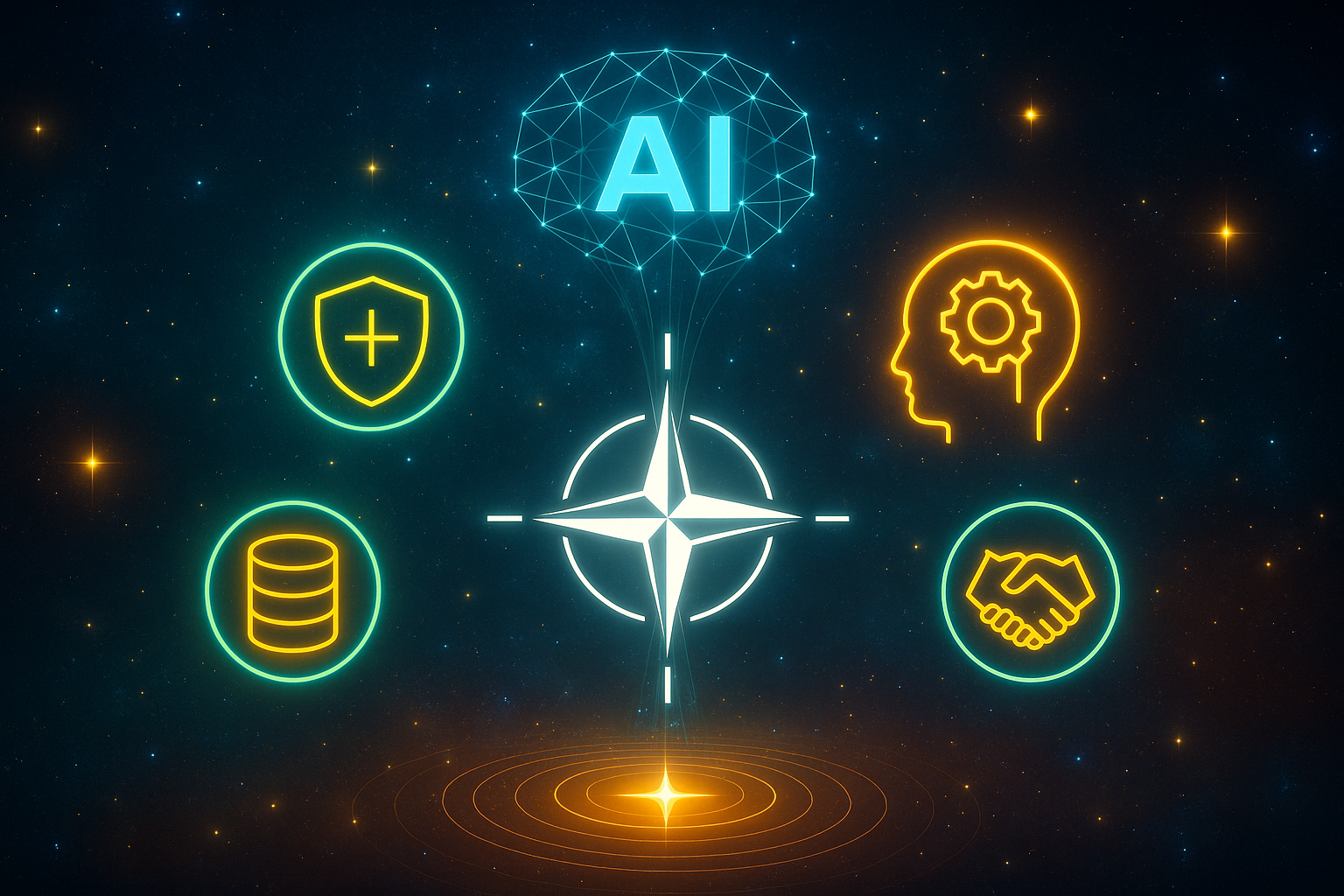
Imagine a future where artificial intelligence (AI) empowers NATO forces with unprecedented speed, precision, and insight. At the heart of this revolution lies Allied Command Transformation, the driving force behind NATO’s journey to harness the transformative power of AI for collective security. The Command is driving forward a wide range of initiatives that integrate AI across military operations, innovation, education, and capability development. These efforts reflect NATO’s broader goal of becoming a digitally transformed, data-driven, Multi-Domain Operations-enabled Alliance by 2030.
Read more here.
 As NATO adapts to the evolving character of warfare in the 21st century, the space domain has emerged as a critical front for securing peace, ensuring deterrence, and maintaining the Alliance’s operational edge. At the forefront of this transformation is Allied Command Transformation, which is leading the effort to integrate space into NATO’s Multi-Domain Operations framework and strategic planning.
Read more here.