At NATO Allied Command Transformation, Beacon Projects are intended to turn promising ideas into practical progress for the Alliance. They focus effort on initiatives that can address real operational challenges, connect experimentation to practical need, and help accelerate the adoption of capabilities that matter in the field.
Task Force X-Arctic is one of those efforts. Driven by ACT, the project’s delivery is led by the NATO Science and Technology Organization’s Centre for Maritime Research and Experimentation (CMRE), with Allied Maritime Command (MARCOM) providing the maritime operational framework leveraging emerging and disruptive technologies in areas such as autonomy, quantum, next generation communication networks, and space technologies. It is designed to strengthen awareness in the North Atlantic and Arctic through a more connected, data-driven and persistent operational approach.
It also reflects a wider Alliance effort. Task Force X–Arctic sits under NATO’s Rapid Adoption Action Plan, approved at the NATO Summit in The Hague in 2025, which is intended to help Allies acquire, integrate and deploy new technological products more rapidly alongside conventional forces. Within that broader effort, the NATO Task Force X framework offers a practical model for integrating emerging technologies into operational units in ways that can be scaled across regions, domains, and mission sets. Task Force X–Arctic applies that model to one of NATO’s most strategically important environments.
Why the Arctic matters
The Arctic is a critical region for Allied security. It is a gateway to the North Atlantic and hosts vital trade, transport, and communication links between North America and Europe. Preserving security, stability, and cooperation in the High North therefore remains important to the Alliance.
At the same time, it is a difficult area in which to operate. Distance, environmental conditions, limited communications and the sheer scale of the operating space all make surveillance and sustained presence more demanding. As NATO continues to adapt its deterrence and defence posture, the Arctic and the High North require solutions that can improve awareness while making better use of available forces.
That challenge is becoming more urgent. Increased Sino-Russian cooperation in the Arctic and the High North has strategic and operational implications for NATO’s posture in the region. For the Alliance, the requirement is clear: maintain a better picture of the operating environment, improve coordination across commands and nations, and do so in a way that is sustainable over time.
What Task Force X-Arctic is designed to do
Task Force X-Arctic is designed to help meet that requirement by testing a different model for awareness in the High North. By the summer of 2027, the project aims to demonstrate, for the first time, a fully digitized, data-centric multi-domain awareness capability in the North Atlantic and Arctic regions.
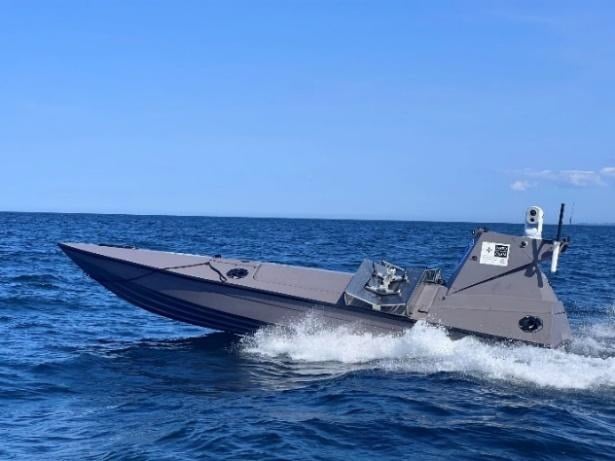
In practical terms, that means bringing together crewed and polar-ready uncrewed systems, all operating under human control ultimately, into a single operational framework supported by a digital backbone, interoperable command and control, data-sharing arrangements and mission engineering tools. The intent is to allow sensors, platforms, and operators to work together more effectively, share information faster, and make better use of available assets in Arctic conditions.
This is where the NATO Task Force X framework becomes especially relevant. Rather than treating innovation as separate from operations, it provides a way to integrate emerging technologies into operationally relevant activity at speed. In the Arctic, that means exploring how autonomy, interoperability and shared data can contribute directly to maritime domain awareness and deterrence by presence.
ACT, CMRE and MARCOM each play a distinct role in delivering Task Force X-Arctic
ACT provides strategic direction and oversight, CMRE leads the tactical delivery, and MARCOM provides the operational maritime framework and integration into Allied maritime activities. Together, that brings strategic purpose, technical experimentation and operational integration into the same effort. The experimentation and its outcomes contribute directly to strengthen awareness in the Arctic and High North.
The project roadmap reflects that seriousness. Activities across 2026 and 2027 include interoperability events, Arctic trials, CWIX, REPMUS and further testing designed to validate standards, connectivity, data-sharing and platform performance ahead of a large-scale experimental integration effort of Task Force X-Arctic. Nations are being asked to contribute capabilities, support industry participation and help create the conditions needed to test what can truly operate in the High North.
Supporting Arctic Sentry and NATO’s posture in the region
Task Force X–Arctic also supports a broader operational effort. In February, Supreme Allied Commander Europe launched Arctic Sentry, a multi-domain enhanced Vigilance Activity that strengthens NATO’s posture in the Arctic and High North by bringing together NATO and Allied activity in the region under one overarching operational approach. Led by Joint Force Command Norfolk, Arctic Sentry is intended to improve information sharing, build a better operational picture and help address gaps more quickly and effectively.
Building on the work of Task Force X–Baltic, Task Force X-Arctic expands the project’s focus to the North Atlantic and Arctic region, where persistent intelligence, surveillance and reconnaissance and improved multi-domain maritime situational awareness are increasingly critical. That makes the project important beyond any single trial. It supports the broader goal of building a more cohesive picture of the Arctic operating environment while accelerating interoperability and practical capability development.
The Task Force X initiatives also point toward a necessary phase two: supporting nations as they procure, integrate and scale proven solutions into their national capabilities. With ACT providing oversight, CMRE leading technical delivery and MARCOM ensuring operational integration into Allied maritime operations, the Task Force X-Arctic Beacon Project shows how NATO can translate rapid innovation into operational advantage in the High North.