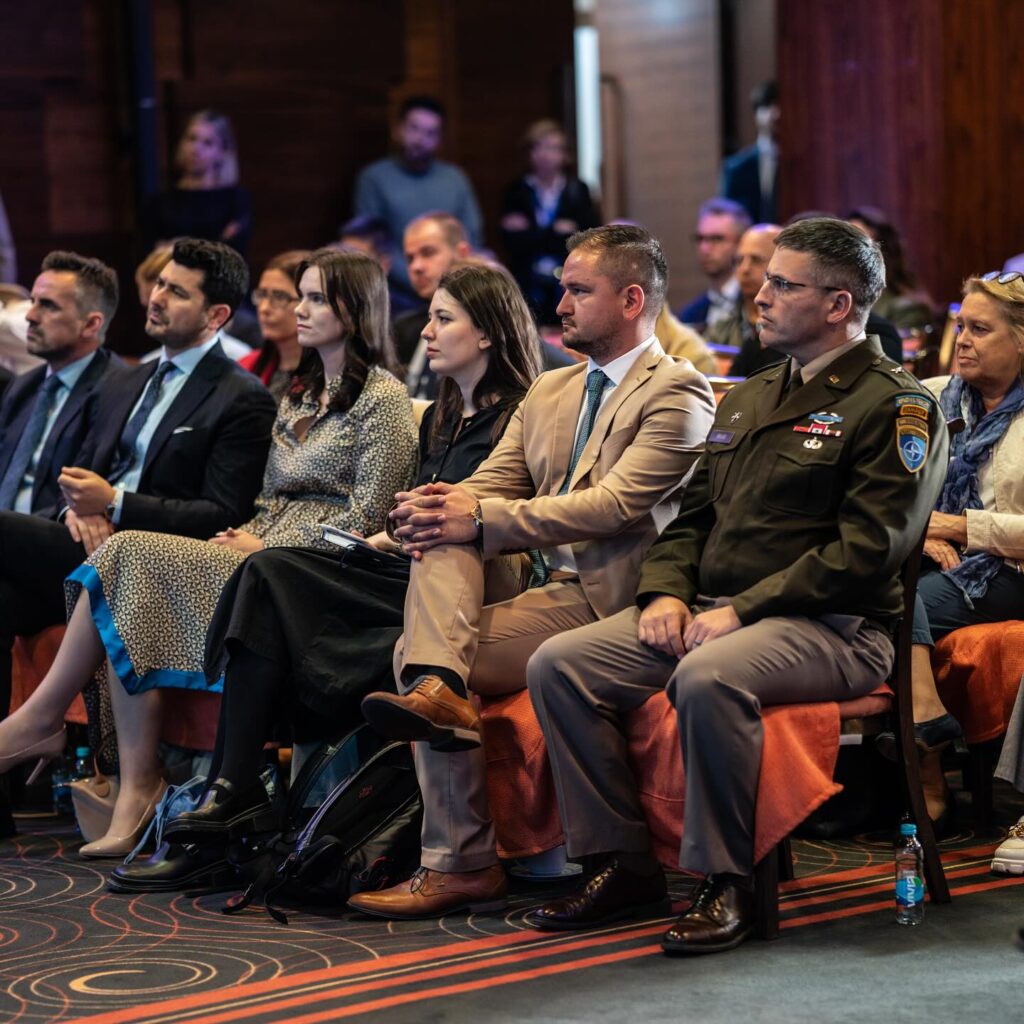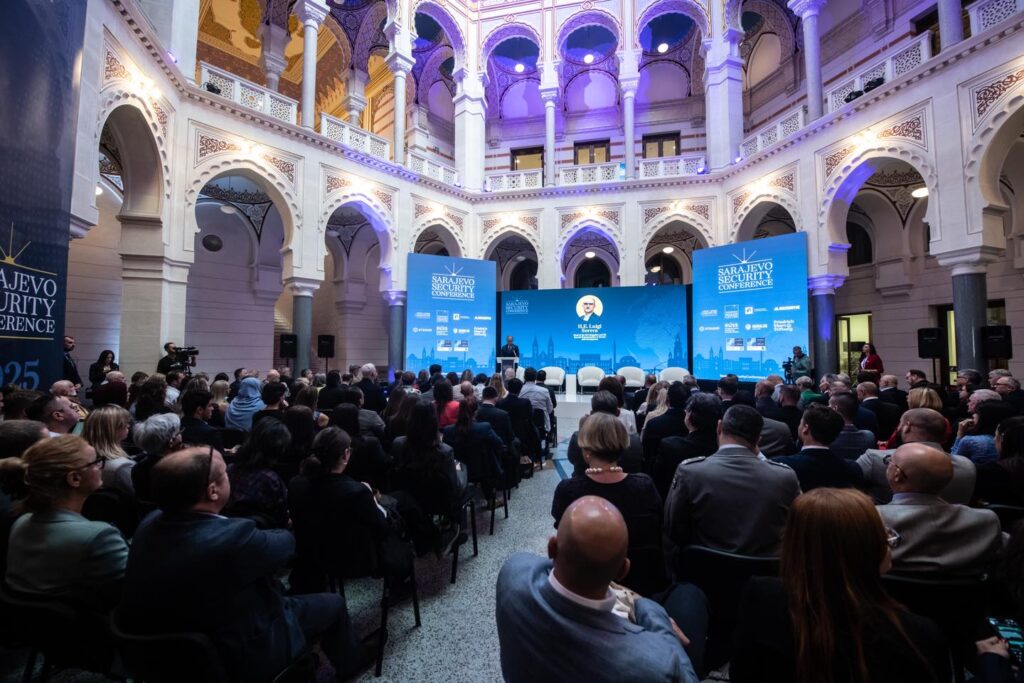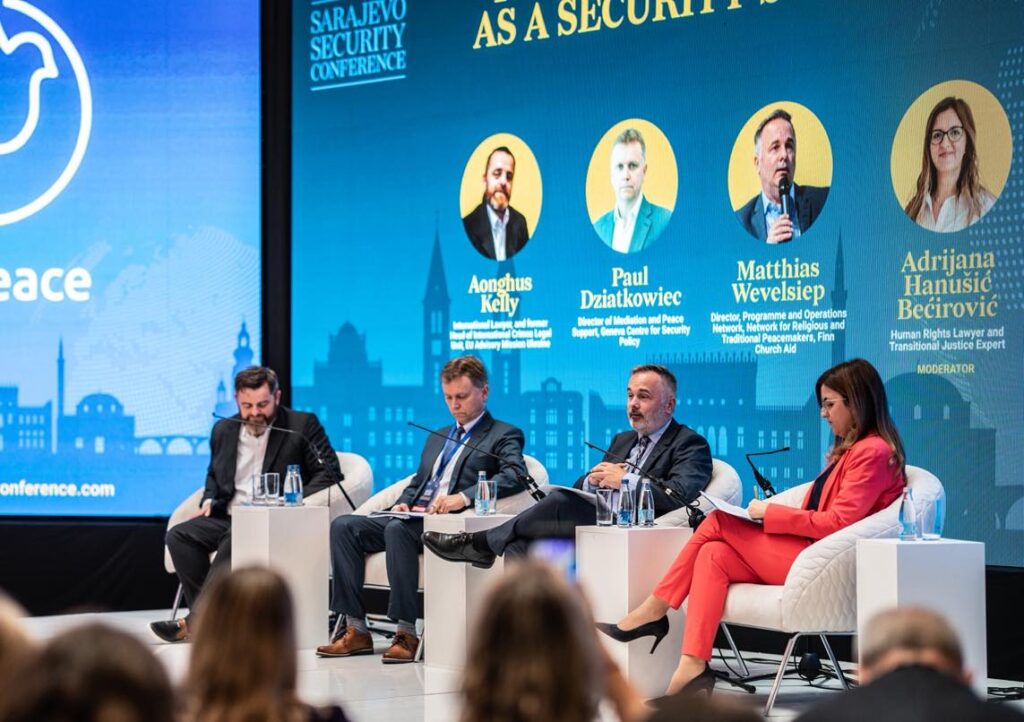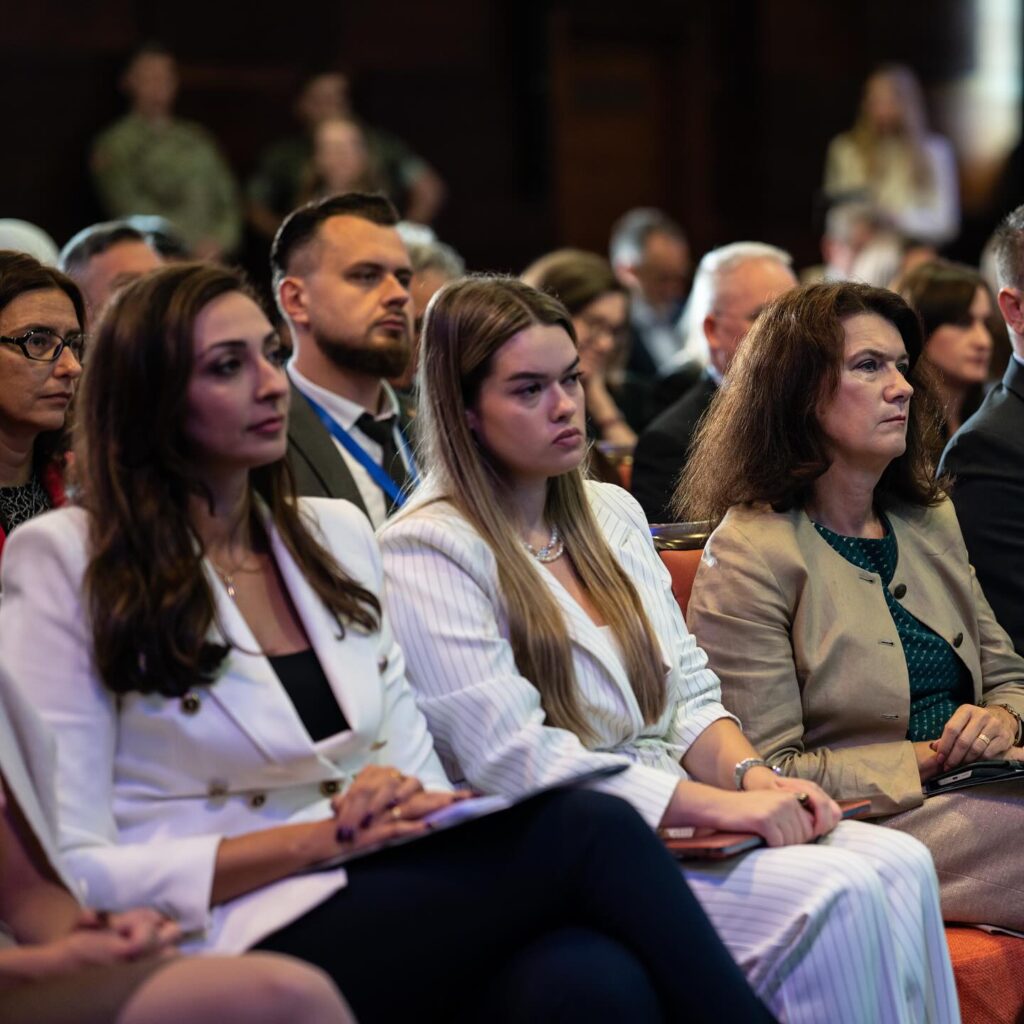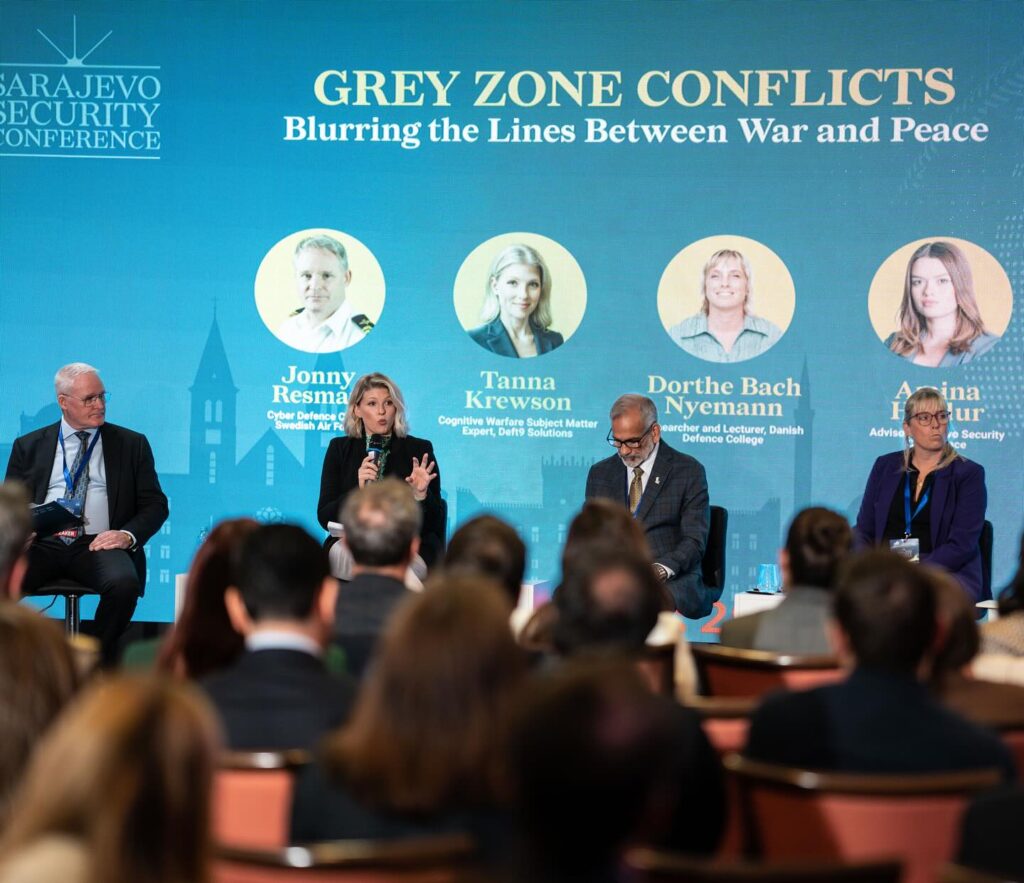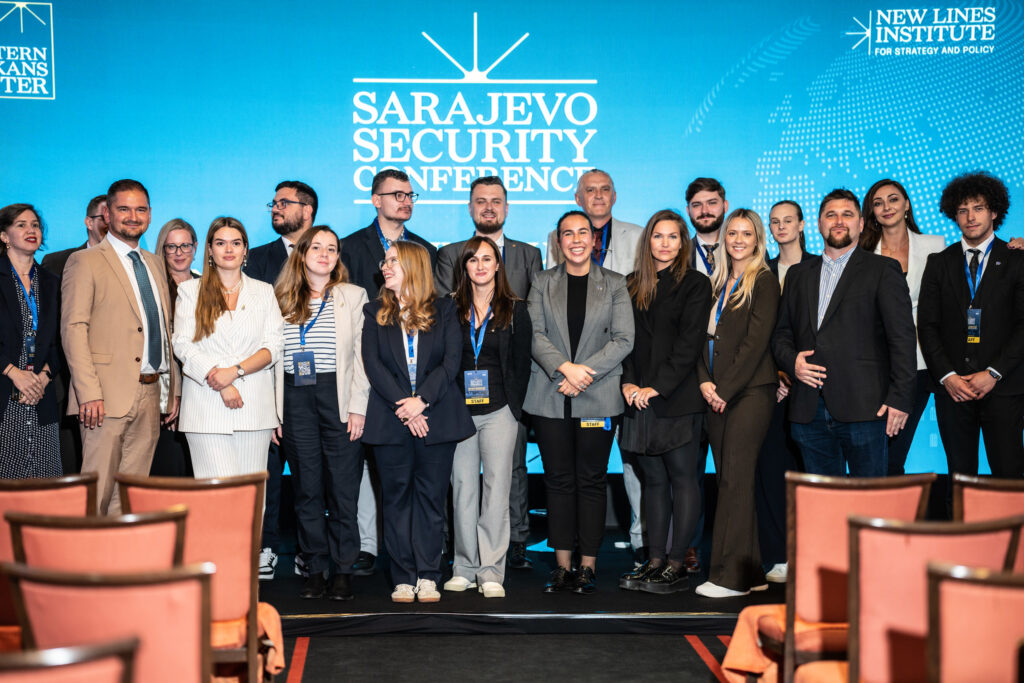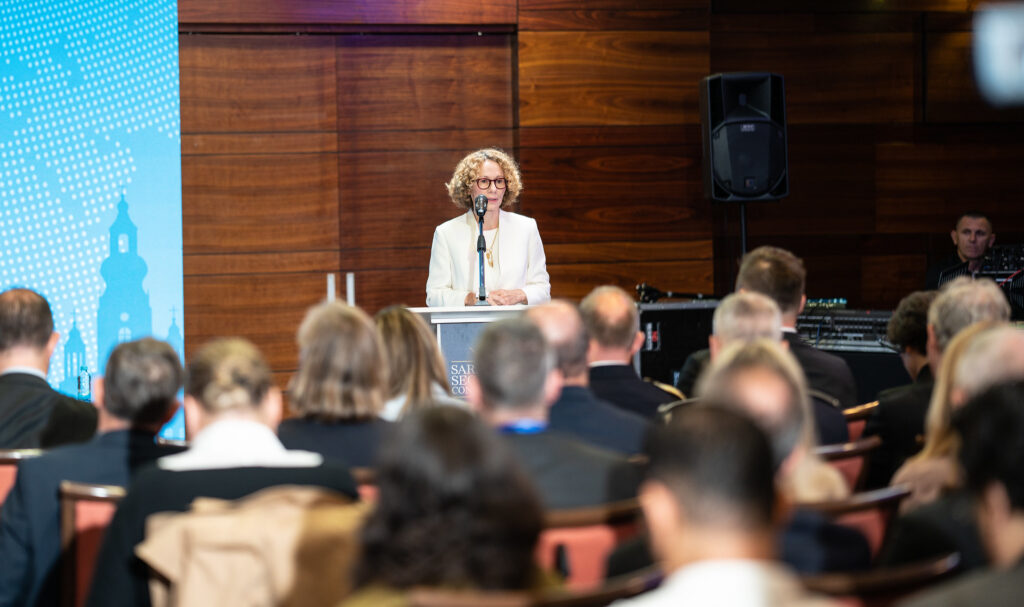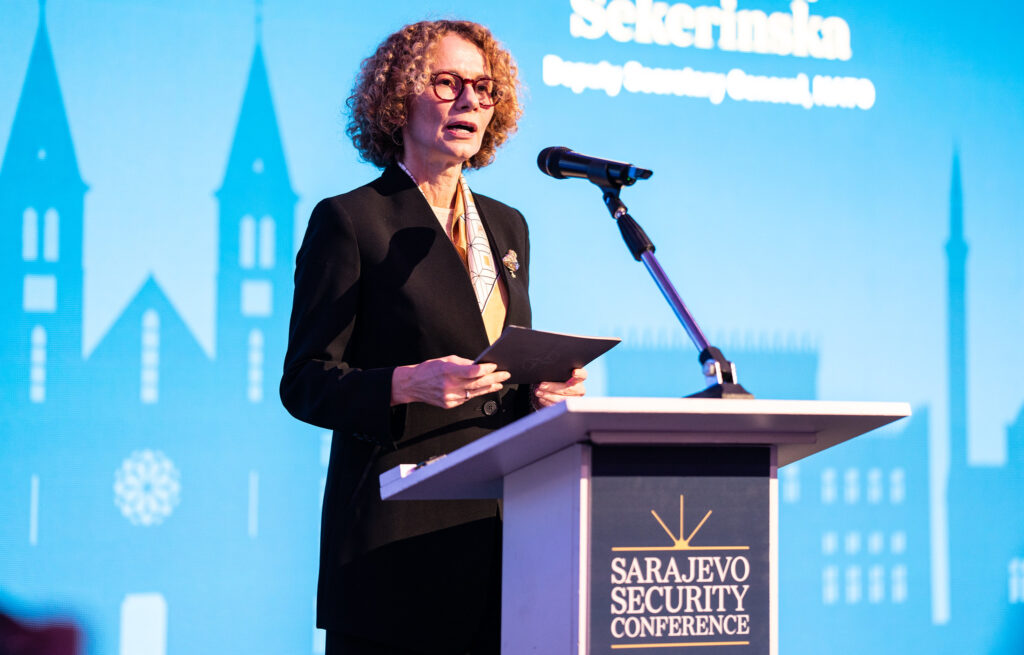

From 26 to 28 September 2025, the Sarajevo Security Conference brought together global thought leaders, policymakers, diplomats, defence officials, academics, and civil society actors to discuss some of the most pressing challenges to global and regional security. This year’s conference focused on issues central to the broader Euro-Atlantic community, including NATO and European Union integration, strategic competition, hybrid warfare, energy security, and institutional resilience in fragile democratic environments
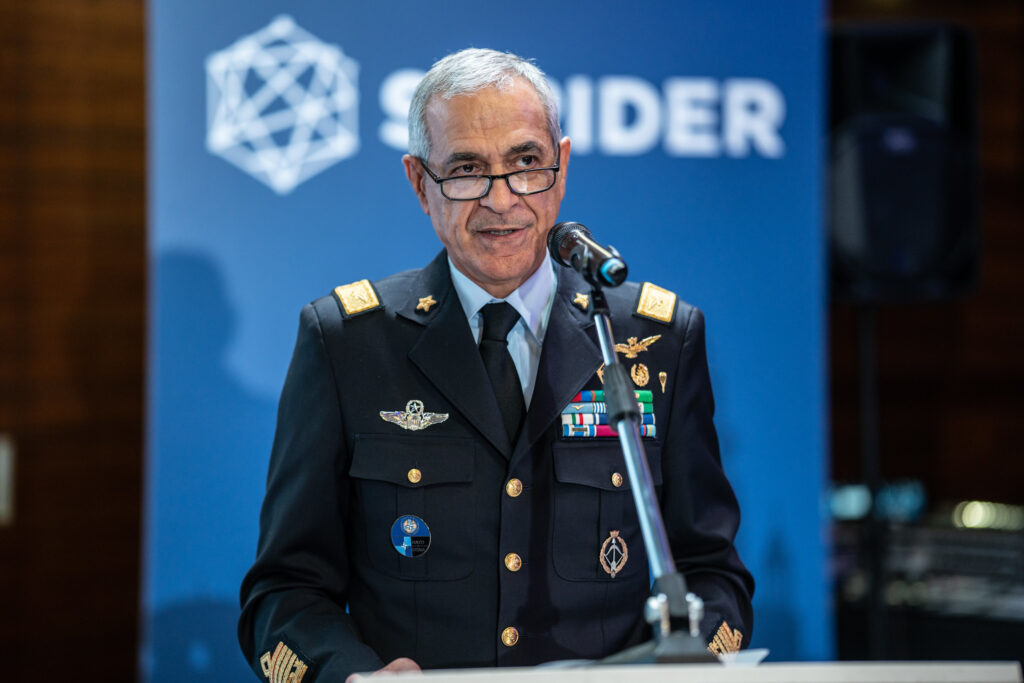
NATO Allied Command Transformation, headquartered in Norfolk, Virginia, contributed to the event through a keynote address by General Aurelio Colagrande, NATO’s Deputy Supreme Allied Commander Transformation, and by organizing the NATO Model Event for university students. While Allied Command Transformation was one of many international participants, these activities highlighted its ongoing mission to help the Alliance adapt to future challenges and to invest in youth engagement across the Euro-Atlantic community. Together, these contributions underscored Allied Command Transformation’s role in driving innovation and ensuring the Alliance is prepared to meet future challenges.
Keynote on Transformation and Readiness
At the Sarajevo Security Conference, Allied Command Transformation used the platform to highlight both the challenges and opportunities in sustaining stability across the Western Balkans. Speaking to an audience of regional and international leaders, General Colagrande underscored the importance of linking historical lessons with forward-looking action, framing NATO’s presence as a commitment not only to dialogue but also to tangible progress. He remarked:
Securing peace is neither guaranteed, nor easy. It needs vision backed up by determination and the means to secure it. So, we gather in Sarajevo to reflect on the lessons of the past, but also to remember what can be achieved.
– General Aurelio Colagrande
NATO’s Deputy Supreme Allied Commander Transformation
In his keynote address he spoke about the complex security environment, shaped by Russia’s coercive military posture, China’s global ambitions, and the spread of hybrid threats that increasingly blur the line between military and civilian domains. He also emphasized the transformative impact of technology, from drones and hypersonic systems to artificial intelligence and quantum technology. Importantly, he noted that these developments are not only about advanced militaries, but also about the “democratization” of technology, where tools once restricted to great powers are now within reach of non-state actors.
For Allied Command Transformation, these issues lie at the heart of its mandate. As NATO’s command charged with preparing the Alliance for the future, Allied Command Transformation drives innovation, experiments with new capabilities, and ensures that lessons from conflicts like Ukraine are rapidly translated into improved doctrine, training, and multinational readiness. The Sarajevo Security Conference provided a timely platform to share these efforts with policymakers, academics, and security professionals.
The NATO Model Event
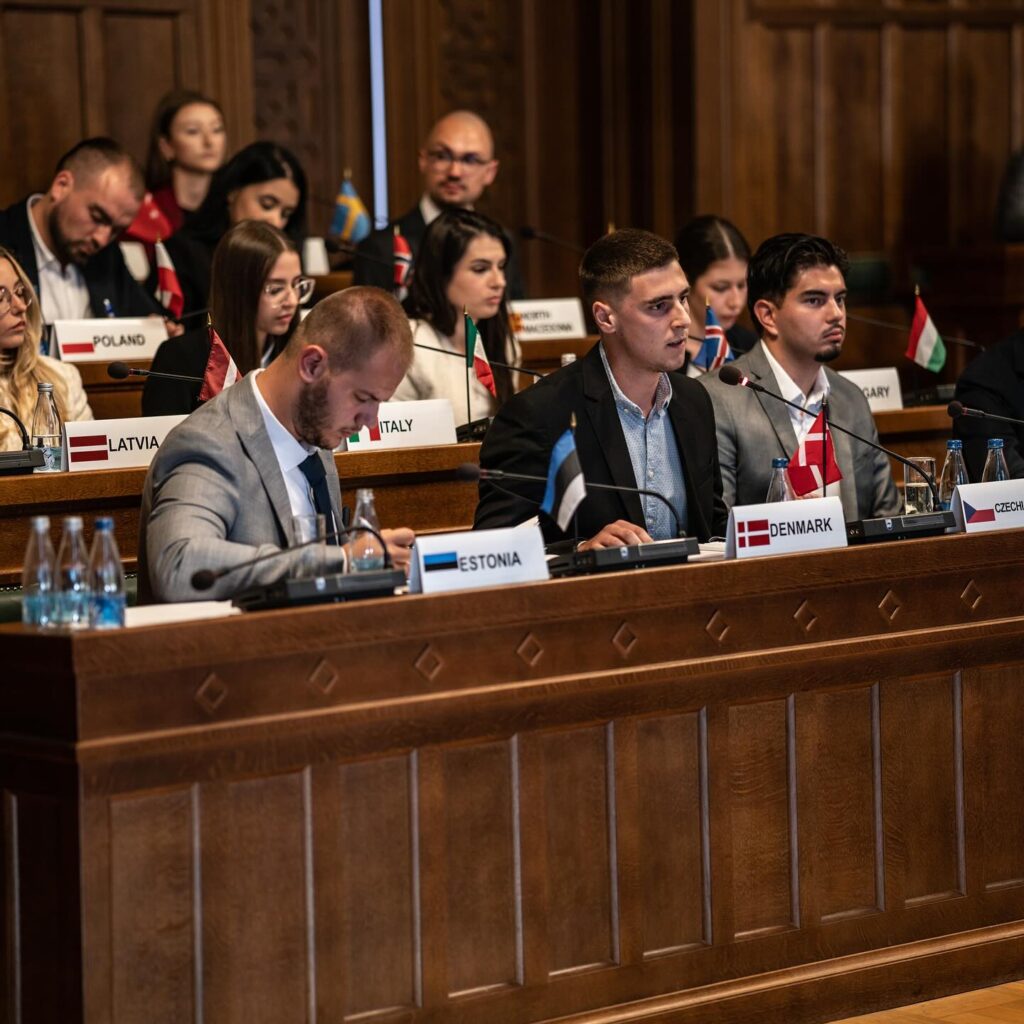
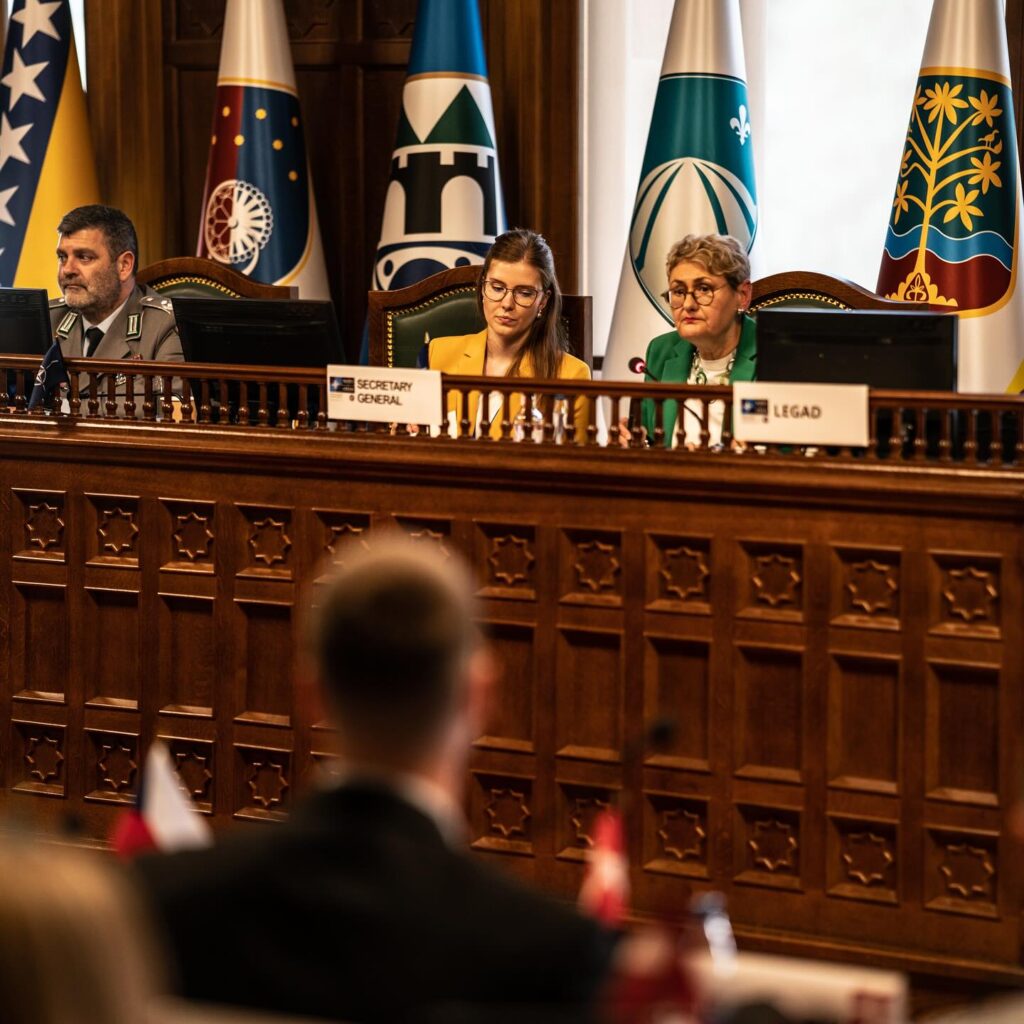
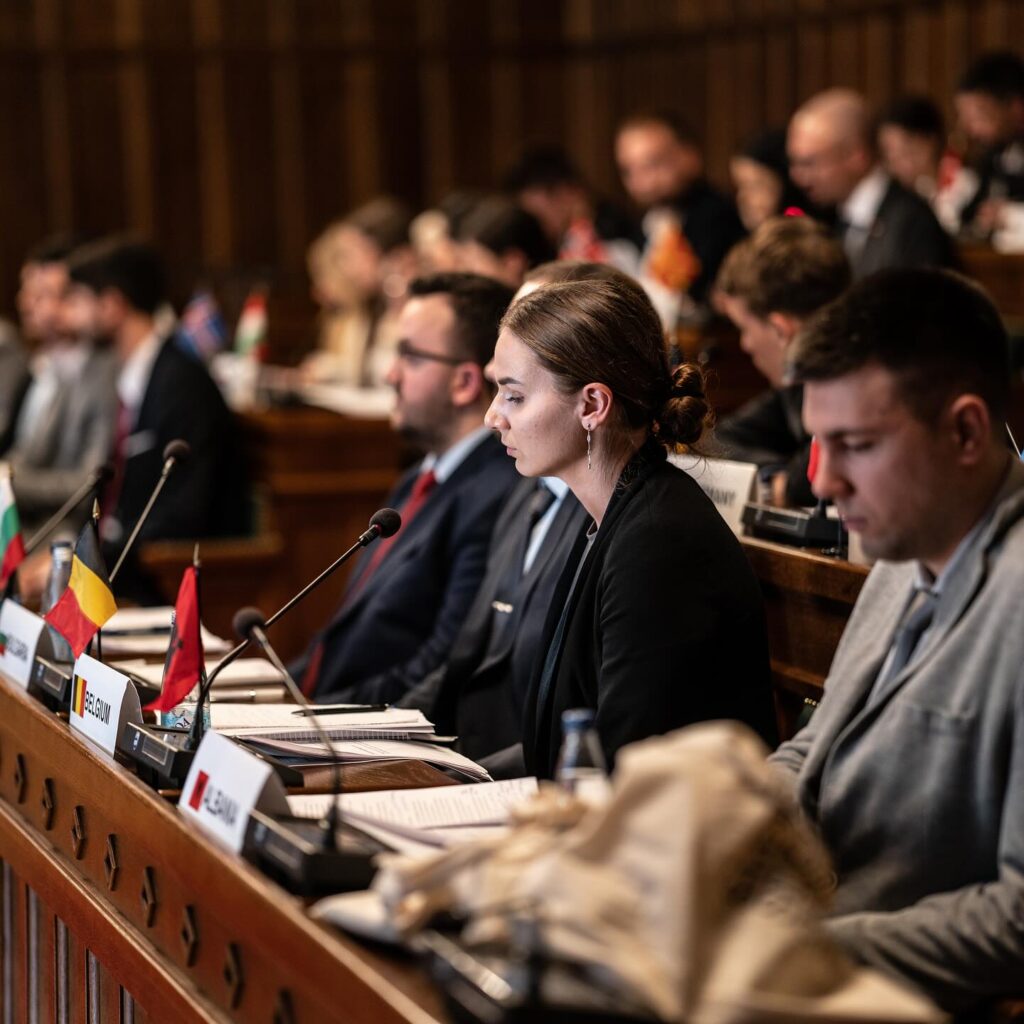
As part of the Sarajevo Security Conference, Allied Command Transformation organized the NATO Model Event. This simulation invited undergraduate and postgraduate students from universities across Bosnia and Herzegovina to step into the shoes of NATO ambassadors, take part in a North Atlantic Council session, and navigate the Alliance’s consensus-based decision-making process.
Allied Command Transformation officials chaired the simulation, guiding participants through a scenario centred on hybrid warfare, including cyberattacks on water facilities in the Baltic region and disinformation campaigns designed to sow mistrust and confusion. Students were challenged to negotiate under pressure, weigh the possibility of invoking Article 5, and balance national interests against collective defence.
For many of the participants, the event was both demanding and inspiring. As Adela Mujezinović from International Burch University reflected:
Participating in Model NATO today was both challenging and rewarding. I gained a deeper understanding of diplomacy, coalition building, and how difficult consensus can be. It was an invaluable opportunity to practice leadership, negotiation, and representing a country’s interests in a complex security environment.
– Adela Mujezinović
International Burch University
The event was designed not only as a learning exercise, but also as a bridge between NATO and local communities. By focusing on skills such as critical thinking, negotiation, and diplomacy, the NATO Model Event gave participants insight into how the Alliance works and underscored the value of cooperation in addressing shared security challenges.
Why Youth Outreach Matters
Investing in education and youth outreach programmes helps strengthen democratic resilience and connects new generations to the principles of collective security. By engaging students directly, Allied Command Transformation demonstrates that the Alliance is not only a military structure but also a community of values that depends on inclusive dialogue, cooperation, and trust.
In the words of Sarajevo Security Conference Director Hikmet Karčić, the NATO Model Event has become “the central youth-focused activity within the Sarajevo Security Conference,” reinforcing the event’s role as a regional platform for dialogue and capacity building.
Strengthening Regional Dialogue
The Sarajevo Security Conference itself has grown into a significant annual gathering, drawing leaders from NATO, the European Union, and across Europe. This year’s agenda focused on redefining the principles and frameworks that underpin Europe’s evolving security environment, with special attention to strategic coordination, democratic resilience, and threats posed by authoritarian, hybrid warfare, and geopolitical instability.
By participating in both the high-level discussions and the youth-focused NATO Model Event, Allied Command Transformation demonstrated its commitment to both immediate and long-term aspects of security. In the short term, the Command ensures that NATO forces remain interoperable, adaptive, and technologically advanced. In the longer term, Allied Command Transformation’s investment in outreach builds trust, empowers young voices, and prepares future leaders to navigate complexity with resilience.
Shaping the Future of Security
As NATO continues to adapt to a world of rapid change, events like the Sarajevo Security Conference highlight the importance of both transformation and engagement. General Colagrande’s keynote reinforced Allied Command Transformation’s role in shaping NATO’s future capabilities, while the NATO Model Event showcased the Alliance’s investment in people, particularly the next generation.
Together, these activities demonstrated how Allied Command Transformation bridges innovation and education, ensuring that NATO remains prepared not only for today’s challenges, but for the uncertainties of tomorrow.