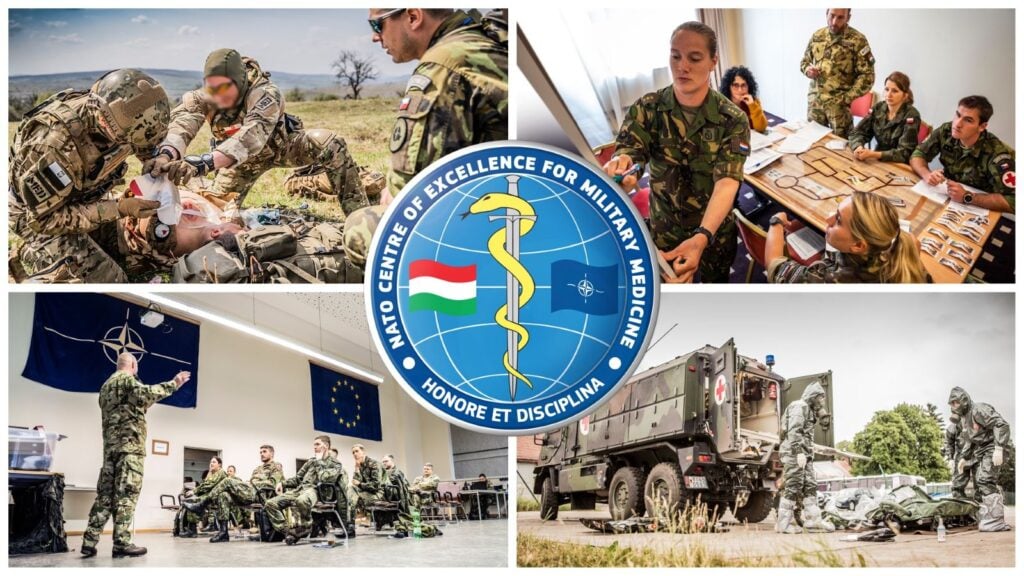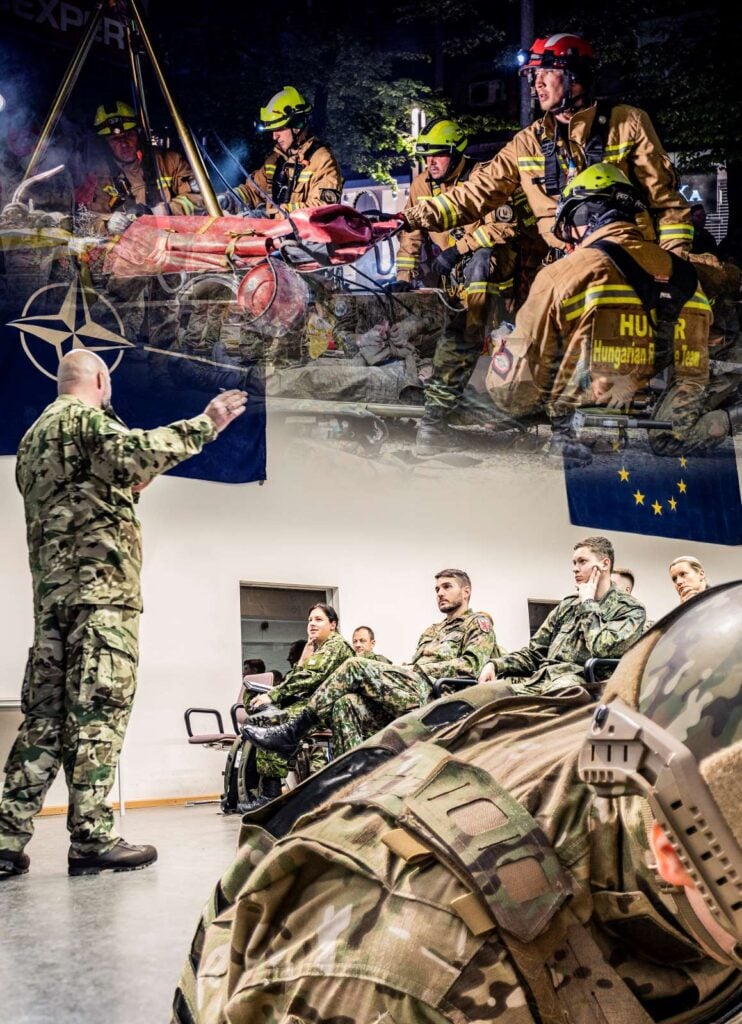
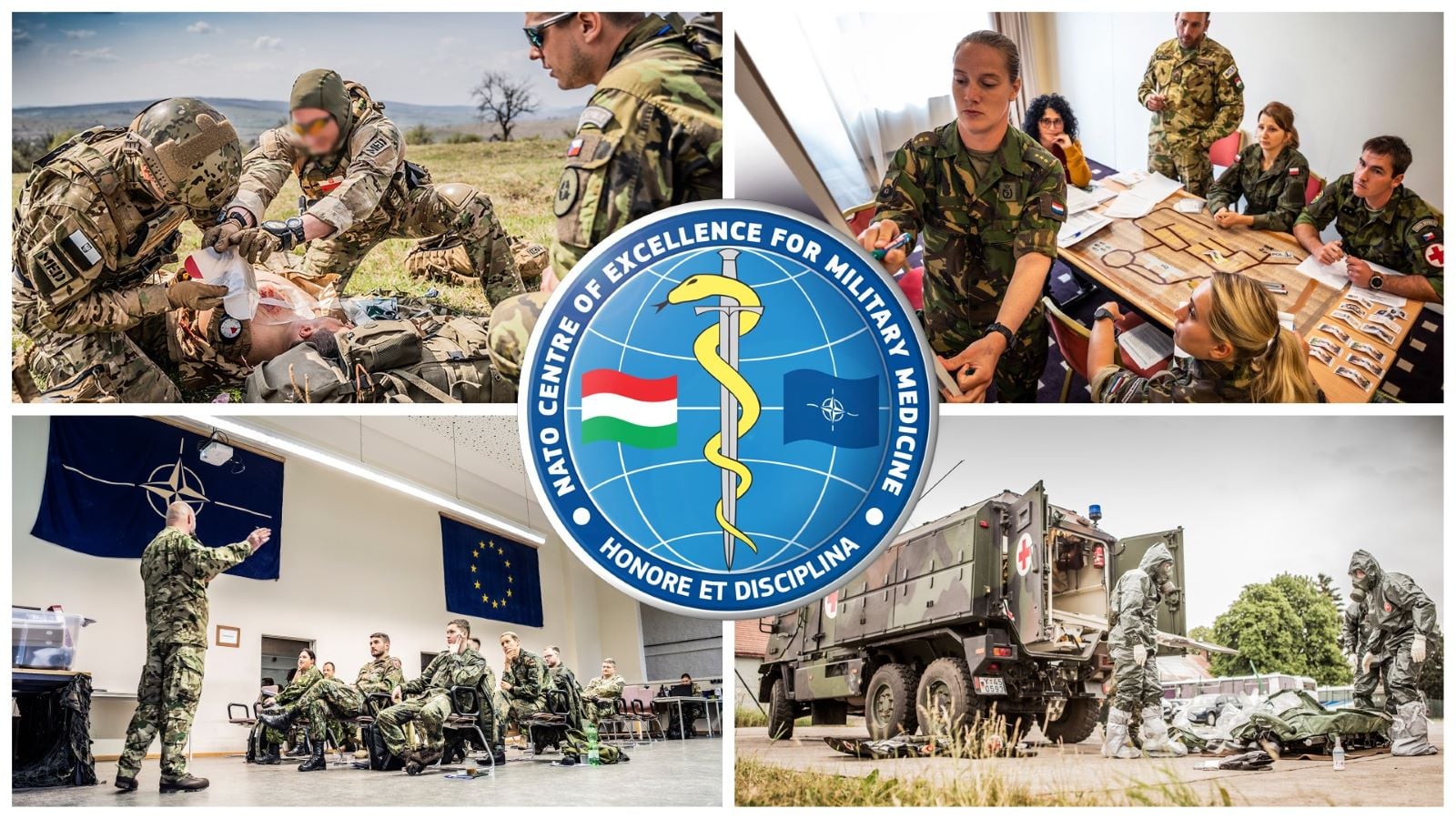
The NATO Centre of Excellence for Military Medicine plays a critical role in ensuring the health and operational readiness of Allied forces. Established in 2009 and located in Budapest, Hungary, the Centre supports NATO through education, training, medical exercises, concept development, innovation, and the continuous refinement of health-related standards. Its work touches every NATO service member by strengthening the collective resilience of Allied medical systems.
A Trusted Hub for Medical Expertise
The Centre is organized around four core branches (Force Health Protection, Interoperability, Lessons Learned and Innovation, and Training) supported by a Directorate and a Support Branch. This structure allows for a comprehensive approach to military medical readiness, combining operational insight with forward-looking experimentation.
Through these efforts, the Centre ensures that NATO’s medical community remains adaptable, prepared, and integrated across national boundaries. Its resources range from specialized training courses to data-driven tools that support disease surveillance and rapid decision-making in the field.
Strengthening Medical Readiness through Exercises
One of the Centre’s flagship activities is the Vigorous Warrior series, NATO’s largest multinational medical exercise. The next iteration will take place in Estonia in summer 2026. These exercises offer a platform for participating nations to test doctrinal concepts, train with military and civilian health providers, and refine coordination of medical assets. The upcoming scenario will explore themes such as the Framework Nation Concept, Force Health Protection, Medical Evaluation, and Concept Development and Experimentation.
Digital Transformation and Real-Time Surveillance
Recognizing the growing importance of remote capability and data-driven tools, the Centre has expanded its digital presence. It now offers virtual training, online collaboration portals, and near real-time medical surveillance capabilities. Among its most significant innovations is the Near Real-Time Surveillance Tool (NRTS), which tracks symptoms and warning indicators across medical treatment facilities. Tested extensively in exercises such as CWIX and Clean Care, the NRTS has been operationalized in NATO’s Kosovo mission and deployed in Somalia, Romania, and Lithuania.
The tool integrates with NATO systems and national databases, enabling early warning for disease outbreaks or biological threats. Two development projects, funded under the NATO Defence Against Terrorism Programme of Work, aim to expand the tool’s reach across NATO missions. These initiatives also support the integration of artificial intelligence and the digitization of the EpiNATO-2 surveillance platform, which is designed to monitor disease and health trends within deployed military forces. Negotiations are underway to implement the system across several NATO medical facilities using a Data-As-A-Service model.
Medical Knowledge Management for the Future
The Centre also manages the NATO Medical Knowledge Management Portal and a dedicated platform for medical concept development and experimentation. These collaborative tools foster continuous innovation and allow experts to contribute to the evolution of NATO medical doctrine.
By fusing education, innovation, and collaboration, the NATO Centre of Excellence for Military Medicine is at the forefront of ensuring the Alliance’s medical transformation. Through its comprehensive approach to military medicine, it empowers NATO and partner nations to address complex medical challenges and safeguard the health and well-being of service members. As the operational environment evolves, this Centre of Excellence remains committed to adapting and delivering cutting-edge solutions to protect and enhance the health of the Alliance.
To learn more about the NATO Centre of Excellence for Military Medicine, see their Facebook, Instagram, LinkedIn, or Website.