Once dominated by governments and major aerospace firms, the space sector now includes a growing range of commercial and private actors. Advances in propulsion, satellite miniaturization, and lower launch costs have opened the sector to more private companies, supported by growing investment and new business models. For NATO, and particularly for NATO’s Allied Command Transformation (ACT), that shift matters because commercial space is increasingly shaping how relevant capability can be accessed, integrated and applied across the modern operational environment. In turn, it also supports ACT’s ability to help accelerate the adoption of new capabilities.
The relevance of commercial space is already visible in conflict. Beyond Ukraine and Iran, conflicts in places such as Sudan and Yemen have also shown growing reliance on commercial space services. Available to any nation able to procure them, these services can support satellite communications and near real-time imagery, enabling functions such as targeting, fire correction, command and control, and battle damage assessment. Commercial space has therefore become increasingly important to how military capability is generated and applied in modern conflict.
NATO’s approach to commercial space
Approved in June 2025, NATO’s Commercial Space Strategy set the Alliance’s direction for strengthening its relationship with the commercial space sector. The strategy highlights the need to integrate commercial space solutions into NATO training, exercises, and operations, while also improving interoperability among Allied space capabilities, and in the military application of commercial space services.
In practice, that approach is taking shape through several efforts across NATO, including NATO Industrial Advisory Group’s SPACENET (a new network to foster a closer relationship with the space industry), and the NATO Space Capabilities Group under the Conference of National Armaments Directors (a specialized body designed to enhance cooperation, standardization, and interoperability among Allies in the space domain). Together, these initiatives help improve coordination and communication among Allies, NATO entities, and industry. ACT contributes by helping connect operational requirements with the processes needed to bring commercial services into use more quickly, supporting the integration of relevant capabilities into NATO’s space activities. The aim is to support more flexible financing and contracting approaches while creating space for small and medium-sized enterprises, as well as startups.
The broader goal is to make better use of commercial space technologies and services, while helping the Alliance balance national military capabilities with relevant commercial solutions.
Commercial space services are evolving fast and are increasingly available. They also lower the entry cost to actors without established space programmes. As a complement to Allied contributions, they offer a faster way to bring relevant capabilities into service and help NATO maintain its edge in a highly competitive domain.
– Colonel Nicolas Delbart
NATO Allied Command Transformation’s Space Branch Head
The U.S. Space Symposium
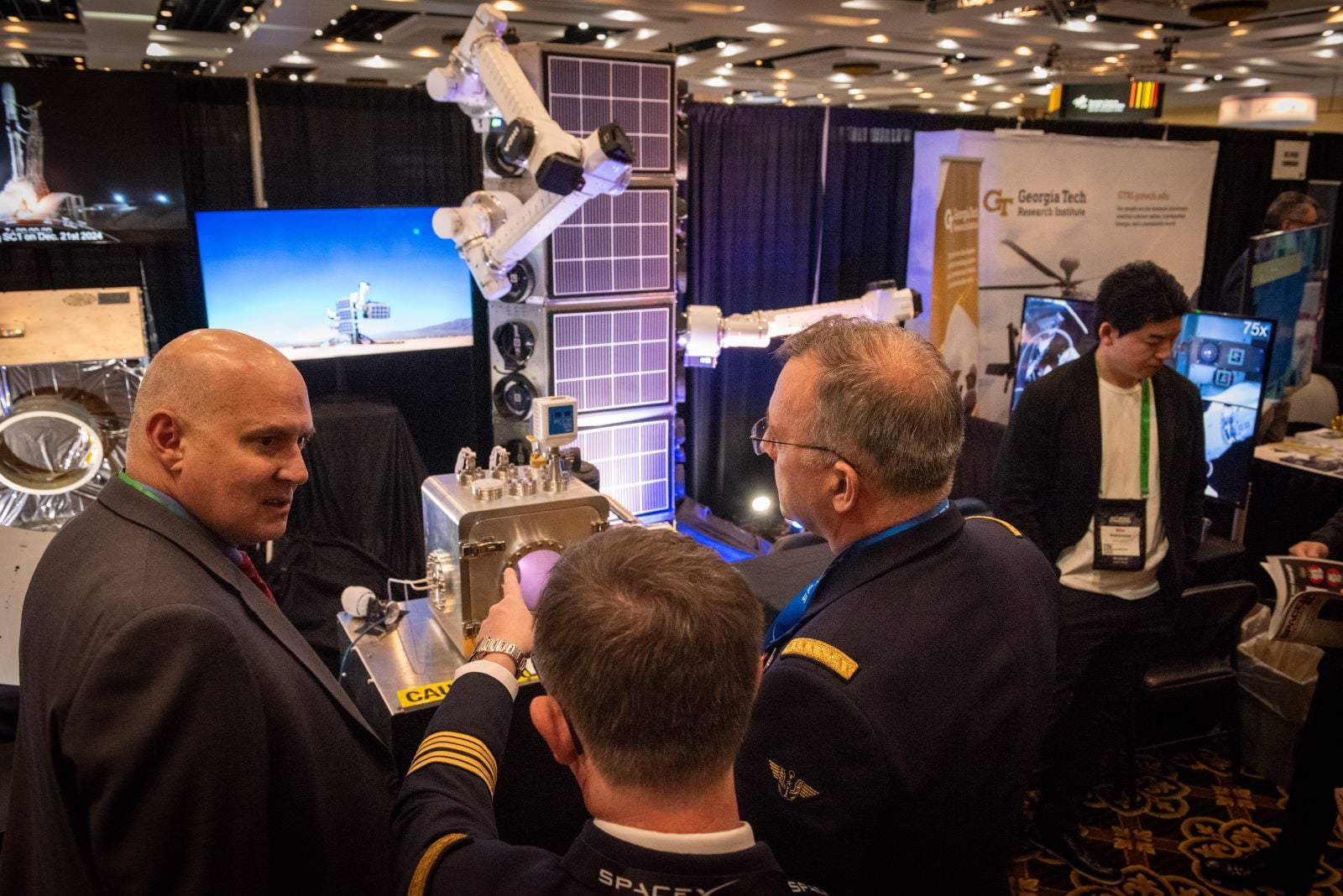
Widely regarded as the premier global gathering for the space community, the upcoming U.S. Space Symposium brings together more than 10,000 representatives from military, civil and commercial sectors across the international space ecosystem. For NATO, it offers a valuable opportunity to sustain dialogue with industry and better understand the technologies, services and partnerships that may support Alliance needs. Representatives from NATO Allied Command Transformation, Allied Command Operations and the NATO-accredited Space Centre of Excellence are expected to participate in this year’s event. As commercial space continues to shape the operational environment, that dialogue will remain essential to ensuring the Alliance can access relevant capability at the speed required.