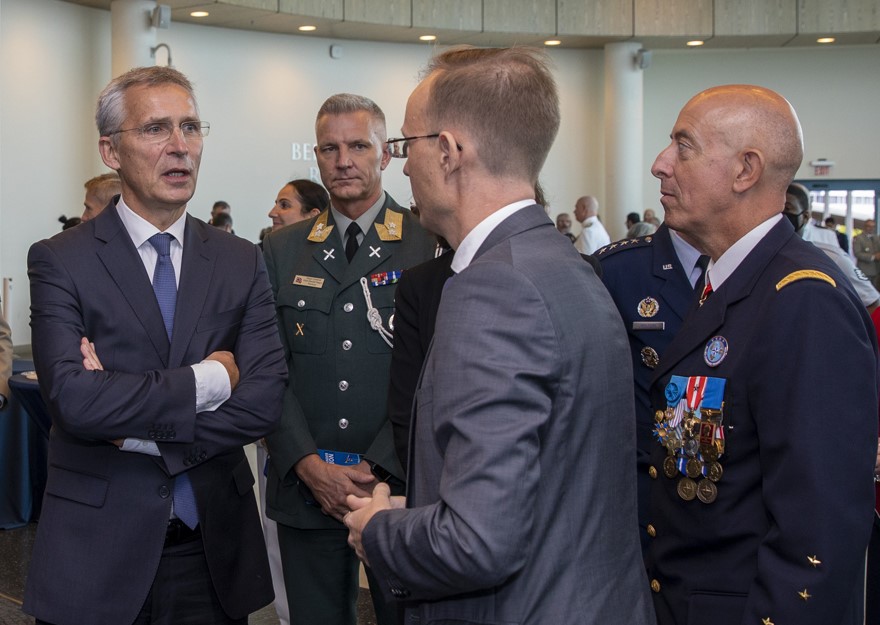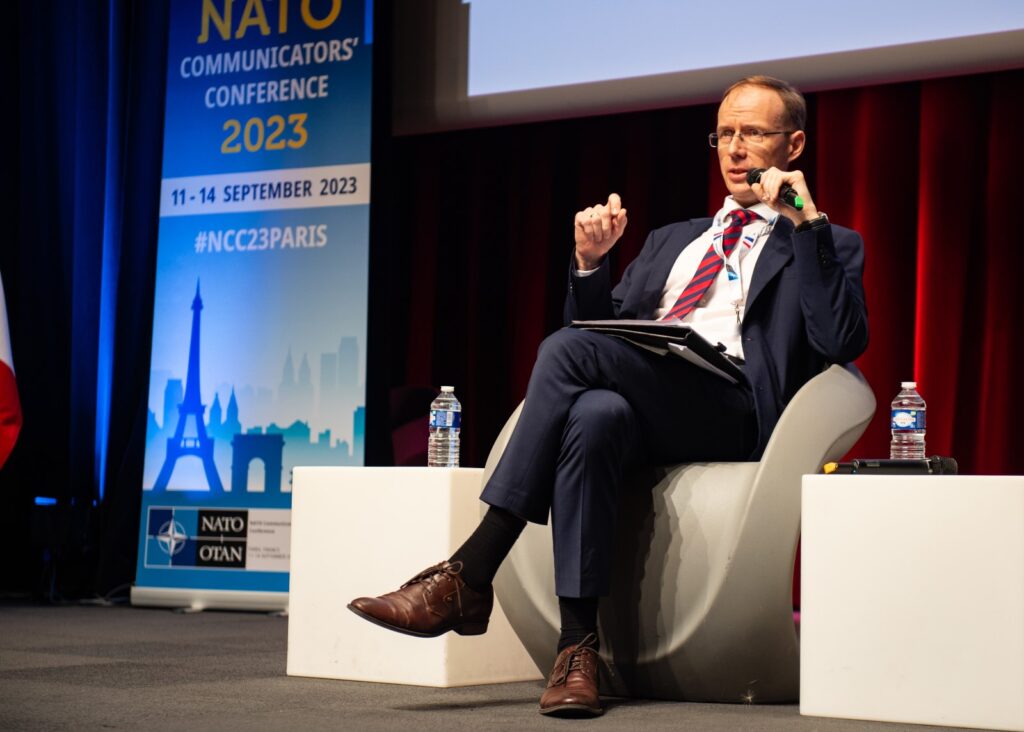

A newly published Routledge Handbook of NATO provides a comprehensive survey of the development and importance of the North Atlantic Treaty Organization (NATO), its role in international relations and its influence on history. Dr. Kęstutis Paulauskas, Senior Strategy Officer at Allied Command Transformation, contributed a chapter on NATO and the Eastern Flank.
NATO has played a pivotal role in shaping international security since its founding in 1949. Understanding its evolution and ongoing relevance is crucial for those working in the field of defence and international relations. Allied Command Transformation, a key NATO entity focused on developing military capabilities, fosters this understanding through various initiatives.
Dr. Kęstutis Paulauskas, Senior Strategy Officer at Allied Command Transformation, contributed a chapter on NATO and the Eastern Flank. The section argues that NATO’s Eastern Flank – the frontier facing the Soviet Union and Russia – has been the crucible of the Alliance’s strategic destiny. The chapter explores this central thesis across four main themes: the changing geography of the Eastern Flank; its sole constant – the Russian threat the underlying political dynamics; and the evolution of NATO’s approach to deterrence and defence.
The newest Routledge Handbook of NATO serves as a valuable resource for those seeking a deeper understanding of the Alliance. It examines the Alliance’s evolution in breadth, depth and context by analysing and explaining why and how NATO has endured and remained relevant since its creation. To present an inclusive study of the Alliance’s activities and milestone events and to offer a glimpse of future challenges, the book’s 29 chapters fall into six thematic sections that act as frameworks and allow the exploration of specific topics that pertain to the evolution of NATO:
- Part I: History of NATO, 1949–2024
- Part II: Key Enduring Themes, 1949–2024
- Part III: Military Operations, 1995–2024
- Part IV: National Perspectives, 1949–2024
- Part V: Regional Perspectives, 1949–2024
- Part VI: Future Prospects, 2024–
This handbook will be of much interest to students and researchers of NATO, strategic studies, defence studies and International Relations, as well as for staff and fellows at security- and defence-oriented think tanks and government officials, military personnel and other practitioners in the areas of foreign affairs and defence.
General Philippe Lavigne, Supreme Allied Commander Transformation, in reviewing the Handbook, noted that “NATO has been the foundation of European security and defence since its inception. While its relevance often has been questioned, it has consistently proven its worth as a political forum, a powerful military organization and a values-based community cementing peaceful relations among Western nations. The Routledge Handbook of NATO is tightly structured yet wide-ranging, with contributions by a stellar set of authors unfolding the story of the evolution, internal dynamics and influence of one of the most successful and enduring organizations in international politics. Anyone interested in understanding Cold War history and contemporary security and defence policy issues will find this book of great value.”
Understanding NATO’s past, present, and future is essential for those engaged in shaping global security. The Routledge Handbook of NATO is a comprehensive resource that contributes to this understanding. By providing a deep exploration of the Alliance, the book equips readers with the knowledge needed to address the ongoing security challenges of our times. Allied Command Transformation, through its focus on future military capabilities, education and development, remains committed to fostering such knowledge and understanding.