
The Era of Machine-Speed Warfare: The character of conflict is shifting. Today’s battlefield is defined by mass—drone swarms, ballistic missile salvos, and electronic warfare designed to saturate sensors and paralyze traditional command structures. In this environment, the greatest vulnerability is “information-to-decision latency.” When threats evolve in seconds, manual, siloed processes cannot keep pace. For the Alliance to maintain its operational edge, NATO must transform its ability to sense, decide and act at machine speed.
The Vision: Allied Command Transformation is developing the Next Generation Targeting Project to ensure NATO retains the battlefield initiative. Next Generation Targeting is a federated framework that integrates national systems through modular artificial intelligence (AI) and data management that complements existing command-and-control architecture.
Federated Data Flow and Governance: To achieve a Multi-Domain Alliance by 2030, NATO is breaking down the barriers between land, sea, air, space and cyberspace. Next Generation Targeting implements a distributed command-and-control environment where data is no longer trapped in silos. By federating national information into a common operating picture, Allied warfighters gain a unified view of the battlefield. This resilient data flow ensures that despite adversary deception or electronic interference, the right information reaches the right commander at the right time.
Efficient Sensor-to-Shooter Allocation: As adversaries deploy high-volume, low-cost forces to overwhelm traditional platforms, NATO must maintain its ability to shape the battlefield through mass and precision. Next Generation Targeting will act as a high-speed, multi-domain system equipped with sensor data. The system optimizes an effector for every threat, ensuring resources are allocated with maximum efficiency. In practice, this delivers a system capable of distilling 10,000 potential targets into a prioritized list of 1,000 critical engagements.
Outpacing Adversary Decision Cycles: In modern conflict, speed and scale matter. Next Generation Targeting will reduce NATO’s information-to-decision latency by over 50%, allowing Allied forces to operate deep inside an opponent’s decision cycle. At the heart of this capability is a sophisticated human control interface. This interface filters out the “noise” of the battlefield, empowering Commanders to focus on strategic objectives rather than unfiltered raw data. By accelerating the synthesis and analysis functions, NATO maintains decision-making advantage on the battlefield while ensuring human judgment remains the ultimate authority.
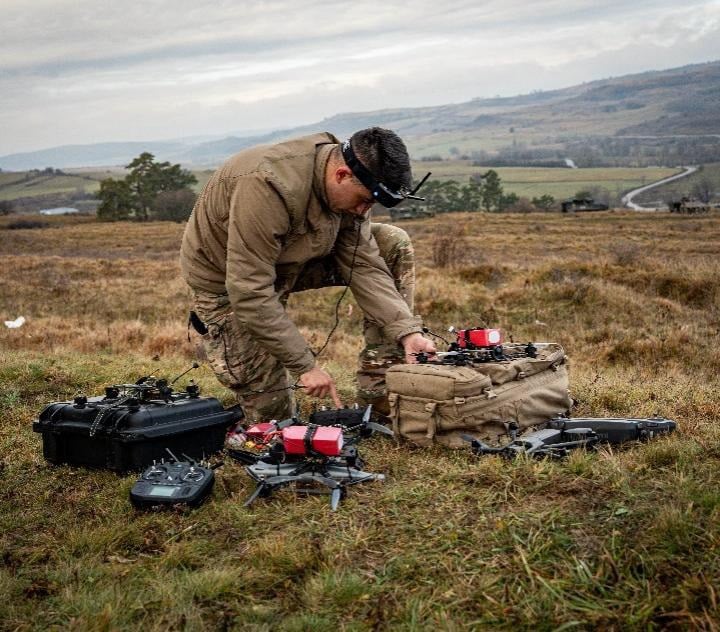
Next Generation Targeting Operationalization: Next Generation Targeting will feed the Rules of Engagement, Commander’s Intent and legal thresholds to the automated targeting system, reducing staff burden and shortening information-to-decision latency. Next Generation Targeting will unify the operational approach under a single digital system. It is a force multiplier that can shrink staff sizes and enable them to track and validate more targets.
The Path Forward: The future of NATO targeting will be validated through rigorous experimentation at the Coalition Warrior Interoperability Exercise in June 2026, Bold Quest in September 2026 and the Digital Backbone Experiment in October 2026. These milestones aim to deliver a resilient, AI-augmented ecosystem ready to defend the Alliance in the multi-domain age.
Click here to download the Next Generation Targeting printer-friendly version.