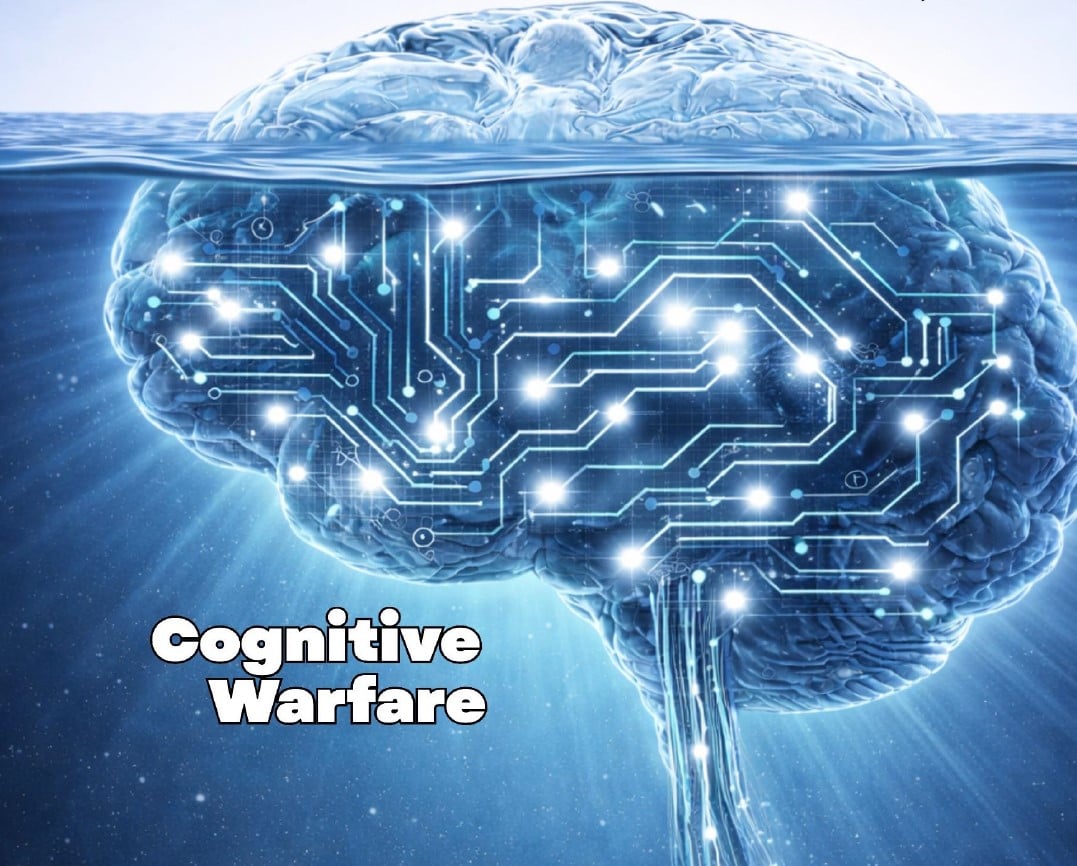

NORFOLK, VA – Cognitive warfare is not the means by which we fight; it is the fight itself. The brain is both the target and the weapon in the fight for cognitive superiority. Contesting in this environment comprises deliberate, synchronized military and non-military activities throughout the continuum of competition designed to gain, maintain and protect cognitive advantage.
Cognitive Warfare focuses on attacking and degrading rationality, which can lead to exploitation of vulnerabilities and systemic weakening. However, this becomes increasingly complex as non-military targets are involved. An example: Russian social media and public information operations targeted much of the international community in an attempt to label Ukraine as being at fault. Through a combination of communication technologies, fake news stories, and perceptions manipulation, Russia aims to influence public opinion, as well as decay public trust towards open information sources. These narratives have extensive reach, and often involve both offensive and defensive posturing.
China, as a strategic competitor for NATO, describes Cognitive Warfare as the use of public opinion, psychological operations, and legal influence to achieve victory. Combat psychology has significant impact on the warfighter’s ability to function; Intelligent Psychological Monitoring System, a recent smart sensor bracelets developed by China, focuses on recording facial information, emotional changes, and psychological states of soldiers to determine their combat status. Outside of the battlefield, influence can also affect law, rule-of-order, and civil constructs. This inclusion of “Lawfare” and the targeting of broader community sentiment has significant impact, since so many civilians and non-combatants are potentially exposed.
Allied Command Transformation manages the Cognitive Warfare Exploratory Concept, which is part of the larger Warfare Development Agenda. Synchronization of adversarial effects against emotional and subconscious domains are increasing; understanding frameworks, definitions, impacts, and risks enables better political decision making, military capability development, and overall Alliance-wide security. Allied Command Transformation educates, collaborates, protects, and shapes NATO forces on the topic of Cognitive Warfare, providing guidance on awareness, civil-military cooperation, societal resilience, and data sharing for the Alliance’s current and future security considerations.