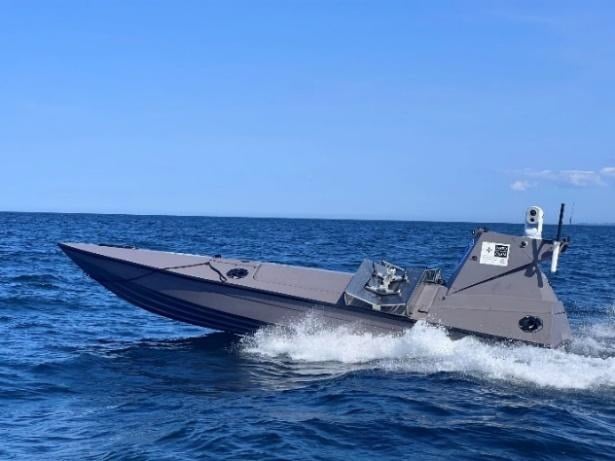
Allied Command Transformation’s Task Force X-Baltic is enhancing the maritime security of critical underwater infrastructure in the Baltic Sea. In conjunction with Allied Command Operations under the enhanced Vigilance Activity Baltic Sentry, Task Force X-Baltic illustrates NATO’s ability to rapidly test and adopt emerging and disruptive technologies. It is accelerating the integration of autonomous systems and artificial intelligence into naval operations.
Embracing Technological Innovation: Task Force X showcases NATO’s commitment to leveraging emerging technologies, such as autonomous systems and artificial intelligence, to enhance defensive capabilities. It also aims to seamlessly integrate autonomous vessels with traditional crewed forces and enable quick and effective responses to threats while still benefiting from human oversight in critical operations, reflecting NATO’s proactive approach to modern security challenges. During three weeks in June 2025, NATO fielded more than 70 air, surface and undersea systems that executed persistent intelligence, surveillance and reconnaissance patrols, choke-point monitoring, critical undersea infrastructure surveillance and opportunity intercept missions, with an average of 75% availability for eight hours per day. The uncrewed vessels fleet operated at one-third the cost of comparable coverage with crewed frigates.
Forward-Thinking Defence: NATO is at the forefront of modern military innovation by experimenting with uncrewed and autonomous vessels, preparing NATO for future unconventional or hybrid warfare security scenarios. In June 2025, Task Force X-Baltic conducted live demonstrations in the Baltic Sea, delivering situational awareness of the region and tracking hundreds of vessels daily—including Russian “shadow fleet” and military assets—in a variety of sea states and weather conditions. These activities prove that NATO can integrate diverse commercial and national systems into a common operating picture within compressed timelines.
Focus on Maritime Security: Through live-fire exercises and tactical manoeuvres involving both crewed and uncrewed naval forces, Task Force X demonstrates NATO’s ability to deploy autonomous systems alongside conventional military assets. It specifically addresses maritime threats, particularly to critical undersea infrastructure like data cables and other commercial and civilian systems vital for the functioning of global economies and communications. It highlights NATO’s recognition of the evolving nature of maritime security in the digital age.
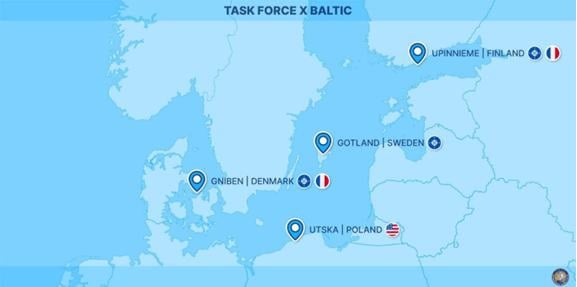
Strategic Partnerships: The initiative underscores NATO’s collaborative approach—eight Allies (Denmark, Finland, France, Germany, Netherlands, Poland, Sweden and the United States) were involved in the first phase of TFX-B testing—and strengthens multinational coordination and collective defence. In February 2026, eight NATO Allies (Denmark, Estonia, Finland, Germany, Latvia, Lithuania, Poland and Sweden) signed a letter of intent to carry Task Force X-Baltic into Phase II, transitioning from experimentation fleets to nationally owned capabilities that can be tasked by NATO and provide persistent coverage in the Baltic Sea.
Click here to download the Task Force X – Baltic printer-friendly version.