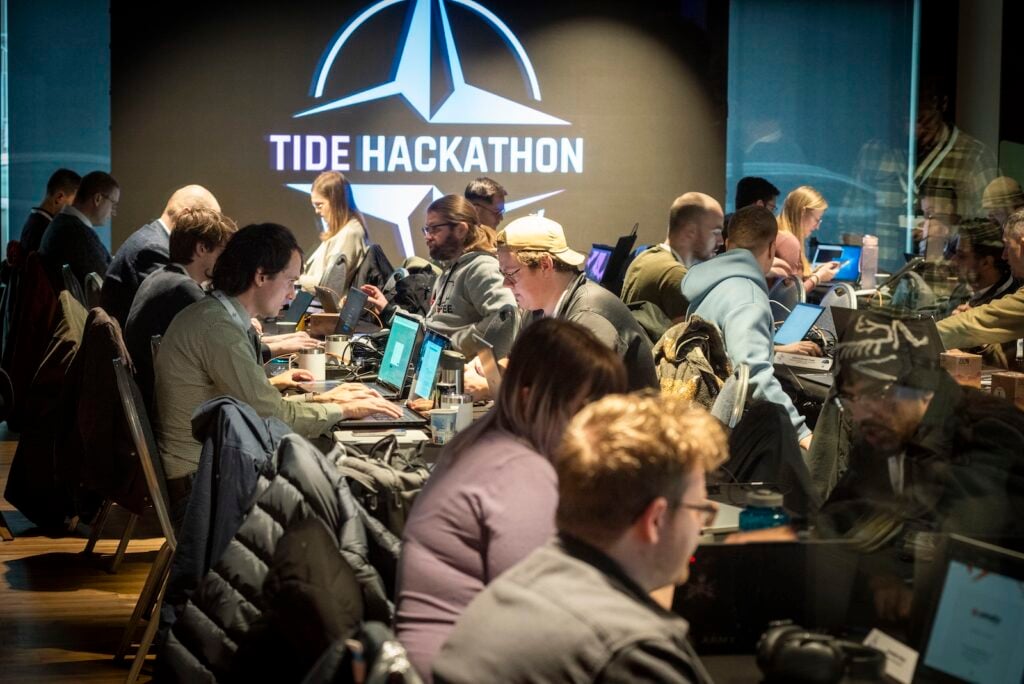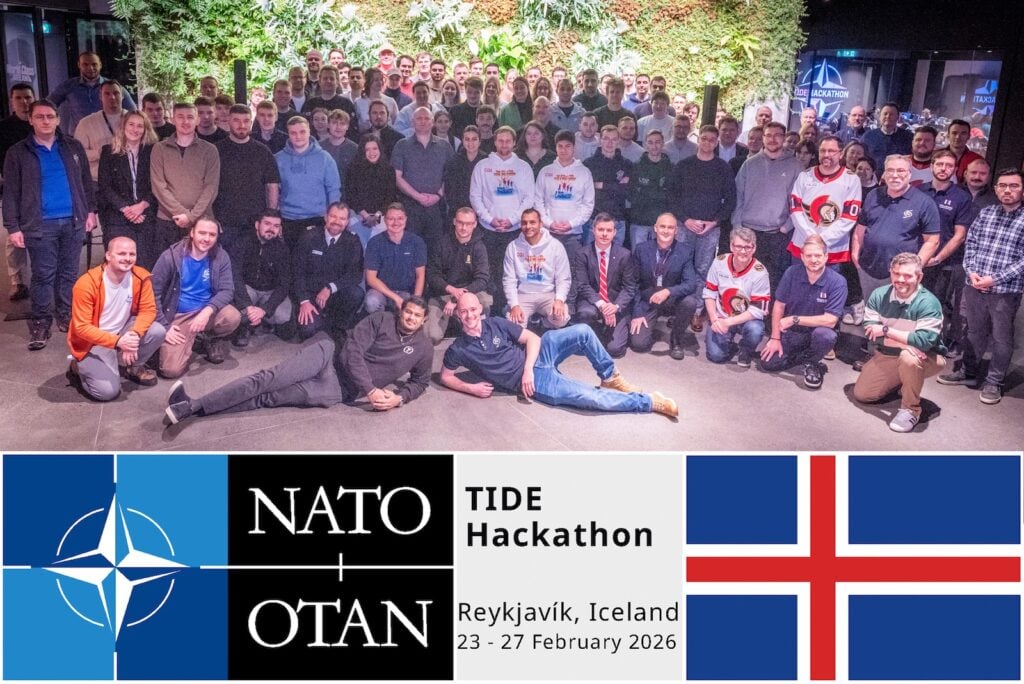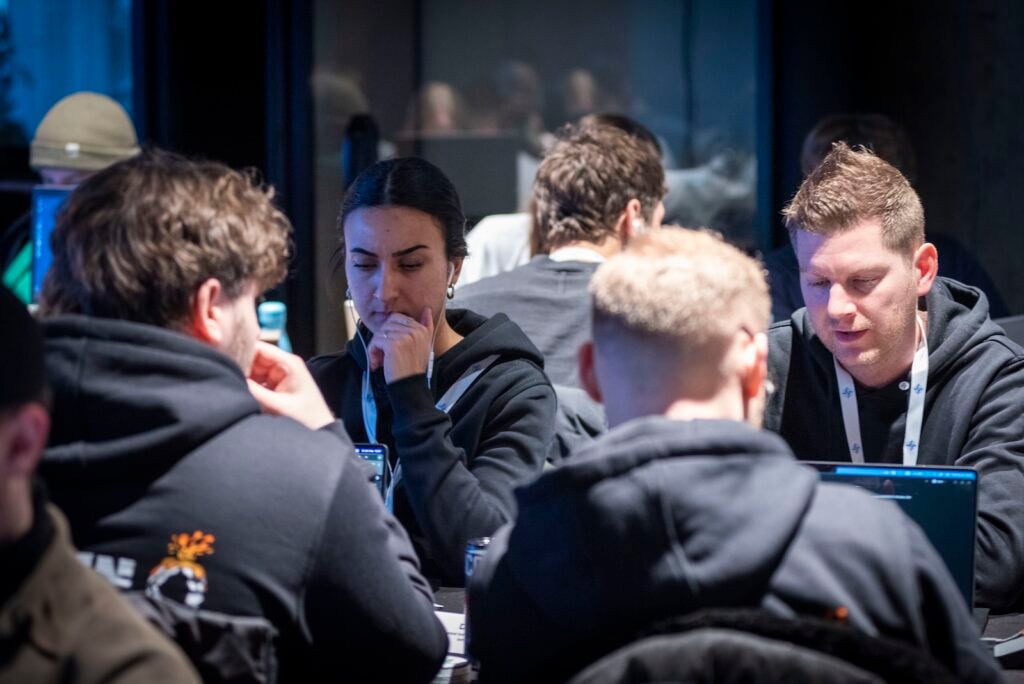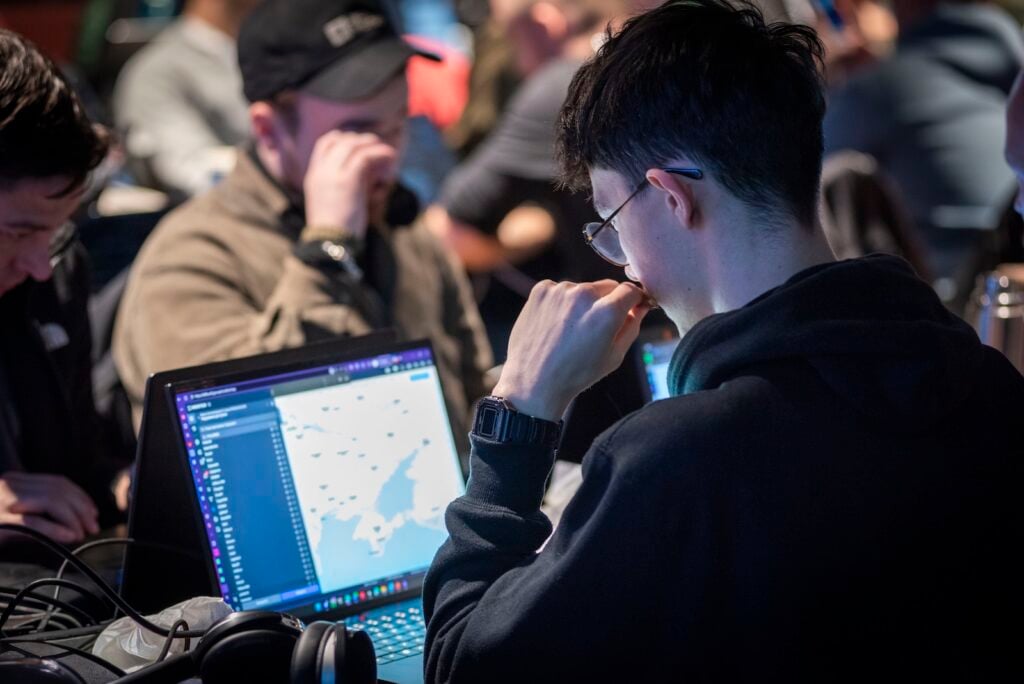

This week, the 2026 TIDE Hackathon in Reykjavik, Iceland, convened innovators from across the Alliance and Partner Nations to ‘hack for good’, turning code into combat power. NATO Allied Command Transformation brought together cyber experts to develop AI-enabled solutions addressing NATO’s most pressing digital interoperability challenges.
Allied Command Transformation convened NATO, Allied and Partner innovators in Reykjavik, Iceland, for the Technology for Information, Decision, and Execution Superiority (TIDE) Hackathon.
Part of NATO’s Interoperability Continuum, TIDE (Technology for Information, Decision, and Execution superiority) Hackathon once again proved that interoperability is not only achieved with standards and policy; it is also about people, code, and operational outcomes.
Over five intense days, multinational teams worked side by side to design and demonstrate solutions that directly address real-world military challenges. The result: practical, AI-enabled tools designed to shorten decision cycles, improve situational awareness, and strengthen multinational coordination.
From Digital Concepts to Operational Impact
TIDE Hackathon is designed to move beyond discussion and into delivery, focusing on building demonstrable solutions. Previous iterations have influenced operational requirements, enhanced C2 capabilities, and matured into Minimum Viable Products (MVPs). The 2026 edition continued that trajectory.
This year’s competition focused on three mission-driven challenges:
- Automated Intelligence Fusion and Analysis Informed Targeting: Teams developed solutions that automatically combine data from multiple sources into AI-enabled targeting workflows. By integrating different data streams into a single process, participants demonstrated how automation can support faster and more precise decision-making. The results will serve as building blocks for Next Generation Targeting, one of ACT’s Beacon Projects selected to rapidly transition proven ideas into NATO advantage.
- Digital Health Web Decision Support Tool: Participants tackled the challenge of connecting NATO’s medical networks to provide real-time visibility of multinational medical capabilities and availability. The goal: reduce friction in multinational medical coordination and shorten commanders’ decision cycles by transforming scattered data into actionable insight. The results will contribute to the Alliance Data Sharing Ecosystem (ADSE) and inform the requirements of the future NATO medical digital services.
- Automated Incident Response: Teams built AI-enabled tools that guide analysts through evolving incidents in real time. By adapting to changing conditions and recommending next steps, these solutions showcased how AI-supported workflows can enhance resilience and responsiveness in complex digital environments. The results will be re-used by Iceland and will inform the requirements of future NATO cyber capabilities.
Each challenge emphasized emerging and disruptive technologies, particularly artificial intelligence, applied in practical, operationally grounded ways.
Data is really vital on the modern battlefield. Data is the new blood and we need to accelerate its exploitation to support warfighters and decision-makers. This is what AI brings to the table, and this is why all Digital Interoperability Challenges are currently addressed using AI, especially during this kind of event.
– Patrick Ratier,
NATO Allied Command Transformation’s
Section Head for Digital Interoperability Policy
Awarded Teams and Solutions
At the conclusion of the Hackathon, a judging panel evaluated the solutions based on innovation, operational relevance, technical feasibility, and potential for further development.
The following teams were recognised for their outstanding contributions:
The winner of the Automated Incident Response challenge, team Canadian Army, showcased an AI-driven assistant that guides cyber analysts and non-cyber operators through complex incidents in real time. By fusing telemetry, contextual threat information and best-practice playbooks, their solution demonstrated how AI can adapt to evolving conditions, recommend prioritized next steps and keep human decision-makers firmly in control during fast-moving cyber crises.
The Ukrainian team JAM secured first place at the Automated Intelligence Fusion and Analysis Informed Targeting with an agentic AI–driven framework that dynamically fuses heterogeneous intelligence streams, applies adaptive prioritization across high-volume targets, and accelerates commander decision cycles through real‑time, self‑optimizing collaboration between agents.
The victory of Bytes on the Ground in the Digital Health Web Decision Support Tool highlights the operational value of data-driven coordination in high-intensity scenarios. Based on an LSCO scenario involving 500 casualties per day, the team developed a visualization and capacity-matching tool integrating both military and civilian medical resources. Their solution was designed to direct the right patient to the right facility at the right time, optimizing treatment pathways under extreme pressure. This achievement provides a concrete demonstration of the strategic importance of reliable, allied-validated data collection within a multidomain approach to medical support for alliance operations, strengthening resilience, interoperability, and decision superiority.
Their proposals will continue to be explored within the broader Interoperability Continuum to assess pathways for further development and integration.
A Multinational Innovation Environment
Participation was broad and inclusive. Teams of two to four members from NATO, Allied and Partner nations, including representatives from industry and academia, collaborated in a fast-paced, week-long competition format.
Importantly, all solutions remain available to the TIDE Community, reinforcing transparency, reuse, and long-term interoperability across the Alliance.
Strengthening the Interoperability Continuum
The TIDE Hackathon provides NATO with a hands-on way to test digital transformation ideas against operational realities.
By bringing together developers, operators, medical experts, C2 specialists, and AI practitioners, the event compresses months of conceptual debate into days of collaborative experimentation. It enables:
- Rapid prototyping of interoperable digital capabilities
- Early identification of technical and doctrinal friction points
- Direct feedback between operational users and developers
- Acceleration from idea to demonstrable capability
These outcomes contribute directly to improving how NATO and its partners integrate digital systems across multinational operations.
Looking Ahead
The 2026 TIDE Hackathon highlighted that digital interoperability is an ongoing effort shaped by collaborative experimentation.
As NATO continues to confront increasingly complex and data-driven security environments, initiatives like TIDE Hackathon ensure the Alliance remains agile, integrated, and technologically competitive.
From automated targeting workflows to AI-enabled medical coordination and adaptive incident response, the solutions developed in Reykjavik illustrate a clear message: when multinational innovation is aligned with operational need, digital transformation becomes operational advantage.